

Planning and designing a recreation center for future needs and community growth is a best practice, and The REC of Grapevine, Texas is a prime example.
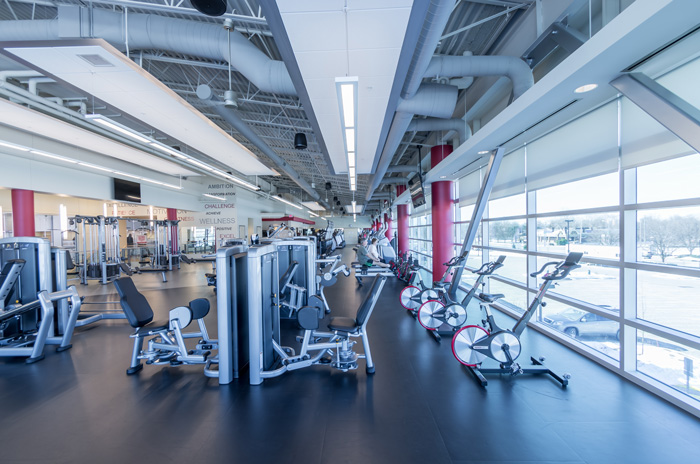
Run by the Grapevine Parks and Recreation Department, The REC (which stands for Recreation Education Community) is a remodeled facility re-opened in 2015 that according to park district executives Chris Smith and Trent Kelly now includes a whopping 40% of Grapevine residents as members. In 2024, the building, which houses 7,000 square feet of fitness space, basketball and racquetball courts, and an aquatic area, generated more than 4,000 visits per day.
Smith and Kelly said the primary goal for the remodel, planned by Barker Rinker Seacat Architecture, in partnership with PROS Consulting and Water Technology Inc., was to develop a recreation center that matched the scale and energy of Grapevine’s highly active and supportive community. This included significantly expanding the fitness space and introducing an indoor aquatics area designed for both lap swimming and recreational play, two key features that Grapevine residents had consistently requested.
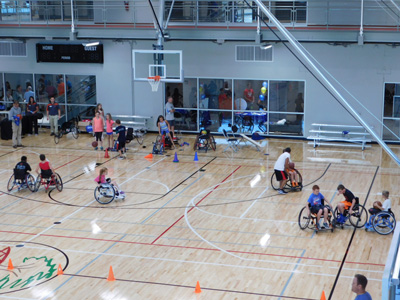
A second and equally important goal was to create a true multigenerational facility by integrating active adult programming into the new space for members older than 55. By incorporating the Senior Activities Center within The REC of Grapevine, they aimed to foster a sense of community and inclusion across all age groups. This vision resulted in a dynamic environment where children, teens, adults, and seniors could all enjoy tailored amenities under one roof.
“The results have far exceeded our expectations,” said Smith. “The response from the community has been overwhelmingly positive, affirming that the center is not only meeting its original goals but has become a cornerstone of daily life for thousands of residents.”
The city of nearly 51,000 residents overwhelmingly approved a sales tax referendum in 2007 that included funding for the renovation, and Smith and Kelly went to work, attending a workshop in Colorado, learning the latest recreational design trends, and networking with other industry pros as well as design and architectural firms. They visited rec centers as well.
“One of the key lessons we learned is the importance of planning not just for current needs, but for future growth,” said Kelly. “From the outset, it’s critical to work closely with your architect and design team to ensure the facility includes flexible spaces and scalable infrastructure that can adapt as the demands of the center increase. In our case, the overwhelming community response and high daily usage numbers underscored the need for adequate room sizes, multi-use spaces, and thoughtful traffic flow throughout the building.
“Had we not collaborated closely with our architect to anticipate future demand, we might have quickly outgrown the space. This experience reinforced the value of forward-thinking design, creating a facility that not only meets today’s expectations but is also prepared for tomorrow’s possibilities.”
The ACSM top-10 list of fitness trends for 2025 is full of ideas for those building, renovating, or simply looking to shake up programming: fitness programs for older adults, exercise for weight loss, traditional strength training, high intensity interval training, data-driven training technology, exercise for mental health, functional fitness training, and health/wellness coaching.
Architect Mira Theisen has seen that list in the plans and drawings for projects in recreation. Theisen, an associate principal for sports, recreation and entertainment for Perkins&Will, said she is seeing greater emphasis on fitness and wellness, with expanded stretching, plyometrics, cardio, machine weights, and free weight/strength areas being highly sought-after in most communities.
“Flexible spaces that can accommodate added wellness programming like yoga, mindfulness, and meditation are also trending, and designers are finding creative ways to make use of existing and new spaces, introducing operable walls, controlled artificial and natural lighting, and enhanced sound capabilities in these spaces to maximize use,” she said.
Theisen added that interest in aquatics programming and adding or replacing existing pools is seeing a big increase as communities respond to the desire for warmer water bodies for therapy and for older adults, as well as the need to replace aging aquatics infrastructure.
New to the rec center game is e-sports, said Theisen; video gaming spaces are highly successful in attracting new recreation users to community recreation centers.
Also on the rise: partnerships between public entities, co-housed in one building. For example, Theisen said, libraries pair with recreation centers in a single building, and recreation centers share lease space with private, public, or nonprofit tourism partners and wellness providers, including physical therapy clinics, mental health resource sites, or medical clinics.
“Society recognizes the key relationship between physical fitness and wellness,” Theisen said. “Physical fitness needs can look very different between individuals, and finding the right balance to serve a variety of needs is important. Flexible spaces are key to responding to different needs and trends. Spaces can change to allow smaller to larger groups, using materials that are durable and suitable for a variety of uses.”
Easy to overlook is the role of the materials used in recreation builds and renovations, Theisen said. Material selection is important to overall user health, she explained, and it’s important to select interior materials that meet human health goals.
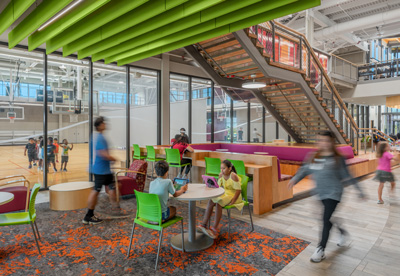
Her firm evaluates materials through sustainability standards, including Health Product Declarations (HPD), Living Building Challenge Declare, and other criteria to recommend products that meet the highest health standards for use in indoor spaces. The carbon footprints of materials are factored into the larger material usage and building design as well. The future of rec center projects will weigh environments without and within, she said.
“Design goals for recreation and wellness centers will focus on continued exploration of sustainable practices that enhance human health and well-being,” said Theisen. “Continuing to explore creative use of resources to maximize programs and create flexible spaces for evolving recreation programs is essential.
“Attention to sustainable design practices that increase daylighting, employ biophilia, use healthy, durable materials, reduce energy consumption, analyze carbon footprint, and effectively use indoor-outdoor spaces that will attract a broad cross-section of users will create long-lasting and operationally efficient facilities to serve communities now and in the future.”
Tom Poulos, CEO of Williams Architects, agreed. He touts the benefits and use of net-zero design, which strives for zero greenhouse gas emissions over the lifecycle of a building. Some of the tools for achieving this include:
- Solar Panels: Roof-mounted photovoltaic (PV) panels are a common way to generate electricity on-site.
- Insulation: High-performance insulation in walls, roofs, and floors helps to reduce heat loss and gain.
- Geothermal Heating and Cooling: The earth’s stable temperature can help provide more efficient heating and cooling.
- Smart Building Systems: Automated systems can optimize energy use based on occupancy and other factors.
- Green Roofs and Walls: These can help with insulation, reduce the urban heat island effect, and improve air quality.
- Water-Efficient Fixtures and Appliances: Low-flow toilets, showers, and washing machines all reduce water consumption.
- High-Performance Windows and Doors: These help to reduce heat transfer and improve energy efficiency.
- Renewable Energy Storage: Batteries or other storage systems can store excess energy generated on-site.
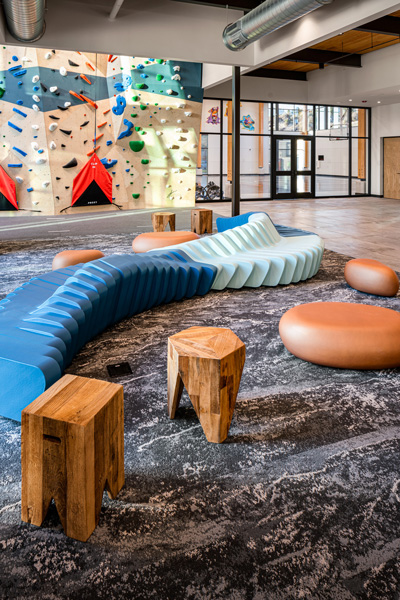
Poulos also sides with Theisen’s ideas on rec center in-house partnerships with community entities like libraries, physical therapy and medical clinics, and mental health services.
“If partnerships are being considered, they should be identified early in the design process,” said Poulos. “Partners become stakeholders in the overall facility design and bring their specific goals and objectives into the process. Security, public visibility, and hours of operation are just some of the criteria that need to be discussed. However, with proper planning, partnerships can contribute to the success of a multigenerational community center.”
Poulos is a fan of making users of rec centers as comfortable as possible, and not just with furniture and fixtures. He said social relevance provides people the connections that make a multigenerational recreation/wellness center a part of their lives and is also the key to repeat participation by people of all ages.
He said in addition to program offerings, innovative people-centric and energetic architecture design can affect retention levels. Lively environments, with the integration of natural light and visual connections to the outdoors, along with the use of appropriate materials that tie in with a community theme, are critical factors of a successful facility design.
“Understanding what’s unique to a community is also at the forefront of a facility design that reflects and identifies with the personality of the community in which the facility is located,” Poulos said.
“In our research, we have identified important interactions that make people feel comfortable and at home. We create social nodes that promote and accommodate user interactions. Social nodes work well in establishing contacts and friendships within a facility. Pre-function waiting and gathering areas outside of the specific program space are an important part of the philosophy for social interaction.”
Poulos also recommends that “… thoughtful design and integration of artwork should be considered as part of the planning process,” and adds that other considerations should include supplemental universal restrooms, locker rooms and shower areas, and easy-to-understand navigation signage.
Stephen Springs, senior principal with Brinkley Sargent Wiginton Architects, said the trend he’s most noticed in the past couple of decades is the influence of operational cost recovery—earning back the cost of goods or services delivered before any other revenue—for projects.
“This was a novel approach to planning and design of projects at the turn of the century, but now has become a premise in much of our work,” said Springs. “Whether the goal is full cost recovery of operations, or establishing a set annual subsidy from a city’s general fund, the financial model more and more defines the amenity set that gets designed and built.”
Springs said virtual exercise instruction is one place to look to cut costs. He said it does make sense, especially in smaller markets, where the cost of entry is low and instructors are few, but the larger, expensive installations are only practical for larger and more affluent suburbs that can charge higher fees.
“We are actually seeing reduced technology in some places, especially the fitness room,” he said. “Patrons all come with their own tech, so there is less and less demand for on-board entertainment or wall-mounted displays. You just need Wi-Fi.”
One of the many lessons Springs has learned over the years, he said, is that if it’s possible, a client should have an operator of the project facility intimately involved with design. “This is not always possible, for example, if a project is a client’s first center, but the reality is that different operators have different preferences, and it is not unusual for us to find ourselves making design changes during or post construction after an operator is hired and wants things changed to ‘their way,’” Springs said.
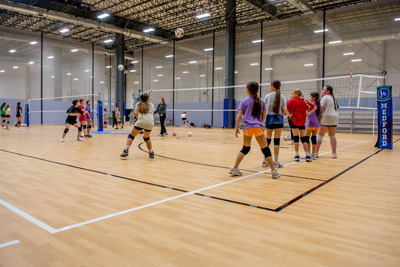
On the flipside, an ideal design partner for a municipality has people involved who are open-minded and collaborative, said Richard Rosenthal, director of parks, recreation and facilities for the city of Medford, Ore. Rosenthal helped guide the building of the 140,000-square-foot, $75.8 million Rogue Credit Union Community Complex, which opened in January 2024.
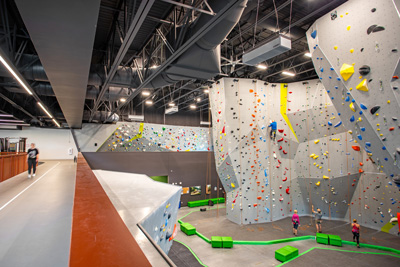
The facility houses sports courts, a competition pool, a recreational pool, waterslides, a splash pad, meeting rooms, a dance studio, food truck bays, a regional sports hall of fame, and a multipurpose room. Rosenthal said the search for a design partner should take some elbow grease.
“Before awarding contracts, it’s essential to check references about the people involved with the project, and work with legal to see if you can explore references that aren’t furnished by the potential contractor,” said Rosenthal. “You want the project team to have user-friendly, collaborative, experienced, and respectful people and personalities—especially when it comes time to make difficult decisions.”
And there will be difficult decisions, he said.
“If money isn’t an issue, the project should be smooth sailing,” said Rosenthal. “But money is always an issue in the public sector! Have an idea of the maximum extent the project can withstand value engineering, and mentally prepare for the worst-case scenario. The project is a success if the available funding achieves a final product above the minimum acceptable expectation.”
Rosenthal, like The Rec executives Smith and Kelly, scouted other facilities for design ideas and lessons learned.
“It was helpful to hear what the building operators recommended,” he said. “For example, we repeatedly heard, ‘Make sure you have lots of storage space; you can never have enough.’”
As director of recreation services for the Apex Parks and Recreation Department in Arvada, Colo., Hillary Roemersberger toured two natatoriums for help with the construction of the Arvada Aquatics Center, a competitive space that opened in November 2024. While the trips yielded several design concepts used in the new facility, just as much help came from the community, she said.
“The partners had a very extensive community engagement process, starting with a feasibility study in 2019 and then public feedback in the early phases of design,” said Roemersberger. “We had public meetings to solicit design feedback, we engaged coaches and athletes, and users of the old facility. The public even played a role in naming the facility.”
It was Roemersberger’s first aquatics facility project after several rec center and recreation pool projects. She said nonprofessional advice was just as important as the professionals’ input.
“This was a great learning experience that involved a lot of key partners and moving pieces,” she said. “We surrounded ourselves with subject matter experts and leaned on insight from coaches and athletes to achieve the ultimate customer experience. There is a lot that happens behind-the-scenes in the competitive pool setting; soliciting feedback from users who use competitive spaces regularly was key to our success.”
Smith and Kelly said community involvement was central to the success of The REC. From the very beginning of the planning phase, there were multiple public input sessions to hear directly from residents about what they wanted to see in the new facility. There were meetings with the city council, the parks and recreation advisory board, the senior advisory board, and various partner organizations to gather a broad range of feedback and perspectives.
“This collaborative approach ensured that the final design reflected the true desires and needs of our community, not just the vision of staff or consultants,” said Kelly. “The feedback we received shaped many of the features that ultimately made their way into the final facility.”
Smith said architect partner Barker Rinker Seacat actively participated in community engagement efforts and helped translate resident input into thoughtful, functional design elements.
“Even after The REC of Grapevine opened in 2015, it has continued to be a valued collaborator, working closely with our team to ensure the facility continues to evolve with community needs,” said Smith. “In fact, they are currently helping us plan our next expansion, which will include additional fitness space, classrooms, and office areas.” RM