

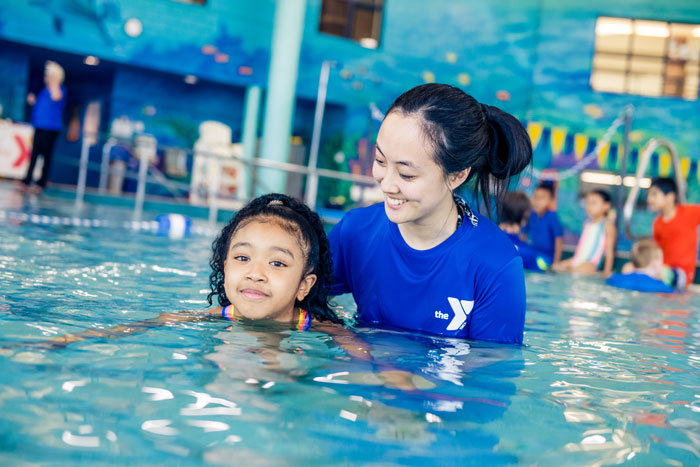
Programming for aquatic facilities includes sessions focused on fun, safety, fitness, and therapy, and if it’s done with care and creativity, users experience all four aspects.
While swim lessons are the industry’s foundational and most familiar programs, today’s menu addresses all age groups, abilities, and interests. Mick Nelson, who along with wife Sue founded and runs Total Aquatic Programming LLC, pointed out the rise in interest in adult classes in exercise, rehabilitation, and therapy.
“One of the most underserved populations consists of adults who love the water and rely on it for health and wellness,” Mick Nelson said. “After 35 years of operating an aquatic facility, we recognized the significance of offering programs tailored for adults. When we transitioned from focusing on learn-to-swim and competitive programs to offering adult programs, adult programming quickly became our top income-generating initiative within less than two years.
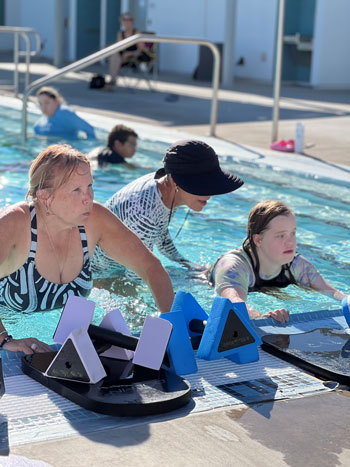
“This shift not only enhanced our service offerings but also significantly boosted our financial performance,” a success that Nelson said can be replicated in any aquatic facility.
Nelson said aquatic centers should consider several factors for optimal adult programming success, starting with distinguishing between water therapy, led by a licensed aquatic physical therapist, and aquatic exercise, or rehab, instructed by a certified water exercise coach. A licensed therapist can provide therapy on a rental basis. At the same time, ongoing rehabilitation can be provided in-house through water exercise classes, aquatic personal training, or a self-directed aquatic health club model.
By understanding the two categories when designing and developing adult programming, you can tap into this potential, Nelson said.
Water temperature is a crucial factor for both class types, said Nelson. Healthier individuals who enjoy swimming laps or participating in vertical aerobic exercises will prefer water temperatures around 82 degrees. Warmer water is for those seeking to improve their health and manage chronic pain or other health issues, he said. Individuals in this group often cannot work out on land due to adverse effects, therefore, warmer water is ideal for them, and they usually require temperatures of at least 87 degrees.
Nelson said water depth plays a vital role as well; the most desirable range for vertical exercise, especially passive routines aimed at flexibility, is between 42 and 48 inches.
Access to the pool is also essential. The facility should have a ramp or stairs to ensure safe and easy entry, as mandated by the Americans with Disabilities Act (ADA).
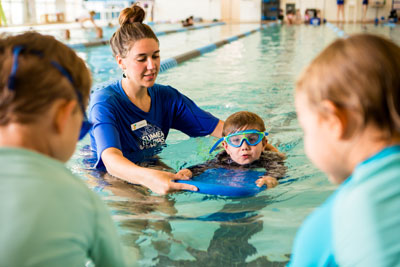
The Nelsons encourage not only meshing program goals within aquatics but between land-based programs and water-based, especially for fitness, therapy, and rehab. “We are beginning to observe a significant change in aquatic center programming; instead of operating in isolation, different programs are learning to collaborate effectively,” Mick Nelson said. “This shift toward collaboration is inspiring, and opens up new possibilities. For example, land and water fitness coaches are discovering that working together can provide more efficient outcomes for their members. This collaborative approach can revolutionize the way aquatic centers operate.”
When the Nelsons work with aquatic centers, they divide the training into categories: water safety and drowning prevention, learn-to-swim programs for all ages and stages, water exercise for all ages, and water sports and recreation.
“Each of these programs, when working together, can have a significant impact on the community,” said Mick Nelson. “They not only promote health and wellness, but also foster a sense of community and social interaction.”
Ame Guy, director of aquatics for the YMCA of Greater Charlotte in North Carolina, said one of her group’s creative adult-based programming wins has been sound baths. A sound bath in a pool is a meditative practice where participants relax and float in the pool while being exposed to the soothing vibrations of various sound instruments, like singing bowls or chimes. The combined effect of the water and sound is intended to induce deep relaxation, reduce stress, and promote a sense of tranquility. The water in the pool provides a buoyant, supportive environment, allowing participants to float and relax fully. The warmth of the water can further enhance the experience, promoting relaxation and reducing stress.
“We gave this a try at one of our indoor pools, and it was a hit!” Guy said. “We can’t wait to expand on our offering and tap into the much-needed space of relaxation for adults and teens! As a full-time working mom of a 5- and 9-year-old, I desperately need to make relaxation a priority. To offer this to our members is such an amazing bonus. Spirit, mind, and body!”
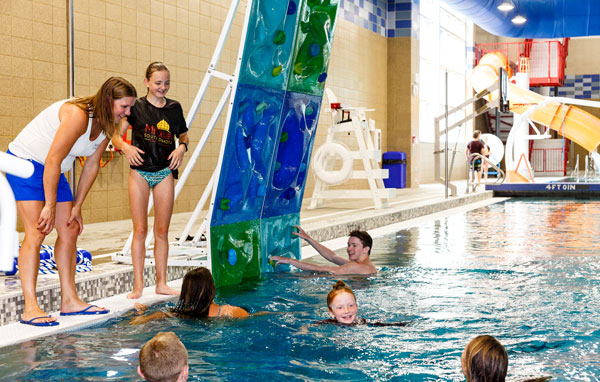
Facilities that want to expand into aquatic fitness but worry about added equipment purchases can offer plenty of exercises that use only body weight and the resistance of water, said Julie See, director of education for the Aquatic Exercise Association. Popular aquatic programs that don’t require equipment include aerobics, Ai Chi (combining tai chi and qigong), yoga, Pilates, interval formats including HIIT, and striding (water walking), which is often combined with other activities such as stride and stretch.
Next level is exercise with minimal equipment, See said. “AEA offers workshops for complete programming built around inexpensive equipment that many pools already have, such as noodles or small balls,” she said. “Equipment is not required for creative programming, except attached flotation for deep-water training. Attention to variety in lesson planning helps bring diversity to programs without adding equipment.”
For facilities with the resources and determination to add exercise that requires equipment, the canvas is blank for activities of all levels and abilities, See said. Changes in aquatics fitness over the years are based on a number of things, she said: new research, the evolution of the exercise industry in general, the changing population base, attention to inclusive programming, and equipment development.
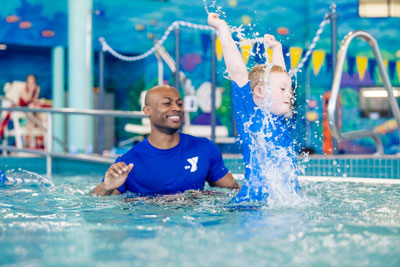
Underwater bikes and treadmills, aquatic boxing bags, combat gloves, aquatic barbells, and more are available to satisfy the growth of water fitness, See said, and AEA can help advise on aspects like the multiple formats and class sizes and the hiring and training of staff.
“Overall, we continue to see more diversity in programming, which benefits a wider range of participants by offering appropriate options to meet specific needs,” said See.
Gwen Wilcox is the community services manager for the city of Temecula, Calif., where in addition to adding the sound bath sessions Guy mentioned, she’s seen the impact of offering members several new fitness classes, including:
- Adaptive Water Aerobics: “For adults with disabilities who are comfortable standing in chest-high water, this class focuses on building endurance, resistance training, and range of motion while supporting each other on the fitness journey,” said Wilcox.
- Aqua Pilates: Incorporates Pilates strength exercises in the water, utilizing water weights and noodles, along with a cardio warm-up.
- Aqua Power Hour: A circuit training class that changes daily. Circuit training includes exercises, strength training with water weights and resistance bands, and cardio workouts that incorporate aqua bikes, punching bags, and aqua poles.
- Aqua Yoga: Held in shallow water, focusing on breathing, upper body stretches, standing postures, and guided relaxation while floating on a pool noodle.
- Aquacise: A fusion of aerobic exercises and high-energy dance-based choreography, participants tone their muscles and improve cardiovascular health in a fun, upbeat environment.
- Deep Water Aerobics: A combination of jogging and kickboxing meets the water in this moderate to high-intensity workout.
- Water Walking: An effective way to increase fitness, endurance, and muscle strength. Wilcox said that one mile of walking in the water is similar to walking two miles on land.
“Don’t be afraid to try something new,” Wilcox said. “Often, patrons aren’t actively seeking out new water aerobics programs, but once these programs are introduced, they’re embraced enthusiastically. A great example is our water walking class, which has become incredibly popular.
“We’ve even received heartfelt messages from participants who say the class helped them regain the ability to walk on land without assistance. The unique benefits of water-based exercise often make a meaningful difference in ways that land-based activities can’t.”
There is programming for all ages, incomes, demographics, abilities, and health statuses these days. See’s organization works with the Arthritis Foundation to offer an exercise program used across the country.
“Some individuals living with arthritis can perform higher-intensity training, and they both enjoy and benefit from this progression,” she said. “We developed the ‘Arthritis & Aquatic Exercise: The Next Level’ to meet this need.”
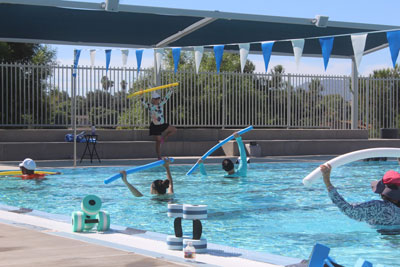
Guy said her Charlotte YMCAs have prioritized diverse-ability swim lessons. She said there’s a need not being met by boutique swim schools.
“Individuals with autism often exhibit a strong fascination and attraction to water that goes beyond what the rest of us may experience,” she said. “For individuals with autism, water offers a multisensory experience that fulfills multiple needs at once. The visual aspects of water, like its sparkling, bubbling, and reflective properties, can be particularly captivating. The sensation of water on the skin, combined with the pressure it exerts, can provide a soothing effect and address tactile sensory sensitivities. It can be their escape from sensory overload.”
More can be done with this target group than simply teaching them how to swim, said Guy. Often children with autism can absorb information from visual boards and respond to verbal cues while in the water better than on land.
“All too often in programming, our default response is, ‘No, sorry, we can’t do that,’” Guy said. “I challenge new leaders to pause and ask, ‘Why not?’ What would it take to say, ‘Yes, we can make that work’? That mindset can lead to real innovation and impact.”
Because of the rise in competition from new public facilities, waterparks, and private swim schools, programmers are long past the days of just offering swim lessons, aerobics, and lap swimming, said Juliene Hefter, CEO and executive director of the Association of Aquatic Professionals.
Today’s trends tend to veer toward more active and exciting programs, she said, like log rolling, SUP yoga (yoga on a standup paddleboard), paddleboarding, underwater hockey, water polo, ninja courses, in-water kickboxing, and anything that uses unique equipment or is a bit more on the creative side.
“People want to be entertained while they are getting or staying in shape,” said Hefter. “Facility operators must continue to expand their horizons on what types of programming might be well received within your community. As competition for patrons and attendance continues to increase, we, as operators, need to search out new and exciting ways to bring our community together.”
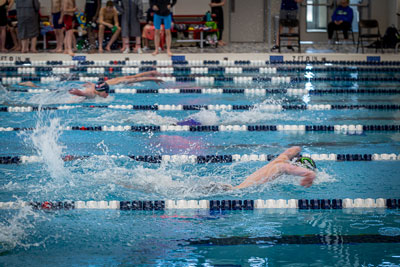
Creativity, then, is a must, and Hefter mentioned aqua yoga, FloatFit, pool parties, lap swim triathlons, poolside movies, doggie paddle days, music-themed events, holiday-themed days, scuba diving, paddleboarding, and kayaking lessons as ideas she’s seen.
“For some additional fun for our lap swimmers, we created some maps and called them ‘Swim Around the World,’” she said.” We choose areas and they would be able to document their laps every time they came in. We then put stickers on the map to show them how far they have swum. We had to continually create new and fun maps to keep up with the daily lap swimmers. We even had some of the high school swimmers and swim club kids join in as well!”
Hefter said not to forget your staff, and include something like lifeguard Olympics to maintain good morale and retention.
Labor in aquatic facilities is crucial for safety, but right behind and often the same employees are the instructional staff members. George Deines of consultant firm Counsilman-Hunsaker said one tool for attracting and keeping staff is to offer no- or low-cost training and certification.
Deines also mentioned the onset of private swim lesson companies with their effect on labor. “I think this is where the popularity of private lessons has hurt the industry, because facilities now have a 1-to-1 ratio as opposed to 1-to-4,” he said. “With the same amount of teaching staff, this reduces the number of children within their community who can not only register for a class, but also afford it.
“It’s also important to have the mentality that every child you teach to swim … is a potential employee in the future. Marketing programs such as pre-competitive swim teams, junior lifeguarding, and swim lesson assistants helps to capture the 12- to 15-year-olds that are right on the verge of entering the workforce within a few years.”
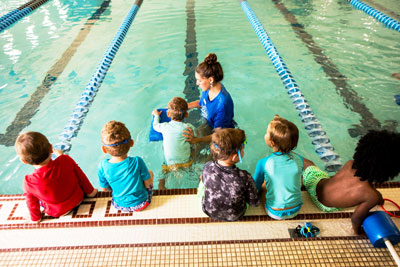
Katherine Webb, aquatics manager for the Amarillo (Texas) Town Club, said that while members are a facility’s lifeblood, “your staff can make or break a program.”
They are the front line, said Webb, communicating with members, running the day-to-day operations, and directly influencing the experience people have. A well-trained, engaged staff can turn an average program into a thriving one by building strong relationships, problem-solving in real time, and creating positive energy around the experience.
“On the other hand, poor communication, lack of enthusiasm, or inconsistency from staff can quickly erode member trust and sink even the best-planned program,” she said. “Investing time into training, clear expectations, and regular feedback with your team isn’t optional—it’s critical if you want your programs to succeed and grow.”
When it comes to aquatic programming, safety has to be the top priority, and keeping your staff fully trained, up-to-date on certifications, and consistently refreshed on safety protocols isn’t just a box to check—it’s a non-negotiable responsibility, said Webb. Adequate staffing levels for each situation are equally critical. Cutting corners, whether through undertraining or understaffing, directly compromises the safety of your members and your team. Regular drills, ongoing education, and a culture that treats safety as part of the daily routine—not just an annual checklist—are essential if you expect to run sustainable and trustworthy programs.
“In aquatics, you don’t get unlimited second chances—the work you put into preparation shows every day on the pool deck,” said Webb.
For Gin Skinner, programs director for the Sparta-White County Family YMCA in Sparta, Tenn., her background as a lifeguard, swim instructor, coach, and aquatics director informs her philosophies on staff: If they have a personal culture of safety and inclusivity before being hired, they will afterward.
“We are lucky to have a great staff at our YMCA who are invested in seeing all kids educated on safety around water,” Skinner said. “Staff are constantly in communication with program participants to make sure that their needs are satisfied and if any changes need to be made. One great thing about our staff is that they are meeting the participants where they are. We are aware that not ‘one size fits all,’ especially in aquatics. Being able to assess each participant and tailor the program to their ability is a strength in aquatic programming.”
Jennifer Ayers-Millar, supervisory aquatics specialist and swim survival skills master trainer for Marine Corps Community Services on Marine Corps Air Station Iwakuni in Japan, said she keeps the multidimensional demands of aquatic programming in perspective.
“Ninety percent of everything I do I learned from someone else,” said Ayers-Millar. “Effective aquatic programming is a willingness to learn from others, to be inspired by their successes, and to build upon that foundation with your own unique perspective and innovative flair. The acknowledgment that much of what we do is learned allows us to approach programming with humility and a continuous desire to explore and evolve.
“You cannot please everyone. Our focus should instead lie in cultivating an environment where both our staff and patrons can thrive. While we cannot guarantee absolute satisfaction for everyone, striving to make their experiences enjoyable and meaningful should be a central tenet of our operational philosophy. And sometimes more is just more. Do it well and leave them excited for the next thing.” RM