

We are all aware of the disruptions that many in the recreation industry experienced during and after the 2020 pandemic. And while it’s mostly gotten back to business-as-usual as far as participation numbers, staffing remains a challenge for some. And many believe this facet of their business has permanently changed—sometimes for the better and sometimes not. So, we checked in with folks from different sectors of the industry to get their insights into staffing issues today.
In Crown Point, Ind., Deep River Waterpark—operated by Lake County Parks and Recreation—is celebrating its 30th anniversary. Chris Nawracaj is superintendent of park operations, and while he feels that things have gotten better as far as staffing, “they aren’t back to pre-pandemic levels,” and he doesn’t think they ever will be. “Too much has changed and made jobs different. Technology is so prevalent now that many of the jobs people are doing aren’t the same as they were pre-pandemic.”
Nawracaj said at least 60% to 70% of their staff return annually, except for years when large numbers graduate college. “A lot of our employees start in high school and stay with us throughout college.” And workers occasionally transition to full-time positions. “I started out cleaning the park when I was in high school and just moved up over the years,” said Nawracaj, who noted that other current superintendents in the department—including the CFO and CEO—started as seasonal help.
To help keep retention numbers high, Nawracaj said they raised wages significantly during the “COVID era,” and “for the most part we’ve kept them at the higher wages. You have to stay competitive with what local businesses are paying or else you run the risk of not having enough staff.” He said they look at what local fast-food restaurants are paying, and other places that hire people of the same age range.
And he said they’ve always been generous with employee perks, believing that “a happy employee is one who will treat the customers well, and it’s been a mantra that we’ve stuck with over the years.” Some of those perks include free admission for the employee and a friend on days off, paid training, free uniforms, a discounted food area, and flexible scheduling.
To attract new employees, Nawracaj said they strive to change with the times and embrace the media that their target employees are consuming. “For us that means advertising on streaming platforms and social media. This year we even did a couple billboards on the expressway for lifeguards.”
Other strategies include letting returning employees bring a friend to rehire events, getting them an interview on the spot. “We had success with that as… it’s always better working with friends.”
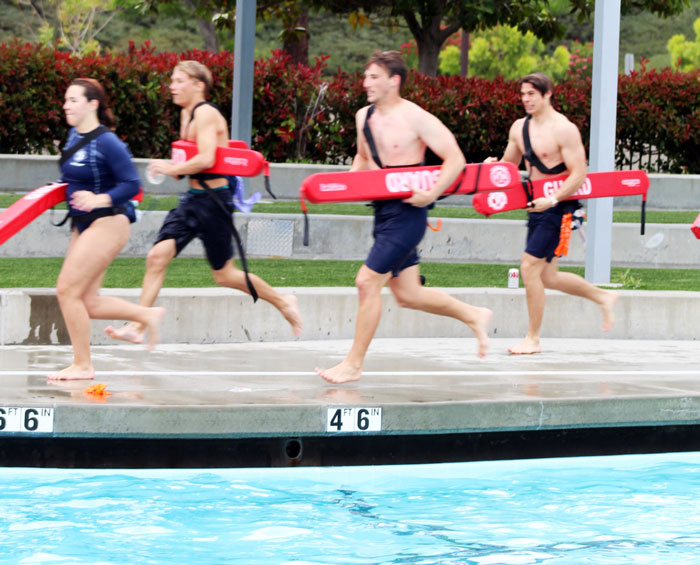
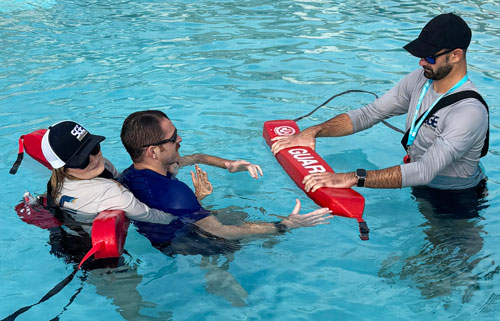
Nawracaj said they hire about 400 waterpark employees annually, and about 200 of those are lifeguards. “All of our water safety staff are certified instructors with StarGuard, and we do all our own training in-house. We start training lifeguards in late February usually,” partnering with a local high school. And while all employees receive training at the beginning of the season, lifeguards have classes throughout June for new hires, as well as “required in-service hours throughout the season.”
When some positions throughout the industry became easier to fill post-pandemic, lifeguard shortages remained an issue for many. Juliene Hefter is executive director and CEO of the nonprofit Association of Aquatic Professionals, and she explained that while many facilities have returned to “somewhat normal,” they’re still hearing of facilities that can’t open all their pools or have to shorten seasons due to a lack of appropriate staff.
Many facilities experimented with different strategies to attract lifeguards, such as paying for their certification training and paying them wages during training. “I genuinely believe that strategies implemented over the past four to five years will continue throughout the industry,” said Hefter. She believes lifeguards should be considered as first responders, and then “we’ll begin to see more individuals looking at these jobs as career builders and not just summer jobs.
“Our industry has seen significant increases in hourly wages, bonuses, and even benefits,” continued Hefter, who said that bonuses and flexibility in scheduling can “improve the chances of obtaining great staff.” She explained how some organizations offer a per-hour bonus if the staff member works a certain number of hours. For example, if they work 250 hours during the summer they get an extra 75 cents per hour worked. “We also find that the chance for advancement can be a way to entice guards to stay or come back.”
And she said they’ve seen a significant increase in older workers filling gaps, especially in facilities that have large lap swimming populations. “Many senior guards are willing to work as lifeguards to ensure the facility can meet the community’s needs. And, with the economic challenges, we’re seeing more seniors return to the workforce.”
Establishing creative partnerships can help too, and Hefter mentioned a collaboration in her hometown of West Bend, Wis., between the YMCA, parks department, and school district. During the school year, the parks department uses the school district pool for swim lessons and water aerobics. During the summer, the department operates a manmade lake within one of the city parks. “To ensure they can staff it appropriately, they’ve worked with the YMCA to offer flexible hours to the lifeguards and staff, and the opportunity to work there during the school year and the summer.”
As far as attracting potential staff, Hefter said they’ve seen more advertising on social media, including TikTok, Instagram and videos, as well as old-school strategies like advertising and job fairs. “It takes a lot more creativity to entice young adults that these types of positions will be great for their future careers and ability to get hired in other areas.”
Lindsay Mondick is director of aquatic strategy at YMCA of the USA. She agreed that workforce availability of lifeguarding has remained relatively steady post-COVID, but added that “public and private schools still face potential closures or reduced hours due to staffing gaps.” She said lifeguards today prioritize workplace flexibility, recognition and growth opportunities, and a positive team culture.
Lynne Thompson is senior director of recreation and well-being at the University of Illinois, Chicago (UIC), which offers a wide range of programs, services, and facilities to students and staff. She said they experienced staffing shortages post-pandemic, largely due to transitions as staff moved on to promotions, “which I fully support as a champion of career development.”
Thompson said at one point they went from 17 full-time staff down to 12, but have since grown to 19 and are “building a new, dynamic team. That said, I don’t believe things will return to what they were; the industry has shifted. Many universities, including ours, have had to transition graduate assistant roles into full-time coordinator positions, which impacts the experience level of our entry-level staff. While we’ve been fortunate to hire some with that background, others are coming from different sectors and still face a learning curve adjusting to the higher education environment.”

UIC has two facilities with pools, which Thompson said require lifeguards. “We typically train and certify them in-house since very few students come to us already certified. Most of our interest comes from international students, and while we sometimes lose guards in the summer to higher-paying jobs with the Chicago Park District, our certification program still allows us to maintain a strong learn-to-swim program year-round.”
Other health and fitness offerings at UIC also require certified personnel, according to Thompson. “For students, we offer in-house training programs using the ACE Personal Training and ACE Group Fitness curricula to help them get started while they work toward national certification. Non-students are required to already be certified or have relevant experience, depending on the program area.”
Thompson said they employ around 300 student employees and actively recruit from the student body, “especially targeting freshmen to retain them over multiple years. Many students do return after breaks or internships, and while we focus heavily on ongoing recruitment and onboarding, our ultimate goal is to ‘lose’ them to graduation.” Some students turn their work in recreation and fitness into full-time careers, which Thompson loves. “While it’s a smaller number since UIC doesn’t offer a sport management degree, those transitions do occur, and we fully embrace and support them.”
UIC offers a robust student development program, according to Thompson, focused on “building real-life and career-ready skills beyond their day-to-day job tasks. While we have recognition programs like Employee of the Month and Years of Service awards, what truly attracts and retains our student employees is the meaningful investment we make in their personal and professional growth.”
To attract staff, Thompson said they leverage their strong relationships with other campus recreation professionals across the state and region and utilize platforms like NIRSA and Bluefish Jobs for postings. “When it comes to retention, our focus is on creating a psychologically safe environment where staff feel supported, valued, and part of a work family. We prioritize opportunities for learning, growth, and creativity, which helps foster a strong sense of belonging and commitment.”
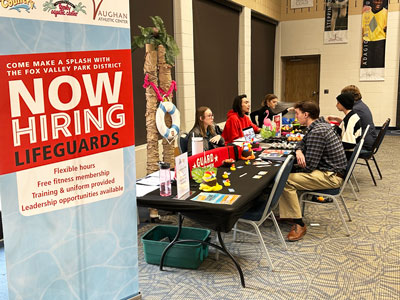
The Fox Valley Park District serves 236,000 people in three Illinois communities. And during and after the pandemic there were staffing shortages across the board, according to Kelly McGloon, human resources coordinator with FVPD, “including the lifeguard shortage, which only allowed us to open one of our two outdoor pools during the 2022 season.”
Following the pandemic there was a decline in younger applicants and first-time job-seekers, said McGloon. “Ironically, retirees were coming out of the woodwork looking to re-enter the workforce. Some of our most productive, enthusiastic team members are senior members of the community who decided to come out of retirement.”
But things have now gotten back to normal. “There has definitely been an increase in applicants in recent years. This year specifically we’ve been working closely with local organizations—including schools and other park districts—who are looking to refer applicants.”
Approximately 75% of seasonal employees return to FVPD each year, and McGloon said they have a history of employees who start their career as seasonal or part-time employees and progress into full-time roles. “Our goal is to transition with our high school staff through college and hopefully see them return to us in a full-time position after graduation. Many employees who have interned with (us) transition to permanent employees with the district.”
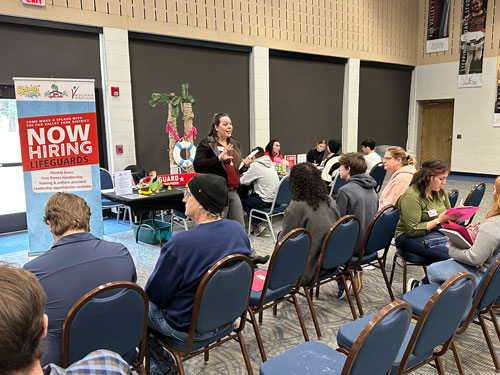
McGloon said they increased benefit incentives to attract applicants, including memberships to different facilities within the district. “Internally, we regularly promote our referral program, encouraging current employees to spread the word.” A job fair is held each March to fill around 350 seasonal positions, and “We attend local high school and college job fairs to promote our opportunities. We post all available jobs internally and externally on the FVPD website and Indeed, along with job boards at the Illinois Park and Recreation Association, and local high schools and colleges.”
Jennifer Gilburg is director of health and wellness strategy at YMCA of the USA. She said that Ys use a variety of recruitment strategies, and “One particularly effective approach is identifying potential talent from their existing member base.” She explained that group fitness instructors often spot regular class participants who show potential, which might include consistent attendance, demonstrating good form and rhythm, following musical cues well, and showing enthusiasm and a passion for fitness. “Even if these members don’t yet hold a group fitness certification, their familiarity with the class format and their energy can make them ideal candidates for training and development.”
Two of the most prominent jobs in the health and fitness space that require certification are personal training and group fitness instruction, according to Gilburg. “To ensure safety and effectiveness, personal trainers typically need certification from a nationally recognized organization like ACE, NASM, or ACSM.” And for group fitness instructors, certification ensures they understand group dynamics, cueing techniques, and how to modify exercises for different fitness levels.
“To support local YMCAs and their staff, Y-USA offers structured learning journeys that help employees achieve the necessary certifications in these areas,” said Gilburg. This training is designed to: provide foundational knowledge and practical skills; align with national certification standards; offer mentorship and hands-on experience; and foster a consistent, high-quality experience across all Ys. “This approach not only helps staff grow professionally but also ensures that members receive safe, effective and engaging fitness experiences.”
Following the pandemic, Gilburg said that Ys adapted their strategies to attract and retain staff in response to workforce shortages, including adjustments to compensation and benefits. And she said it’s common for Ys to develop part-time or seasonal staff into full-time roles. “This approach reflects the Y’s commitment to nurturing talent, promoting from within, and building career options rooted in its mission and values.”
She said many Ys actively identify high-performing part-time employees and provide them with opportunities to grow into full-time positions. This includes offering mentorship, leadership training, and access to certification programs. “Whether someone starts as a lifeguard, camp counselor, or group fitness instructor, there are learning journeys that can support individuals in gaining the skills and experiences needed to advance into supervisory or full-time roles in health and wellness, youth development, and operations.”
Other strategies for attracting and retaining top talent include “community engagement and word of mouth,” according to Gilburg. “Ys often leverage their strong community presence by encouraging current staff and members to refer potential candidates. Word-of-mouth remains one of the most effective recruitment tools.” And offering part-time, seasonal and hybrid roles “can attract candidates who need flexibility, such as students, parents, or those re-entering the workforce.”
Platforms like Instagram, Facebook, and LinkedIn can help reach a broader and more diverse audience, said Gilburg. “Highlighting staff stories, workplace culture, and career growth opportunities can make these posts especially engaging.” Additionally, participating in local job fairs and partnering with schools, colleges and certification programs helps Ys connect with job-seekers.
The nonprofit American Camp Association has a mission of “Empowering camps to create quality experiences that build a world of belonging and growth.” Henry DeHart is interim president and CEO of ACA, and he said they’re hearing that many camps have been more successful this year in finding summer staff. “This may be in part because of more interest in working at camp, but it also could be related to camps adjusting their practices around staff recruitment, pay, and scheduling post-COVID.”
DeHart mentioned a new staffing norm emerging since the pandemic, with camps seeing a higher no-show rate for staff contracted for the summer, and more staff deciding to leave mid-summer. “So, camps are required to over-hire in anticipation of these trends. We’ve also heard that camps continue to have a more difficult time filling positions that require specific skill sets or certifications, such as lifeguards, trained ropes instructors, boating instructors, etc.
“Fortunately, many people—especially parents—recognize the value of summer camp jobs for their young adult children,” continued DeHart. “Camp jobs provide a unique opportunity to develop skill sets for future careers, leadership skills, communication skills, possible school and internship credit, and more.”
Gilburg believes that creating a positive, mission-driven workplace culture where employees feel valued and recognized goes a long way in retaining staff. “Regular appreciation events, shout-outs, and growth opportunities help build loyalty.”
Added Nawracaj, “I think it’s important to maintain a fun environment while also educating people. For many of our employees it’s their first job ever. You constantly have to find new ways to motivate people and keep them going.” RM