

Aquatic facilities are among the most valued community assets, offering everything from swim lessons and water aerobics to a simple afternoon of splashing and swimming. But to ensure this kind of success over the long term, it’s important to work with an experienced team to make the right design decisions.
Community Needs & Wants
Your aquatic facility won’t draw in members of the community if it’s not designed to meet their needs. That’s why it’s important to start with data, rather than simply making assumptions. A professionally led feasibility study is the foundation of this process. It evaluates demographics, usage patterns, and wellness priorities, helping you make informed decisions about the size, scope, and features of your aquatic space.
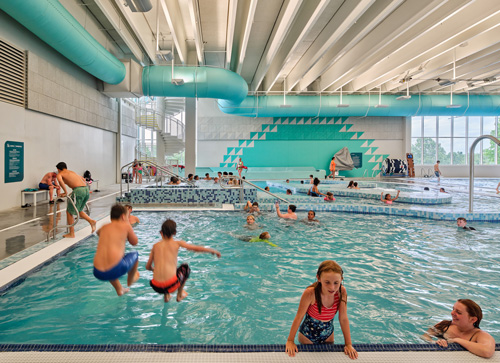
Equally important is community engagement. Your design team should work to gather community input, not just from competitive swimmers and swim teams, but from families, caregivers, and seniors who can share the kinds of aquatic amenities they’d like to see. That could include zero-depth entry play areas for younger children, poolside climbing walls or cliff jumping platforms for the more adventurous guests, and lazy rivers appealing both to guests seeking relaxation and to those interested in the therapeutic and fitness benefits of resistance walking. And, of course, dedicated competitive lanes and support spaces can still be prioritized for local athletes and swim teams.
Early alignment between community desires and budget realities is key. Program and amenity input provides valuable insight into right sizing the overall facility footprint and identifying the number, type, and even the water temperature.
Multigenerational Impact
A well-designed aquatic facility serves users of every generation and ability. Your design team should work closely with you, ownership, and operations to best understand the aquatic program offering, enabling a program that maximizes reach and impact.
Flexibility in design is just as critical as thoughtful planning. Successful aquatic facilities are designed to adapt to varying use patterns, scaling aquatic operations throughout the day, season, and year. This scalability not only ensures efficient use of space and resources but also enhances the guest experience by delivering the right amenities at the right time.
For More Information
Water Technology Inc.:
920-887-7375
www.wtiworld.com