


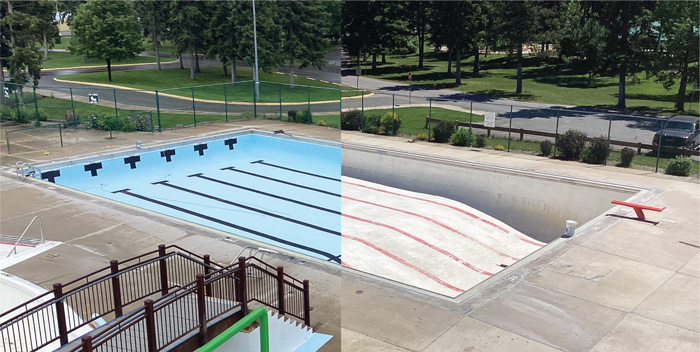
Many older municipal and commercial pools face growing challenges: leaks, surface breakdown, and water loss that threaten daily operations and safety. With limited budgets and long timelines for new construction, facility operators often feel trapped between doing nothing or starting from scratch. But in many cases, the best solution lies somewhere in between. Renovation approaches like applying a commercial membrane system can restore watertight integrity, protect aging structures, and extend the life of a pool without the disruption or cost of a full rebuild.
Q
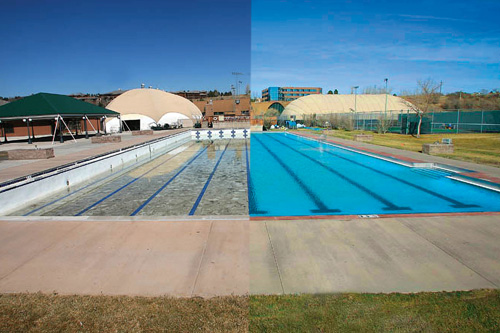 What are the most common causes of water loss and damage in older commercial pools, and how can they be addressed?
A
Most commercial pools built decades ago used concrete as the primary construction material. Concrete is durable, but it is naturally porous and allows water, especially acidic water from pool chemicals, to seep in over time. This can lead to loss of alkalinity, resulting in cracks, spalling, and leaks. Once leaks start, water can wash out soil around the pool shell, causing the structure to settle and crack further. Expansion joints may also fail, allowing even more water to escape. The result is a cycle of deterioration that can quickly make a pool look beyond repair. Fortunately, many of these issues can be addressed effectively with the right strategy.
Q
How does a membrane system help solve these problems?
A
A membrane system acts like a continuous waterproof barrier, covering the interior of the pool to stop leaks and protect the existing structure. It starts with felt underlayment that helps inhibit bacterial growth and adds comfort for patrons. The membrane itself is fitted and heat-welded on site, creating a smooth, watertight surface that conforms to the pool’s unique shape and features. This approach stabilizes the pool by isolating the water from the concrete shell, preventing further damage from chemicals and freeze-thaw cycles. Before the membrane is installed, any loose concrete is removed and patching is done where needed. By preserving the existing shell and infrastructure, a membrane system can transform an older pool without the cost and disruption of a full rebuild.
One important consideration for commercial operators is membrane thickness. Commercial membrane systems are typically manufactured with a minimum thickness of 60 mil, ensuring durability and puncture resistance in high-traffic and chemically demanding environments. This thicker membrane stands up to constant exposure to chlorinated water, UV rays, and frequent cleaning, making it a solid choice for municipal and commercial pools.
Q
What other benefits do membrane systems bring to pool operators and patrons?
A
Membrane systems offer several operational and safety advantages that matter in busy commercial facilities. Slip-resistant textures are often available, helping improve safety around steps, shallow areas, and entry points. Their non-porous surface resists algae growth and makes cleaning easier, reducing downtime and maintenance costs. Because membranes are heat-welded during installation, they also allow operators to incorporate design changes like benches or interactive water features. This flexibility means operators can update their pool’s look or functionality without dealing with the complications of connecting old and new concrete.
Q
Are there important considerations before starting a renovation with a membrane system?
A
Yes. While a membrane system restores watertight integrity and enhances the pool’s surface, it does not fix underlying structural issues like severe foundation movement or major cracks that affect the pool’s overall integrity. Operators should have the pool’s structure thoroughly inspected and repair any significant problems before starting a membrane installation. Because the seams of the membrane are essential to its watertight performance, it is critical to work with experienced installers who know how to achieve proper heat-welded seams. For budget-conscious operators, planning the project in phases can also help manage costs and allow the pool to stay open as much as possible during the process.
For More Information
RenoSys: 800-783-7005
www.renosys.com