



By Anne-Marie Spencer
More than ever, data is a critical component in the defense of municipal budgets. Park and outdoor spaces, among others, fall under a microscope when budgets fall short and infrastructure needs are high. However, understanding data and how to assemble it into a story that measures the effectiveness of the space can often help defend and secure the necessary funding for operation and expansion.
Every department, including recreation services, needs data to demonstrate that resources are being used effectively and efficiently. Beyond the spend, parks can use data to help quantify the economic contributions of parks, such as increased property values for nearby homes, attraction of tourism, and reduced healthcare costs due to increased physical activity. Data can also help demonstrate the positive social and health outcomes associated with parks, such as improved physical activity levels, reduced healthcare costs, and enhanced overall well-being. Additionally, data-driven insights allow agencies to move beyond intuition and make informed decisions about development, programming, and resource allocation to optimize impact, address increasing demands, foster equity, and build trust and transparency with the community.
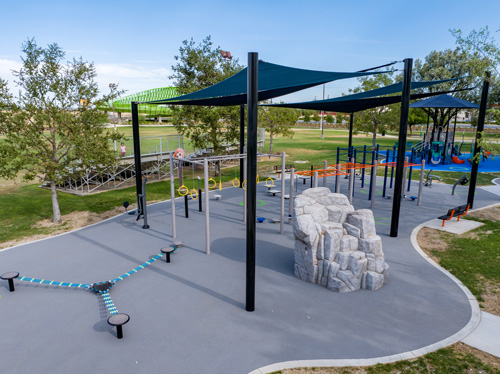
As a result, data transforms budgetary requests from mere proposals to data-backed justifications that are more likely to earn executive approval and support from stakeholders. One way to get this data (in storytelling format) for outdoor play and fitness spaces is through the National Demonstration Site Program.
A National Demonstration Site (NDS) is a location, often a playground or outdoor recreation area, that serves as a model for best practices in design and implementation, particularly those promoting physical activity, inclusion, and nature play. These sites are recognized for incorporating evidence-based design principles and have the opportunity to receive data to demonstrate the community impact with no added cost or data collecting effort by the department. They are designed according to established research-backed guidelines for creating effective and engaging outdoor spaces, focus on supporting health-related initiatives, such as encouraging physical activity, and receive recognition, bringing attention to the site and the community it serves, which in turn attracts users.
The data collected at NDS provides valuable information about the impact of the space. As an example, one National Demonstration Site had a focus on increasing intergenerational activity by providing adult fitness equipment adjacent to areas for children of all ages to be active. Research already shows how multigenerational outdoor spaces provide an important source of physical activity and social engagement for all community members. To help defend this particular space and lay groundwork to expand the same infrastructure to additional parks in the system, data was needed to show its benefits, engagement and satisfaction rates, and distance people traveled to reach the specific offering, among other data points.
Through the National Demonstration Site report process, the department was able to demonstrate the need through a variety of data points. Regarding satisfaction, 100% of user respondents were satisfied with the site, and all of them planned to return. When examining physical health and lifestyle behaviors, 98% of those who used the space were active, with 81% reaching the recommended level of moderate to vigorous physical activity, showing the space was a valid component in increasing physical activity among users. Nearly 70% had to travel more than a mile to access the park, with 23% traveling more than 5 miles; 76% used a personal car to reach the site, demonstrating the opportunity to reduce travel time, cost and environmental impact if similar sites were in closer proximity to these travelers.
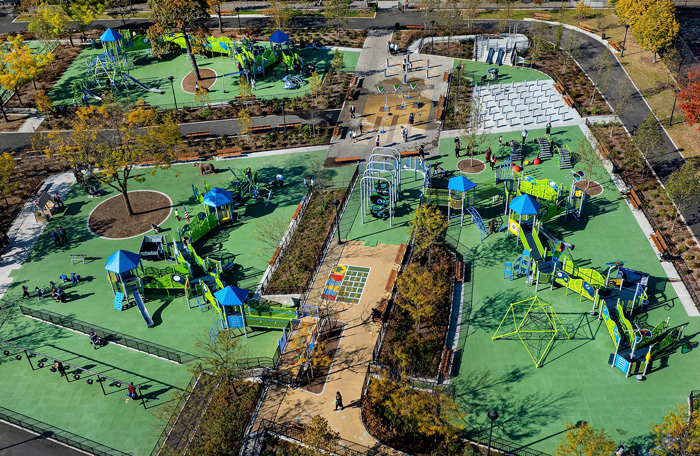
One of the best report statistics to align the department’s goals was the mix of user ages, with an almost even split between adults and children/adolescents. Attracting a multigenerational group to a park can be challenging, and the fact that this site demonstrated that ability, along with activity levels and satisfaction rates helped them validate the effectiveness of the site. Research also shows that individuals who spend more than 120 minutes outside in nature within a seven-day period can experience well-being benefits, which, taken together with the physical activity benefits, helps establish that this park investment can also help reduce healthcare costs over the life of residents. (Data documenting the value of this effect on healthcare is another available datapoint for NDS.)
In today’s landscape where grant funding is increasingly uncertain and competitive, data is no longer a “nice-to-have” for park and recreation agencies seeking to justify investments and secure resources; it’s a fundamental tool for success. By strategically collecting, analyzing and using data, agencies can demonstrate their impact, optimize resources, build credibility and secure the funding needed to create and maintain vibrant, equitable parks for all. RM
ABOUT THE AUTHOR
Anne-Marie Spencer is the corporate VP of marketing for PlayCore, working with both their Center for Outreach, Research, and Education, and the PlayCore family of brands. For more information, visit www.playcore.com.