

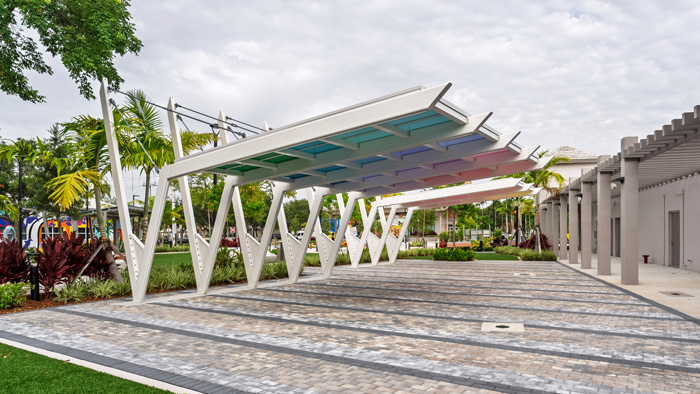
Shelters and shade structures in parks, playgrounds and outdoor sports venues have, in several ways, become essential to the overall health and experience of visitors. When strategically placed throughout the outdoor space, such structures not only provide protection and relief from the sun’s harmful UV rays, but also reduce temperatures and enhance the overall enjoyment and usability of outdoor spaces.
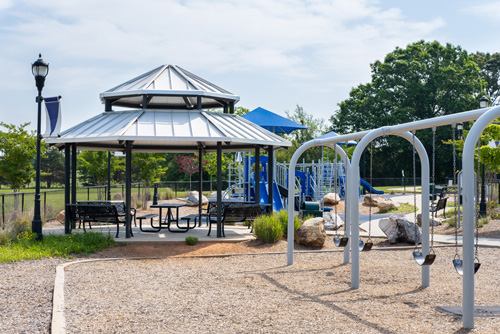
Shade structures have evolved over time. “The shade protection value, the UV protection, is one of the main reasons these have become so popular over the years,” said Jay Rivera, vice president of sales for a Dallas, Texas-based design/build fabric shade structure manufacturer.
“Shade structures are a safe and comfortable environmental add-on for the public, especially children and vulnerable populations, allowing them to stay longer and engage in activities without the risk of sun-related health issues,” said Natalie Winters, marketing manager for an Evansville, Ind., manufacturer. “But shade structures do much more than just offer protection. They enhance the entire visitor experience.”
Adding a shelter or shade structure can dramatically improve how a public space is used, and when, said Sean Schmeiser, sales manager for a shelter systems designer and manufacturing company with corporate headquarters in Holland, Mich. “These structures provide vital protection from not only the sun, but also wind and rain, making parks and recreational areas more comfortable and usable year-round. Whether it’s offering a shaded place to sit during a game, covering a picnic area or creating a break spot along a trail, shelters invite people to stay longer and return more often. They also support programming—like events, sports leagues or school outings—by offering a reliable space for gathering regardless of the weather. From a planning standpoint, shelters help communities get more out of their public spaces.”
Adding a structure creates a more comfortable, accessible environment for visitors, athletes and families by offering relief from the sun, rain and heat. “It encourages longer stays, boosts community engagement, and elevates the overall appeal of the space. Structures are built to last, combining form, function and durability for parks and sports facilities of any size,” Winters said.
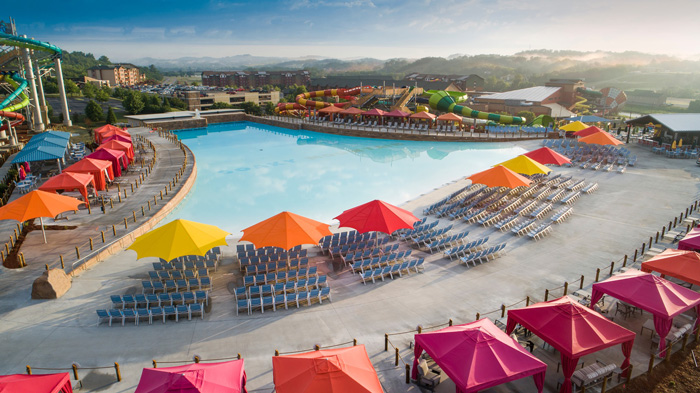
Shade structures also can significantly lower the temperature of the space they cover, making it more comfortable to stay for extended periods of time, said Jennifer Graves, marketing supervisor with a Holland, Mich.-based designer and manufacturer of park architecture. “Outdoor spaces can also be utilized for more activities that would otherwise be kept indoors,” Graves explained. “In addition, structures will help keep your guests relaxed and encourage more time outdoors, offering many health benefits, functional advantages, and contributing to sustainable and more attractive environments. Options include dugouts, bleacher canopies, scoring stands, concession/dining pavilions, restroom canopies, etc.”
Putting a shade structure in a park or at a school—any type of facility where you don’t have shade—adds huge value to people that are going to be sitting underneath the structure, adding temperature reduction, Rivera said.
Key Considerations
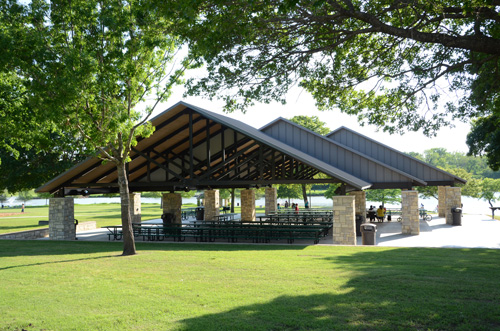
When selecting a shelter or shade structure, it’s important to consider functionality, location, durability and aesthetics, Winters explained. Stakeholders should think about how the space will be used—whether it’s for spectators, play areas, or picnic zones—and choose a design that supports those needs. Material quality is also critical; you want a structure that can withstand the elements and require minimal maintenance.
Most importantly, make sure to consider all of these factors up front. “One of the challenges with shade structures in sports parks is that when we go into existing facilities there are a lot of unknowns,” Rivera said. “For one thing, people have built courts in these beautiful sports parks. It is hard for us to tell them we are going to come in with big equipment and we are going to rip up courts and sidewalks around the area in order to install these structures. But that is part of the construction process. What we typically suggest to clients is ‘early and often.’ We want to get in there before you are building the sports park because with these structures, we are bringing in big equipment to install them. If it is a new facility we would optimally be involved in the designing and planning stage going into the project. We can work with designers, architects and construction contractors to get these structures in prior to all the flatwork, and all courts and everything going in.”
This is not to say you can’t go into existing facilities, Rivera noted, “but it is a longer construction process, with much more detail put into the planning with the client to get these structures in while not disrupting their whole facility.”
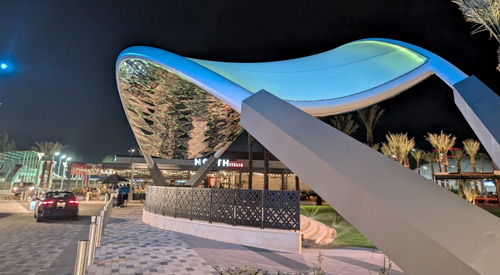
It’s all about planning, Rivera said. “How do we execute the work? In our case, we suggest putting a whole plan together, from the designing and engineering all the way to construction.”
Graves pointed to other considerations: “Structures can be engineered to order. And standard shelters can be modified to fit specific needs. Our company specializes in designing a structure to fit a specific site. We have a network of representatives across the country that can guide stakeholders through the process of selecting the right shelter for your site.”
When considering your structure options, you need to ask yourself what the purpose of your structure is, how much space you have, and what budget you’d like to stay within. Each shelter can be designed to complement the surrounding environment. “Our in-house design team will create drawings and budget pricing by partnering with the client to realize their vision,” Graves said.
Shade structures vary greatly in both use and design. Creating the perfect structure will save the customer both time and money. “We are constantly evaluating new products that can be incorporated into a design, giving clients more options,” Schmeiser said.
Think about how the structure will be used. A shelter that’s intended to cover picnic tables will have very different requirements from one that’s shading a playground or covering the bleachers at a sports field. Once the function is clear, consider the size and footprint—how much space is available, and how many people will be using the shelter at once.
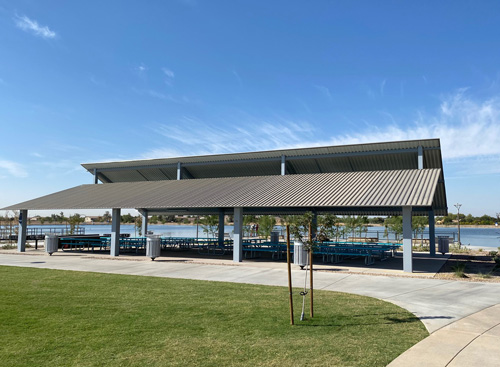
Material selection is another major decision, Schmeiser noted. Steel is often chosen for its durability and low maintenance, while fabric shade options may be preferred for their light weight and ability to cover large areas economically. In any case, materials and finishes should be chosen with the local climate in mind, especially in regions with high winds, snow accumulation or intense sun exposure.
Budget and installation timelines will influence design choices as well, Schmeiser said. “Some projects benefit from modular systems that install quickly, while others may allow for more customized, architectural options. Lastly, the shelter should feel like a natural part of the space. Choosing a style, color and form that complements the surrounding architecture or landscape helps the structure look intentional rather than added on. And of course, it’s essential to ensure that all designs meet local codes and accessibility standards, including ADA compliance.”
Enhancing Aesthetics
Functionality and visual appeal should go hand-in-hand. “Shade and/or structures can serve as focal points, adding color, shape and style to any environment,” Winters said. “With different styles of umbrellas, many different sizes and an unlimited amount of colors, you can create a bold visual identity for parks, campuses, sports facilities and public spaces—turning ordinary areas into inviting, attractive destinations. Many products can even be custom-branded with your logo or colors to make an even bolder statement.”
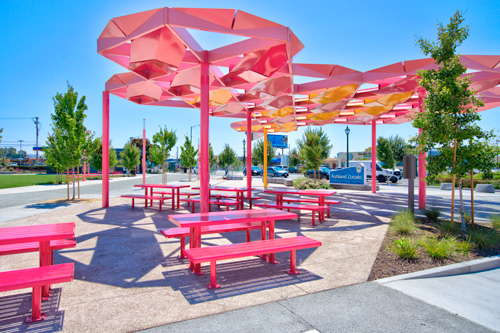
When designing a space, there is a lot of collaboration—working with a client or an architect to bring an organic look to a facility, be it a park, a playground or a sports facility, Rivera said. “These structures can be designed in many ways. I’m not just talking about four poles and shade fabric. You can do elaborate designs or very basic coverages as well depending on what the budget is. There are a lot of options with colors, with designs and with fabrics.”
Shelters aren’t just practical—they can shape how a space looks and feels, Schmeiser said. “In fact, the right shelter design can act as a focal point, creating visual interest and giving a park or facility a distinctive identity. With modern manufacturing and design capabilities, shelters today can include bold rooflines, intricate cutouts, creative color schemes, and finishes that range from sleek and contemporary to warm and natural.”
By selecting a design that aligns with the surrounding environment—whether it’s echoing nearby architecture or blending in with nature—planners can create a cohesive, inviting space.
“Even subtle details, like the curve of a roof or the color of a column, can influence the atmosphere of a park and elevate the user experience,” Schmeiser said.
There are a few important caveats to consider: Ensure the structure meets local building codes and is designed for its intended use and capacity. It’s also wise to implement a reservation system, establish clear rules for usage, and consider liability or insurance needs.
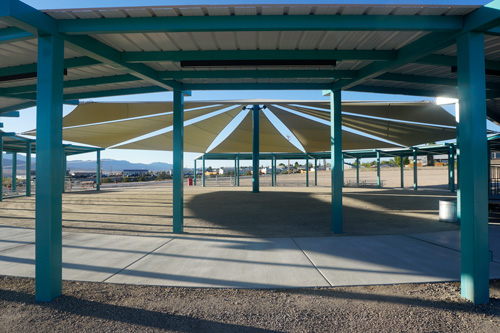
“A beautifully designed structure will enhance the overall look of a property, drawing in more visitors and increasing property value,” Graves explained. “Structures can be rented for community events and gatherings, host concerts and fundraising events, house farmer’s market vendors, and cover outdoor dining. Protection from the elements even allows for year-round use in some areas, extending profitable seasons. Above all, the right structures enhance engagement, promote tourism and bring communities together.”
Many municipalities, schools and park departments rent out their shelters to bring in additional revenue, Schmeiser noted. “These structures often host birthday parties, reunions, community events and more. To support rentals, the shelter should be equipped with basics like ample seating, trash receptacles and clear signage. Easy access to parking and nearby restrooms also enhances the appeal.”
It’s important to manage rentals thoughtfully, Schmeiser added. “Clear policies should be in place around cleanup, noise levels, time limits and general use. Some communities implement booking systems to streamline reservations and set expectations. Maintenance is also key—keeping the shelter in good shape between events ensures a positive experience for both renters and the broader public.”
“One of the things that we look at while working with clients is, is there a return on investment for them?” Rivera said. “If that is what they are looking for, we can design areas within facilities that can be rented out, for parties, for gatherings. Or, if it is in a sports facility for pickleball or tennis, all these ongoing events under cover could be a definite return on investment.”
Rivera’s company has responded to the pickleball trend. Shade structures can support pickleball or tennis, Rivera noted. “We have been fortunate and successful in working in this market,” he said.
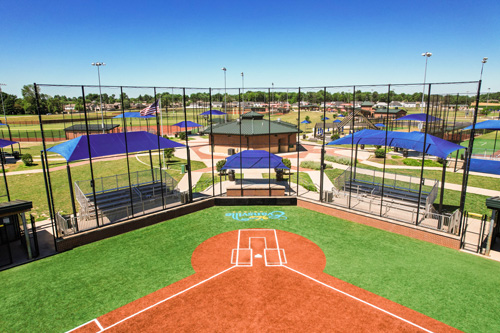
In the past four years there has been a huge surge of interest in the sport. According to Pickleball USA, pickleball is the fastest-growing sport in the U.S. It has seen significant increases in participation, with a 45.8% increase in 2024 alone. In 2024, 19.8 million Americans participated in pickleball.
Rivera pointed to a structure at the U.S. Open Pickleball championship courts in Naples, Fla. “They use it on a daily basis for five-court coverage. In this facility there are about 30 open courts. This is an example of where a shade structure can provide ROI, when they rent out those courts that are covered.”
One championship court under the structure has bleacher seating, Rivera said. “In the first year, attendance was very low because it wasn’t covered. In the following year the court was covered and they had a massive increase in spectators because there were bleachers that were covered. This was a huge positive for the U.S. Open, and that spurred inquiries about covering courts.” The project was a partnership between Collier County and U.S. Pickleball Association.
Covering courts, such as pickleball, can be difficult because these are very large structures, large spans, Rivera said. “We can’t have columns in the middle of the courts. So we are doing 120-foot free spans. Those structures can get expensive but we are seeing a surge of people wanting to do this. It took time for stakeholders to look at this from a funding standpoint, but clients are finding ways to meet the expenses because they realize the importance of covering courts and making it comfortable for people when they are playing in the summer in the sun belt—where temperatures can increase up to 100 degrees inside.”
Light & Power
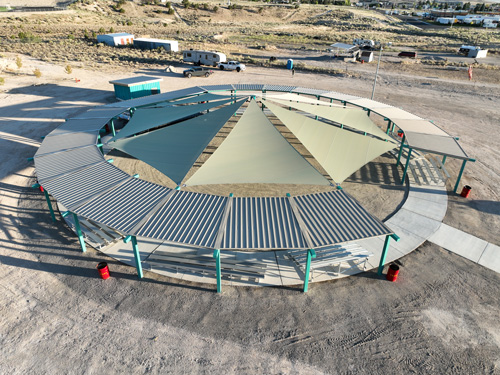
If you want to level up your structure with lights or power to support things like outdoor concerts, it is not difficult to handle in the design phase, Rivera said. “What we do with our engineering and designing is to integrate the ability to run power and electrical sound systems—whatever the client is looking for—into the structures. So there are no exposed wires on the outside of the structure. We will facilitate the structure, the attachments, whatever is needed for whatever they are trying to hook up to the structure in the design.”
Adding power or lighting is relatively simple if it’s part of the original shelter design, Schmeiser agreed. “Many pre-engineered steel structures can be manufactured with built-in conduit, allowing for easy electrical wiring during installation. This opens the door to a wide range of enhancements, from overhead lighting to power outlets for events or charging stations.”
If the shelter is already installed, retrofitting is still possible—but it may involve extra steps like trenching for electrical lines or coordinating inspections and permits, Schmeiser explained. “Partnering with an experienced shelter provider or installer is the best way to ensure everything is up to code and that the work is done efficiently. In the end, adding power can greatly extend the usefulness of a shelter, especially for spaces that see frequent evening or weekend use.”
Fast-Forward
Looking forward, Graves noted new varieties of roofing types to fit specific needs and aesthetics, including laser-cut panels. Designed to create unique shadows and dappled shade, laser-cut designs mimic the feeling of sitting under a tree, providing creative designs on the ground throughout the day.
Polycarbonate is another type of roofing option, in this case a solid roof that allows sunlight to come through to utilize natural light in a covered space, Graves said.
Living roofs are yet another unique option, creating a garden atop the shelter, increasing its impact by both providing shade and weather protection as well as helping to decrease the heat-island effect by incorporating more greenery and reducing reflective surfaces.
Whether you choose one of these innovative shelter options or go with something simpler, you’ll be adding comfort, sun protection, and a beautiful architectural element to your site. RM
Story sponsored by:
