


By Iannick Di Sanza
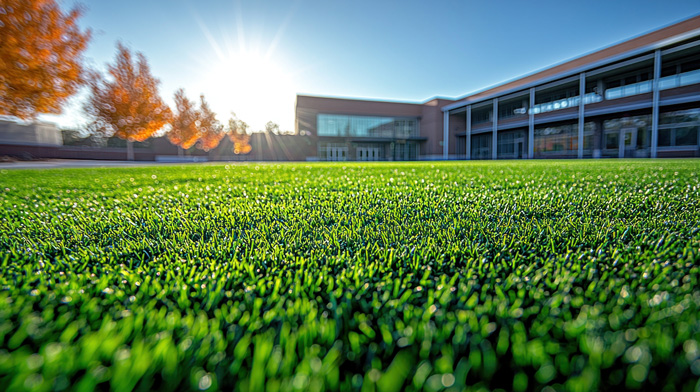
A recent study looking at PFAS in turf fields installed at two Northern California high schools found they contained no detectable PFAS above State and EPA soil screening levels. At one of the fields, no PFAS were detected at all.
The study, carried out at a time when PFAS (per- and poly-fluoroalkyl substances) remain a topic of public and regulatory concern, was commissioned by FieldTurf.
Led by environmental consulting firm Gradient, the PFAS research is intended to provide organizations and communities with the facts and transparency needed to navigate conversations about playing field options.
“We’re here to help communities make informed decisions with real data and expert support. For more than 25 years, we’ve invested in doing things the right way, and this study is a powerful validation of that approach,” said Darren Gill, FieldTurf executive vice president.
Gradient’s study of PFAS compounds used U.S. EPA Method 1633 to evaluate 40 individual PFAS compounds in these fields before and after the construction of new fields. One field was originally natural grass, while the other was an older synthetic system with SBR (styrene-butadiene rubber). Both high schools replaced their aged surfaces with new fields, installed using natural infills like cork, sand and olive pits. Testing results showed one new field with no detectable PFAS compounds, and trace levels at the other new field.
All testing results were found to be below EPA and/or U.S. State soil screening limits and/or within normal background ranges.
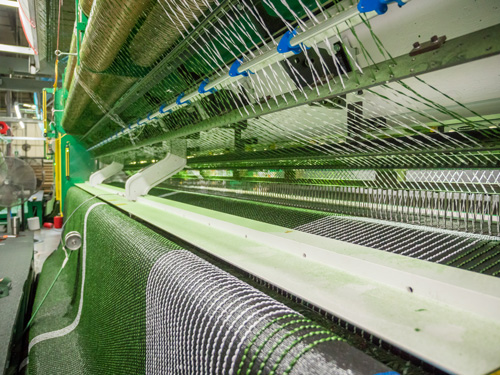
The results also highlight the progress made through material innovation and purpose-led design, with no detectable PFAS found in recently extruded fibers and only trace levels present in legacy materials. These outcomes reflect an ongoing transition in fiber production, providing further proof that synthetic turf systems can perform at the highest level and encourage athlete safety. These findings should encourage even greater product leadership and sustainable innovation among top manufacturers across all sports surfacing industries (e.g., turf, track, courts, indoor, etc.).
A Closer Look at PFAS in Natural Grass Playing Fields
Natural grass is not immune to the presence of PFAS. In fact, a 2024 self-funded white paper by environmental consulting firm Woodard & Curran titled “PFAS in Massachusetts Background Soils” assessed the background occurrence of PFAS in soil. This study analyzed 100 surface soil samples across undeveloped sites in Massachusetts, finding measurable concentrations of PFAS in 88% of samples—nine PFAS compounds were detected, and more than half exceeded the strictest state soil screening levels. This study, and many others, show that atmospheric transport of PFAS has the potential to impact soil, even in remote areas.
The results of this background soil study are consistent with Gradient’s high school field study, which found that prior to replacement, the natural grass field at the Northern California high school contained higher PFAS levels than the existing synthetic turf and the two newly installed replacement systems. This reinforces the finding that natural grass fields may contain higher levels of these PFAS compounds.
“At every level, stakeholders have countless factors to evaluate when considering the future of their athletic facilities,” Gill added. “We hope that the results of this study can be helpful when it comes to determining what kind of surface will provide them with the best combination of performance and safety.”
Extensive Testing & Expert Consultants
In addition to the Gradient study, FieldTurf has conducted extensive lab testing across its key products to identify possible PFAS compounds that could be present as pre-installation ingredients. The accredited third-party lab tested products for more than 70 PFAS compounds, with results showing:
- No key products contained detections above U.S. EPA screening levels.
- Most PFAS detections were below reporting limits or could be attributed to lab background.
- A simulated worst-case exposure test (TOP assay) also had no detections above U.S. EPA screening levels, confirming product integrity.
As leading innovators in sports surfacing continue to make significant investments in research, laboratory testing and third-party consultation, communities considering synthetic turf systems will find themselves increasingly assured that they are grounded in science and transparency. RM
ABOUT THE AUTHOR:
Iannick Di Sanza is director of marketing at Tarkett Sports, a world leader in sports construction and surfacing. FieldTurf, a part of Tarkett Sports, specializes in the innovation and production of synthetic turf solutions. Both new fields in the study use synthetic turf manufactured by FieldTurf. To learn more, visit fieldturf.com.