

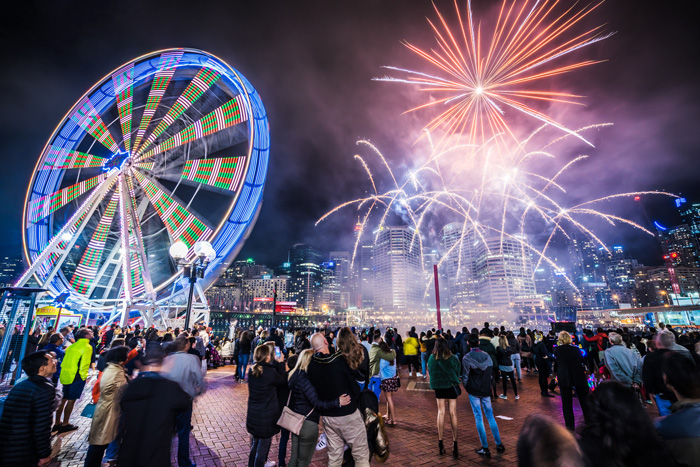
On the day of a well-executed event, many attendees won’t understand the time, thought and effort that went into it. They just know they’re having a great experience. Following are some proven approaches from producers of events big and small on how to pull off increasingly successful events and festivals that keep patrons safe, having fun and more interested than ever in coming back next year.
Know Your Goals
According to Mike Hanley, an Austin-based festival and event producer and founder of the event resource website festivalandeventproduction.com, the key initial step is to know what you want to accomplish with your event. That starts with your budget and financial goals—especially in an environment of increasing labor and talent costs.
“People say, ‘let me just have a bunch of bands, a bunch of food trucks, and I’m going to make a ton of money,’” Hanley said. “You have to be willing to lose money if you’re trying to make money at this. If it’s literally just a governmental allocation and you’re never making money anyway, it’s actually a lot easier. There’s a lot less pressure.”
Amid ongoing inflation and economic uncertainty, Hanley is seeing people being increasingly selective in which events they’re going to. “If Shakira or Beyoncé is coming to town, they may choose that rather than four or five street festivals because they haven’t seen Beyoncé and really want to see that, but can wait a year on these street festivals,” Hanley said.
He noted that this consideration is contributing to a trend of stadium tours and some arena tours doing really well even as more amphitheater and arena shows struggle because people don’t have the money to do it all. “And when they get there, they’re confronted with $20 hot dogs, $25 drinks, that sort of thing, and it just gets to be too much,” Hanley said. Especially for smaller, non-bucket-list local events, affordability is conducive to better attendance.
Hanley also noted that it’s important to only spend money that you actually have or can afford to lose on an event—and never think of sponsors as a solution for a new event. “For first-time events, you’ll hear about sponsors that are interested, but they need to see you do it first, and then they’ll give you money next year,” Hanley said. “If it’s something where you’re trying to make money and it’s not funded by public money, be ready to take a loss for the first three years, because you have to prove yourself.”
Plan Ahead
Planning ahead more than you might think you should is helpful for any event or festival. How long can vary greatly depending on the particulars of the event, but it could be 12 months or more. This can vary tremendously based on local regulations, the permits required, and the nature of the event or even the portion of the event you’re planning.
Matt Wolff is the San Antonio-based owner and production manager of Galaxy Productions, which produces Muertos Fest, La Semana Alegre, and the San Antonio Coffee Festival in the city. He notes that he often starts planning the event budget for the next year’s event right after this year’s has concluded, with more detailed planning coming later. “Booking your bands and working with your vendors and getting your budget together—that takes more time than anything,” Wolff said, and he often starts getting deep into those specifics at least six months out.
But getting things like permits can vary greatly by jurisdiction. Wolff noted that in San Antonio, you can’t get liquor temporary permits until within 30 days of the event, while health and fire permits need to be ordered within seven days of an event.
Hanley likewise noted that starting a year out with planning can be beneficial, and that it’s also important to consider reaching out to potential sponsors for established events at the start of the calendar year. “Often, especially if their Q1 is aligned with January, the beginning of the year is when it’s best to start going after them, because that’s when they’re setting their budgets for the year and they haven’t spent all their marketing money yet,” Hanley said.
It’s also advisable to leave more time than you predict you’ll need for each specific task in your production schedule. “Be wary of the planning fallacy—of always being optimistic about the amount of time it will take to complete a task,” Wolff said. “If something should take only two hours to do, I make it a three-hour window in the production schedule.”
Wolff noted that this approach provides buffer room for another inevitability—Murphy’s Law. Things will go wrong. Wolff also recommends using convergent thinking to consider possible solutions in terms of their strengths, not the negatives, while staying creative and not immediately ignoring an idea that’s novel. “If you concentrate on the strengths of all the different potential solutions, and you go with the one that has the most strengths, you’ll have your answer a lot quicker,” Wolff said.
Have an Evacuation Plan
Any event or festival should, at minimum, have an evacuation plan in place that enables you to clearly communicate to patrons if they need to evacuate for any reason—and that allows for proper flow of those visitors out of the venue. For safety in these situations, and for overall guest comfort, it’s important to carefully consider both logistics and the appropriate capacity for any event. This will only become more essential for outdoor events in the coming years.
“Because of weather and climate change, you’re noticing more and more bands doing more concerts in arenas than they are in amphitheaters … It’s more challenging to do events now,” Hanley said. “You have to be ready to evacuate. I’ve evacuated probably 15, 20 events over the last five or six years. It’s just become so common for a thunderstorm to pop up.”
Wolff is seeing the same in his outdoor events. “Most of our stages can take rain—it’s not a big deal. The show must go on, rain or shine, but if there’s lightning, cut it off. That’s what’s going to get somebody killed on stage. Heavy winds over 30, 40 miles per hour—that’s a problem too,” Wolff said.
In cases where cancellation could result in a significant loss, Wolff recommends considering adding an event cancellation policy into your budget that will cover, at minimum, your expenses. But he also noted that those policies themselves can also be expensive.
Focus on Continual Improvement
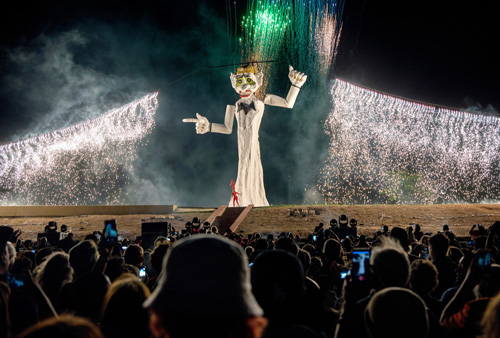
For existing events—even those with decades of success operating in the same space—there are still opportunities to focus on continual improvement. An example can be seen in Santa Fe’s annual burning of Zozobra, which was created in 1924 by artist Will Schuster and has become a beloved community event that involves burning a figure in effigy that represents people’s anxieties and gloom.

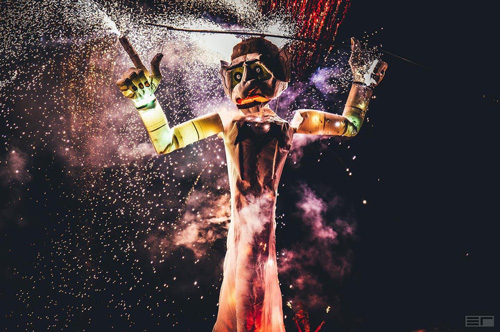
Schuster oversaw the construction of the Zozobra figure until 1964, when he gave his detailed model, drawings and scripts to the Kiwanis Club of Santa Fe to continue the successful tradition. The Zozobra figure—also known as Old Man Gloom—has grown from six feet tall to a 50-foot marionette, and the annual burning last year hosted a record 71,069 attendees.
“Fort Marcy Park has been Zozobra’s home for a full century, so growth can’t come from real estate—it has to come from design,” said Raymond Sandoval, event chairman for the Kiwanis Club of Santa Fe. “We tackle that in three ways: circulation, sight lines and time.”
According to Sandoval, this has included a doubling of entrance lanes, converting parking lots to pedestrian plazas, and creating pedestrian spokes that keep people constantly moving outward from the stage instead of bottlenecking. Fifty-foot LED screens, elevated speaker towers and a 360-degree drone camera feed keep all visitors—even those behind the stage—updated on the action.
The event also now features timed ticketing with four entry windows. “It flattens the arrival curve, reduces queues and gives families the freedom to pick the slot that works for them,” Sandoval said. “These levers together let us grow attendance by 18% last year while dropping average entry time from 27 minutes to just under 12.”
The nonprofit, volunteer-run event donates every dollar after expenses to New Mexico children’s charities, raising $767,000 over the past five years. And while these funds come from ticket and expense revenues, keeping the event affordable for the local community also remains a priority. Early-bird general admission is still $20, with kids 10 and under free. New bleacher seats have been added at $35. There are also now two ADA platforms with unobstructed sight lines, on-site captioning screens and a dedicated sensory-friendly zone 200 feet from the stage for neuro-divergent guests.
The event also offers free park-and-ride shuttles from five city lots and discounted Rail Runner train fares from New Mexico cities Albuquerque and Belen to the south. “We want the Old Man [Zozobra] to burn, not your wallet or your patience,” Sandoval said.
In addition to these logistical and accessibility improvements, the show itself keeps getting bigger and better. The Zozobra figure now contains “glooms”—troubles, fears and frustrations written on pieces of paper—from nearly 200,000 people per year. And Old Man Gloom now can make nine servo-controlled facial expressions and is preceded by a 300-drone pre-show that paints animated stories in the sky. The main event is accompanied by a pyro-musical score with fireworks matching each beat of the performance. Also part of the preshow is a hot-air Mini-Zozo balloon that ascends at dusk carrying 10,000 handwritten glooms. “The net effect is that the show feels cinematic without losing its folk-art soul,” Sandoval said.
Consider a Dedicated Festival Space
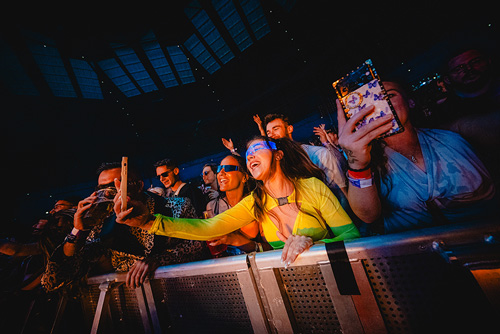
As labor costs related to event setup grow, unpredictable weather increases and other safety concerns loom, some communities are giving greater consideration to investing in a dedicated space for big events. This option can be designed to handle these concerns better while also saving the damage and community pushback that sometimes accompanies the use of big public parks for expensive ticketed events.
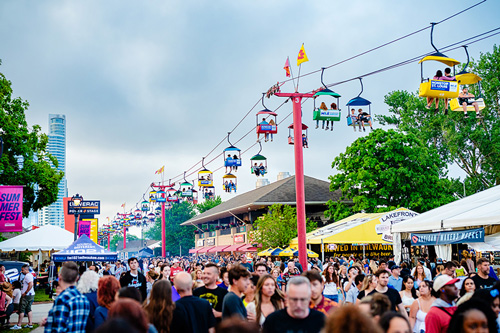
A leading model of the benefits that can be realized by implementing this approach with the right design, in the right location, and with the right community input can be found in Milwaukee’s Henry Maier Festival Park. This facility dates back to 1970, when the city started converting a former airstrip and military installation on the lakefront into what is now a 75-acre dedicated festival space. It quickly became the new permanent home of Summerfest, which had originally been held across numerous city locations starting in 1968.
The gradual creation of a massive festival grounds enables Milwaukee to today host festivals of any size while avoiding issues like muddy rainouts and damage to grassy multiuse parks from major festivals that have plagued other cities.
“If we were hit with two days of rain, while not a comfortable festival experience for people here, we would still be able to continue because of the infrastructure that we have,” said Kevin Canady, vice president of business development for Milwaukee World Festival Inc., which runs Summerfest and other festivals at the park. “We’re on permanent festival grounds with stormwater management systems. There are a lot of advantages to having the permanent festival grounds.”
Beyond stormwater management, the grounds offer extensive opportunities to help patrons weather hotter days or wait out inclement weather. “Our permanent facility gives us the ability to have resources like drinking fountains and indoor bathrooms and cool-down lounges—and opportunities for patrons to have areas of respite, whether it’s on a picnic table, or enjoying a cool breeze under a tree on the waterfront,” said Jason Stuewe, vice president of planning and development for Milwaukee World Festival. “There’s a ton of opportunities for us to be able to provide resources to support different weather events, and we have a strong history of keeping the doors open and keeping people safe here at Henry Maier Festival Park.”
The grounds have enabled Milwaukee World Festival to build Summerfest into the world’s largest music festival. And they help Milwaukee position itself as the City of Festivals by programming more than 60 major events per year at the grounds between the end of May and early October. The events together contribute a more than $300 million economic impact for the state of Wisconsin, over $250 million of that for Milwaukee, while driving tourism and hotel occupancy, and creating thousands of year-round and seasonal jobs.
“The lesson here for any other municipality that’s looking at, does it make sense for us to invest in the grounds, is that the return you can have on your entire community and state can be massive when you look at the economic impact and everything else,” Canady said.
Milwaukee World Festival is consistently considering new festival offerings. According to Canady, considerations for slotting a new event in include looking at seasonal weather, whether it’s a new offering for the area, and whether Milwaukee World Festival can do it better if it’s something that’s already offered. This year’s new additions included the new barbecue festival Smoke on the Water, the Incredible India Festival, and the dog-focused Paw Fest.
New additions to Summerfest this summer included a new interactive light and sound experience, Astral Relics of the Great North Woods, featuring 30-foot glowing forest spirits created by 11 Milwaukee-based artists. The fest also included a pickleball pop-up experience sponsored by Dean’s Dip that enabled people to try out the sport, play with experienced instructors, buy equipment and learn about places to play in their neighborhood. Summerfest also debuted a new country-themed area called the Lasso Lounge that featured live music, mechanical bull rides, line dancing and specialty cocktails.
“We’re always conscious of making sure that we change it from one year to the next and in some cases, from one weekend or one day to the next so that if people come three or four days out of the nine, or even all nine, they’ll experience something new every time,” Canady said.
Encourage Local Creativity
Even cities or towns that don’t have big budgets can help support creativity and enhance their public spaces by supporting creative events that community members are nurturing with a DIY aesthetic. This happened in Chicago with the Secret River concert series, which features bands playing on a humble pillar in the Chicago River across from a makeshift seating area under the Belmont Avenue bridge.

Series creator and musician Ben Kinsinger used to explore the area. “It used to be really gross, and full of garbage, and kind of a hobo haven,” Kinsinger said. “And then during the pandemic, a bunch of volunteers cleaned it up.”
Kinsinger realized that the space had potential to be something more. “My thought is if we bring people in with intention, then the place becomes something new. It’s now a place of gathering,” Kinsinger said. “It’s wild that I started doing these shows, and now there have been other people who’ve done shows too. There was an acoustic punk festival under the bridge, some skateboarders now hang out down there—it’s grown beyond what I do.”
The shows, which Kinsinger organizes and performs in under the moniker Lawrence Tome, King of the River, run on select summer weekend days. They go from noon until sunset, with as many as six to eight bands at each show. Kinsinger estimates that he’s featured more than 100 bands so far. He started with a boat and a battery-powered amp before upgrading to a generator in the project’s second year to amplify the bands performing on the electricity-free pillar.
He also reached out to the city to let them know what he had been doing without permission. “I confessed everything in the form of a grant application to the city,” Kinsinger said. “I was like, I’ve been doing these shows, but what I’d like to do is a parade on the river. And they gave me the grant.”
The $5,000 from the city helped Kinsinger decorate five pontoons as parade floats that performed at different spots along the river, ending at the Wild Mile, an area billed as the world’s first-ever floating eco-park and the flagship project of the nonprofit Urban Rivers. Kinsinger has also invited Friends of the Chicago River and Urban Rivers to have tables at the regular concert events, enabling concertgoers to connect with organizations doing valuable ecological work on the river.
This concert series also shows that you don’t need the best facility to create art and community. Sometimes, having events in an unusual space can actually make the experience more special. “I find that if someone listens to your music in a special place, then they have a memory of encountering your music,” Kinsinger said. “And then it’s like, ‘I remember when I saw them at the river show, and that was when I first encountered this band.’ It creates connections between the people who are making music in your community, and the listeners in your community.”
Maximize the Community Element
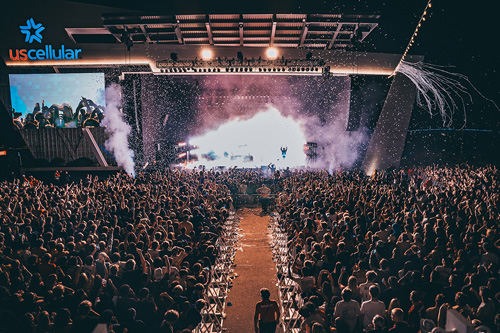
Featuring local musicians, artists and food vendors at any event as much as possible is also a great opportunity to make events more special, boost event popularity, and maximize community impact.
Wolff noted that even simply featuring local artists in larger festivals can boost both the success of that local talent and attendance at the event itself. “When you have a large art market, each of those little 10-by-10-foot art vendors has a following of 2,000 or 3,000 people and it’s hyper local,” Wolff said. “If you can engage with those artists to promote your event, that can be very powerful, and it costs you nothing.”
The same can be done with food vendors by showing a preference for local brick-and-mortar restaurants and food trucks. Done right, these partnerships boost their standing in the community while making your event more unique.
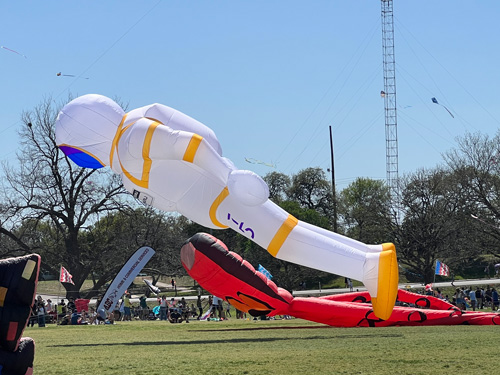
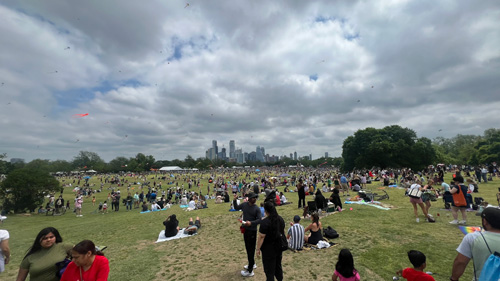
Encouraging a DIY aesthetic like Kinsinger’s can also be beneficial, as can featuring free or low-cost local musical talent. Hanley noted the example of Austin’s ABC Kite Fest, which brings thousands out to Zilker Park, the same large park that hosts Austin City Limits. In addition to a kite-flying contest and showcase, the event features MossFest, a children’s music concert; a mini market showcasing women-owned small businesses; a Pet Zone featuring fun off-leash dog activities; and free entry supported by a more expensive VIP entry option.
Local communities are also a key inspiration for new festival and event ideas, whether focused on an ethnic demographic and its unique foods and sounds, or even a niche food or drink. Wolff noted the example of Taco Fest, which Wolff ran before the pandemic, and which featured vendors each selling a specific $1 taco. “That dollar taco would go into the taco competition, and we had six-foot-tall trophies,” Wolff said. “If you are doing something food-related, it’s really easy to wrap a competition around it, and make it fun.”
Partnerships with local businesses and charities can also enhance the overall benefits of an event. Summerfest runs free admission through charity promotions like a Stomp Out Hunger event with Bush’s Beans where people can get in for free by bringing in non-perishable food items between noon and 3 p.m. The effort boosted early-day attendance, visitors got in for free, and community members in need benefited from 24,000 free meals.
For the Zozobra festival, the event partnered this year with Santa Fe Brewing on a Zozobra-themed beer, with local Iconik Coffee on a “Midnight Gloom” blend, and with Meow Wolf on a limited-edition “Gloom Goblet,” among other partnerships that sell unique items while generating additional funds for kids’ programs.
These examples show that a focus on effective planning, creativity, win-win partnerships and community benefits can enhance the distinctiveness and appeal of events of any size or budget. In the process, these approaches can also create room for continual improvement—and for memorable experiences that will keep patrons coming back, year after year. RM