


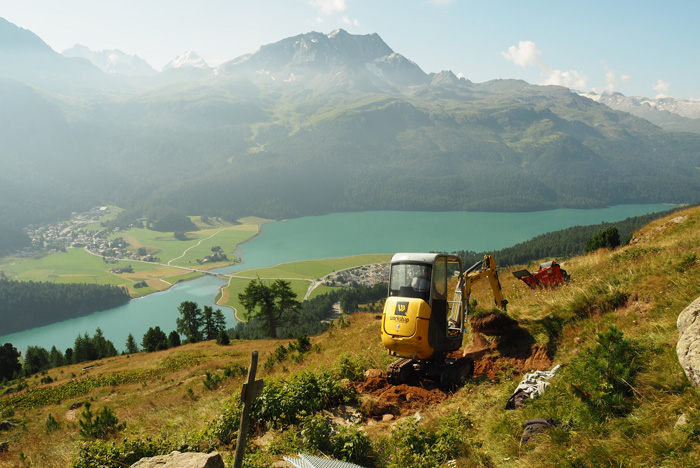
Trails feel like an opportunity; when you pass by them, they seem to be stealthily beckoning you. And whether you’re spending your lunch break strolling on an urban trail near your job, riding your bike with friends to a local café on your community trail system, or getting a serious hike in on a wilderness trail surrounded by beauty, a trail can offer exercise, fresh air and respite—a chance to reenergize. And for those who plan and design trails, there are many ways to get creative with trail development.
In 2021, what is believed to be the longest glow-in-the-dark walking trail in the U.S. was unveiled in Vinton, Iowa—an extension of a three-mile loop serving a growing part of the city. Planning for the extension was nearly complete when the city suggested the idea to make it glow, explained Justin Campbell, transportation engineer with design, architecture and engineering firm Shive-Hattery, who worked on the project, so they began to investigate different options. “The city went all in on this, and it was pretty amazing.”

Ultimately, ultra-grade, half-inch emerald green glow stones were selected for their superior brightness, supplied by a Niagara Falls, N.Y.-headquartered company that manufactures glow stones and glow sand. Environmentally friendly photoluminescent pigment is mixed into resin or glass to create the stones, which can glow for 15-plus hours after eight minutes of UV charge (sunlight or UV light), and last for more than 20 years. For the two-mile glow trail, one pound of stones was applied to every 16 square feet of concrete.
Nathan’s Miles Glow Trail—a twist on “Nathan smiles”—is named for former Vinton City Councilmember Nathan Hesson, who died in 2021 at age 37. Hesson was known for his trademark smile, along with his dedication to the community. He was an early advocate for the glow trail, and his wife Ashley recalled how he’d said, “There are these trails in Europe that glow, and how cool would it be to do something like that in Vinton?”
As the project was in a rural setting, Campbell said they had to balance the uniqueness of the trail with the surrounding fields. “And we had to consider safety and lighting, which we always consider with trail projects, but was a challenge because we wanted it to be as dark as possible so the trail could glow.”
He said that when a community brings something fun like this to the table, “it’s so exciting because you know it’s going to have a legacy. Vinton was first so there’s a level of making sure we get it right, including from an engineering standpoint.”
And indeed, Matt Boggess, director of parks and recreation in Vinton, who led the project, said he still gets calls from all over the country—and the world—asking about the project. He said the amount of year-round use the trail gets—from walkers, runners, bikers and people of all ages—“continues to make me very proud. This was a fun and unique project to do something different to draw people to our small town from an economic development perspective and to make it something that was more interesting than just a regular path.”
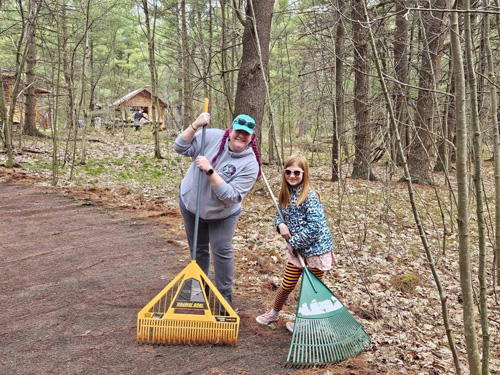
The nonprofit American Trails is a “nationwide coalition of all types of trails organizations, agencies and individuals” with a mission of “Connecting and transforming communities through the power of trails.” They strive to achieve this through conferences, trail grants and professional development.
“Federal, state, municipal and regional districts are some of the main groups that work with American Trails,” said Mike Passo, the organization’s executive director. “Training services are focused on our new shared community of practice website TrailSkills.org. The Trail Skills Project is a national initiative advancing the growth and professionalization of the trail workforce.” He said the site outlines competencies and clearly defined skill levels across five categories: construction, maintenance, project planning and design, crew leadership, and program administration.
American Trails also covers the physical aspects of trail building, conducting on-site trainings for more than 30 years through their International Trails Summit. “We offer many hands-on workshops in some of the most important skills at our summit every two years,” said Passo. “Now we’ve focused on developing the Trail Competency Framework to help local agencies get the resources to do their own training to a high level of quality. We also have a pretty wide stable of trainers that do this for a living, and we connect regions with the trainers they might need.”
And what about city dwellers getting trail access? “Urban areas are critical,” said Passo. “Building and maintaining urban paths and greenways has its own unique set of skills and resources. We partner closely with organizations like Rails to Trails Conservancy and the East Coast Greenway, which have vast experience in planning, designing, building and maintaining these types of critical infrastructure.”
Passo said technology is “growing by leaps and bounds” in the trail industry, “whether it’s drones and LiDAR (Light Detection and Ranging) as trail layout and design tools, story maps to tell the stories of successful trails, or adaptive mountain bikes providing access to trails to whole new categories and individuals.” He said their Trails Summits always feature technological innovations, while their webinar series “showcases many sessions focused on new and emerging technologies.”
Passo mentioned an innovation in gravel for trails, “that is coated in wax to provide a more durable and accessible surface.” And he noted the International Mountain Bicycling Association’s work on “several new design innovations happening around the country that better serve the full spectrum of trail user types.” For example, the Rib Mountain Trail System in Wisconsin offers more than 13 miles of hiking trails, with over eight miles accessible to people with disabilities.
As for other innovative trail ideas, Passo mentioned the Tires to Trails project at T. O. Fuller State Park in Memphis, Tenn., aimed at addressing illegal tire dumping and creating a new recreational trail. More than 24,000 illegally dumped tires were transformed into crumb rubber, which was used to make the 2.5-mile trail’s surface. The initiative involved several state and local agencies and numerous volunteers.
And sensory trails “are getting super popular,” according to Passo. In northern New York, the Indian River Lakes Conservancy (IRLC) unveiled two new sensory trails in 2024 at their Baker Woods and Redwood Hill preserves. The conservancy currently oversees more than 2,700 acres of land, including 2,000 feet of shoreline and five public preserves featuring “28 miles of trails for hikers of all abilities,” according to Katie Syring, who heads up membership and administration at the conservancy. “The unique and wonderful thing about our organization is we are donor funded. Therefore, everything we do is a reflection of our community.”
The sensory trails were a collaboration between IRLC and Encompass Recreation, a nonprofit providing recreational opportunities for youth in northern New York, especially those with higher support needs such as ADHD, autism, Down syndrome, anxiety, mobility needs, or communication needs. Encompass Founder Kylie Schell was trying to find recreational opportunities for her two sons and was saddened by the lack of inclusive spaces. “I yearned to fashion a sanctuary where families could venture out without the shadow of judgement looming over them. We identified IRLC as an ideal partner due to the longstanding reputation for caring about kids, but also because you had existing trails in two counties.”
With a variety of activities and features, “the sensory trails offer a multisensory journey for visitors,” according to IRLC’s website. “From a sensory path with diverse surfaces to a musical corner echoing the sounds of the forest, each element invites exploration and engagement. The components were intentionally chosen for this project as they attend to various needs across a single space, highlighting the trails’ versatility in catering to different sensory experiences.”
Syring said children regularly visit the trails, including a local preschool and the Carthage Free Library, which hosts a story walk at one of the sensory trails. IRLC also hosts field trips, a summer camp and family events “where children of all ages and abilities can visit the sensory trails and explore.”
Additionally, an all-access trail at Redwood Hill Preserve allows everyone—including those who use wheelchairs, walkers, canes or other mobility devices—to access and connect with nature.
All the preserve trails have been “carved out by our land stewards,” said Syring. “We love our community and really lean into our volunteers. Without our land stewards our trails would not exist.” She said that on “stewardship days” they have a team with lots of experience and equipment like chainsaws, but they “also get stewards who simply help with cleanup of debris. Every bit counts, and every moment and memory on the trails makes a difference.”
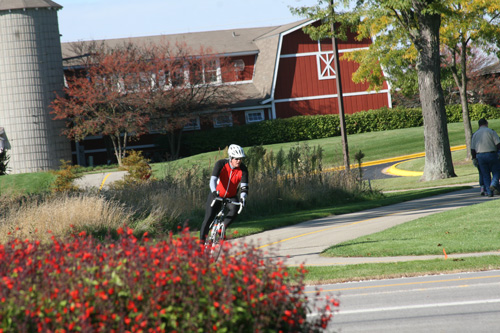
The Fox Valley Park District serves three communities in Illinois, including the state’s second largest city, Aurora, and FVPD oversees a 48-mile interconnected network of trails. “While originally planned and constructed as recreational trails, our system is used by quite a few residents and non-residents for commuting,” said Jeff Palmquist, director of planning at FVPD, who added that from his office window, he regularly sees a resident who works in a nearby community riding home.
Palmquist explained that the evolution of their trail system began with three main regional trails, but as the popularity of these systems grew, FVPD endeavored to add “safe, secondary and tertiary connections to neighborhoods. Often, these connections require coordination with our municipal partners as we frequently don’t have jurisdiction and land between the regional trails and neighborhoods to allow for direct trail connectivity.”
The FVPD’s trail system feeds their regional trail system—which connects towns all along the Fox River—as well as runs through the downtowns of FVPD’s communities, which is great for local businesses. “Increasingly, cyclists coordinate with friends for a little exercise and socializing at local establishments. Occasionally, local bike shops or clubs coordinate trail rides that incorporate stops at local breweries,” said Palmquist. Additionally, residents on the trails “see areas of the community and stunning natural features they may otherwise never notice. Our Fox River Trail… has preserved and protected miles of Fox River shoreline as open space.”
FVPD has secured numerous grants from state and federal agencies that have assisted with land acquisition as well as trail construction costs, according to Palmquist, allowing the district to realize a more extensive system built along a faster timeline. They’ve now been awarded a federal and state grant “focusing on two bridge projects to improve connectivity and safety.”
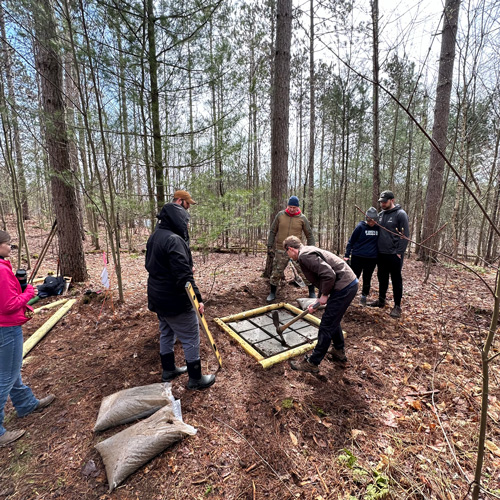
Aaryn Kay and Scott Linnenburger are co-owners of Kay-Linn Enterprises, offering trail masterplanning and design, trail training, and other services within the industry. Kay-Linn is a Professional TrailBuilders Association (PTBA) member company. PTBA is a nonprofit trade association representing private-sector companies that plan, design and build trails worldwide, and Kay is executive director of PTBA.
“98% of our work (at Kay-Linn) is with public lands seeking to create new trails and/or trail systems and assess and improve existing trail systems for physical, social and managerial sustainability,” said Kay. This includes parks and open space departments within cities and counties in rural, urban and suburban areas. And with backgrounds in environmental management, she said planning services often involve helping clients navigate permission and permit processes, as well as the stakeholder engagement process, cost estimation and construction documentation.
And they get boots on the ground as well, with Linnenburger spending about 40% of his time in the field, “assessing landscapes, outdoor recreation assets, trail masterplanning, field flagging projects for construction, and doing construction management, especially on projects with multiple trail contractors working at once,” according to Kay.
Trails can be good revenue generators, and Kay said they’ve seen many communities transformed by the addition of trail systems. “Communities highlight the economic benefits of increased property values, tourism revenue and business recruitment/retention. However, it’s the lesser quantifiable elements that tell the bigger story, like community health outcomes, cross-generational trail exploration, increased support and volunteer engagement related to the trails and conservation, and in general a bolstered quality of life. When compared to other community assets (sports fields, pools, community centers), trails are such a low investment with such a high outcome.” She mentioned their work in the Iron Range of Minnesota and the Bailey’s Trail System in rural Appalachia, Ohio, as examples of investments in trail destinations in rural communities that are “seeing community benefits beyond economics.”
After joining the trail industry, and with backgrounds in education, Kay and Linnenburger taught sustainable trail building to volunteers and land managers. Linnenburger still leads multiple trainings each year, “as a guest speaker for universities, leading multi-day tailored trainings for land management agencies or nonprofits and offering workshops at PTBA conferences,” said Kay, who added that “workforce development and inspiring the next generation of trail professionals is a huge focus for PTBA.”
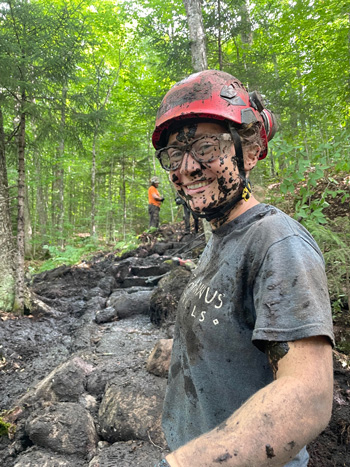
As for creative trail destinations, the nonprofit Timberland Hills Foundation in Wisconsin is “blending gravity hubs (designed for mountain bikes) into a broader trail system that also integrates with the Ice Age hiking trail,” said Linnenburger. “The idea is to develop a local rural economy-driving trail system and an event-ready venue on county forest lands that are actively being logged, with the trail system designed to work with/around that more industrial use of the land.” Events might include ultra races, a training site and trail-based festivals. “This system is also unique in that it’s almost 100% privately funded by the One Track Mind Foundation,” which provides essential funding for building and maintaining mountain bike trails.
Kay pointed out that over the past several years, PTBA has seen the fastest growth in member companies focused on mountain bike trails, which “likely reflects a broader industry trend of increasing investment in mountain bike trail systems.”
And Linnenburger mentioned the nonprofit organization WinMan Trails in Winchester, Wis, which is “working to create a four-season community park, gathering place and camping area out of its trailhead, essentially making it a ‘trail-focused park’ rather than a park where you may find trails spread around its acreage.” He said they’ve worked with the group on communications and fundraising, along with refining their trail system and trailhead amenities. “It’s also a system that’s been 100% privately funded in its development.”
Kay said that through PTBA, she’d recently talked to a community “where they were integrating physics signage into a bike park, creating connections between science, trails and kids.” And she mentioned another idea gaining traction: trails as medicine. “Engaging health providers as stakeholders offers a powerful opportunity, with some already prescribing trail use as a form of preventive care, highlighting the growing recognition of trails as essential to community health and wellness.”
Passo agreed and said that health foundations are now investing in trails, “because a robust trail infrastructure is shown to have direct effects on community health outcomes in ways that expensive new facilities and other expensive programs don’t have. Trails are starting to be known as one of the most cost-effective investments a community can make to improve their population’s health.”
And then there’s the benefit of people using trails who then feel ownership, ensuring stewardship of the trail and surrounding natural spaces. “The more a person develops a personal connection to a trail or landscape through their own recreational experiences, the more they’re motivated to give back,” said Passo. “When they visit often, they see the month-to-month changes that a trail can go through, and they see firsthand how their experience is affected when a trail isn’t maintained on a regular basis.” RM