

According to the Aspen Institute, the youth sports industry produces about $40 billion in annual revenue. About 60 million children play sports, and in 2024 the average sports family in the U.S. spent $1,016 on its child’s main sport. That’s a 46% increase since 2019, according to the most recent Aspen Institute parent survey, in conjunction with Utah State University and Louisiana Tech University.
The numbers themselves may be shocking, but anecdotally it’s more and more common to know someone personally who spends a lot of money and time on youth sports. The demand for instruction, equipment and revenue-generating tournaments has attracted domestic and global entrepreneurs, big business and major investment from private equity, according to a July article in the The New York Times.
“America’s obsession with youth sports is attracting investments from private equity and other large investors across the world,” wrote the authors. “Last year, KKR bought Varsity Brands, which makes sports uniforms and organizes cheerleading competitions, for $4.5 billion. Waud Capital Partners invested in TeamSnap, a platform that coaches, players and parents use to communicate and schedule games, tournaments and payments.
“Two years ago, a fund held by EQT, a Swedish private equity firm, acquired IMG Academy, a sports-focused boarding school in Bradenton, Fla., in an all-cash deal valued at $1.25 billion. Another private equity firm, Patricof, bought a smaller stake in IMG on behalf of more than 50 star athletes, including Jason Kelce, Michelle Wie and Dak Prescott.”
IMG tuition is $85,000 annually, an outlier for sure, but its model of specialization and world-class facilities has swept the nation as communities build sports parks to attract regional tournaments and the economic boost attendees provide in lodging and hospitality spend.
The 2024 Annual State of the Industry report released by Sports Events & Tourism Association revealed that the $47.1 billion direct spending from what’s known as sports tourism conveyed an economic impact of $114.4 billion, and supported 665,000 jobs in the U.S., generating tax revenue of $8.5 billion for state and local economies.
Rich Arave, a senior project manager with Stantec, which specializes in sustainable engineering, architecture and environmental consulting, said that sports park development has been the result of the growth in sport tournament opportunities.
He said the increase in the number of tournaments has resulted from the development of privatized athletic leagues as an attractive alternative to community-based rec sports programs. “Over the past 30 years we have seen sport-governing bodies evolve to become unified administrative organizations, focused on popularizing their sport at a national or regional level,” said Arave. “Historically public athletic organizations have focused on the administrative needs of recreation programs within communities, with no marketing beyond the community boundary. The transformation toward unified sports administrative organizations has been the catalyst for growth in tournament opportunities, as unified organizations oversee larger pools of participants, which offer athletes and teams the ability to play consistent competition at a higher level of athletic play.”
Over the past 20 years participation in competitive youth sports has increased as athletes have migrated from community rec-sports leagues to competitive sport programs that offer players chances to improve athletic ability, opportunities to play elite competition, and have unique athletic experiences, Arave said.
Sports parks have evolved to attract events and support the preferences of competitive teams and their athletes, he added. The concept of sports tourism is a further development of this model, which brings in elements beyond scheduled games to provide athletes and often their families with enhanced experiences. Effective sports tourism venues look beyond the boundary of the sports complex to ensure that facility proximity, hotel availability and adjacent land uses are advantageous in supporting the sports parks’ efforts to attract tournaments and provide participants with an experience that will bring them back.
“We are seeing these sport complexes begin to integrate multi-use elements to provide tournament participants multiple experiences like lodging, food, beverages and retail options within the sports complex,” Arave said.
“Additional entertainment options not focused on tournament activities are being included in these emerging sports parks to offer participants alternative activities between games. This incorporation of mixed-use development elements into the sports park projects is expanding the user base as these new sports complex projects are becoming anchors for community-centered developments.”
That’s the story across the country as cities and towns have and are planning to build locations to host tournaments and camps for multiple sports in order to provide jobs and increase revenue.
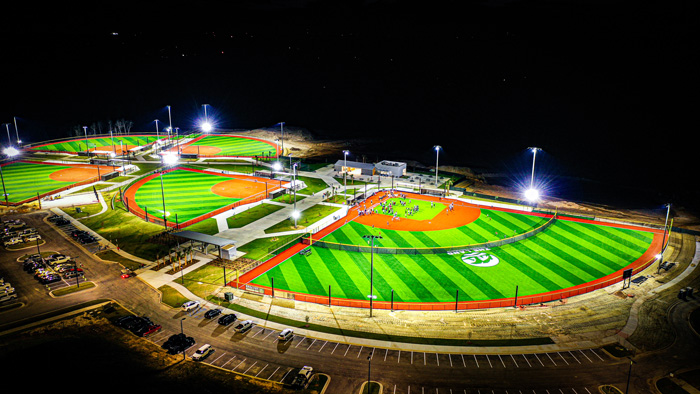
Ryan Kennard is the general manager of one such location trying to win the competition with other communities for sports tourism dollars. Key City Park, in Vicksburg, Miss., features 750,000 square feet of synthetic turf across 10 baseball/softball diamonds and six full-size multipurpose fields, all with lighting systems to allow game play to take place after dark. The facility accommodates baseball, softball, soccer, lacrosse and flag football. “Key City Park is more than a facility; it’s a symbol of community pride and excellence,” Kennard said. “Event organizers can expect world-class facilities, outstanding service and Southern hospitality. We have completed an overhaul of new organizers for all different sports to fill up our 2026 calendar year. Returning organizers have begun scheduling even more tournaments due to their success in the area.”
Kennard said the ideal sports park boasts fields that support multiple sports as this versatility helps with scheduling and provides opportunities for outside sports to be successful. Food and beverage options are vital for sports parks as well, he said. His park offers four different options for food and drink.
“Guests and teams are able to stay on site during the day because of these options, and it helps drive revenue for the park,” he said. “Also, an added amenity goes a long way for the overall guest experience as well. For example, we have mini golf, which provides a fun option for families to take a break in between games.”
As the sports and small group sales rep for the Columbia County (Fla.) Sports Commission, Chris Coleman is in his second year of dealing with two sports complexes and what clients need from them. Baseball and softball are the core strengths for the locations, regularly hosting tournaments for multiple organizations, with soccer being a strong third through various camps and 3-on-3 tournaments, Coleman said.
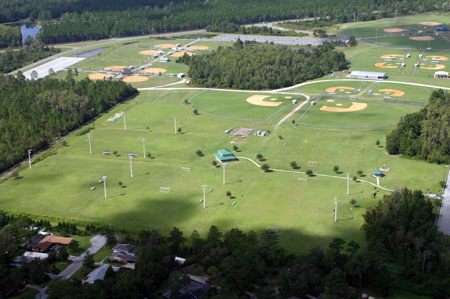
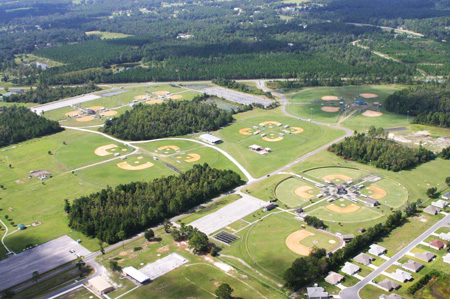
The Southside Sports Complex is fully ADA-compliant and features 13 baseball fields, eight girls’ softball fields, four adult softball fields, and five full-size flat utility fields.
South Columbia Sports Complex is also ADA-compliant and offers a pair of 200-foot softball fields, two 200-foot baseball/softball fields, two 300-foot fields, and two full-size flat utility fields.
“The growth in the past year has been tremendous,” said Coleman. “Looking ahead, our goal is to host 75 to 80-plus events in 2025 while also recruiting five to six new vendors to further enhance the experience.”
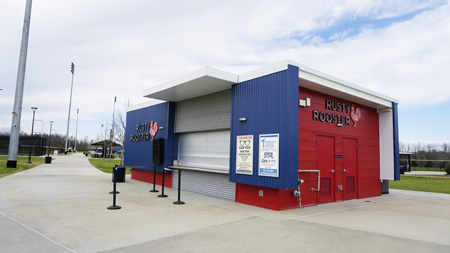
Coleman said the best sports parks combine functionality and comfort. Key basic design features include adequate parking lots for large crowds, centralized concessions for easy access, clean, well-maintained restrooms, and ample shade structures for fans and players between games.
It’s one thing to have a great park, but outreach and marketing are still necessary, he said.
“In the beginning, I reached out to as many organizations as possible, but with limited success,” said Coleman. “I learned that a targeted approach works better, researching organizations, ensuring our facilities meet their needs and aligning with their brand goals. Building strong relationships with rights-holders has also proven to be one of the most valuable strategies for generating revenue and repeat business.”
One key lesson Coleman said he has learned is the importance of being proactive—ensuring staff are scheduled appropriately, sharing tournament schedules with all necessary parties, and always having contingency plans for weather or emergencies are essential.
“Following up with organizations post-event to gather feedback and reports is equally critical for long-term success,” he said.
Arave said sports park success begins with full assessments of the regional market and community objectives. It’s also critical to identify what range of events is appropriate for the project to host up-front in the project planning as construction and installed systems should mesh with the expectations of potential client organizations.
“In planning it is important to have a realistic understanding of where your project will be ranked amongst similar comparable facilities within your geographic market area,” he said. “This means looking at everything that your facility and community can offer to attract the events. As no venue is the same, this is not always an apples-to-apples comparison. However, identifying and understanding the advantages and shortcomings of competing sports venues can help establish differentiating features or strategies so that the venue will be perceived by potential client organizations as a valid option to host their tournament.”
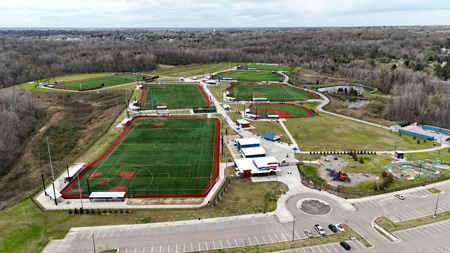
A feasibility study using an experienced sports tourism firm should be step one, Arave said. This study should identify the strengths and shortcomings of competing facilities within the targeted region, and should include an assessment of the viability of incorporating a competing project into the existing defined target market. A good study will evaluate a project’s proposed business model to determine if the project construction and operational costs are in line with the projected gain.
“Assessments of the comparable facilities should identify and confirm opportunities within an existing market, revealing where possible trends or strategies could be implemented to differentiate the proposed project from competing facilities,” said Arave.
“Upon completion of the study, utilize it to assess decisions made during the programming and design phases of the project. It is important to relay to facility operators a project’s targeted markets or business model and have them on board so that they can run a compatible marketing strategy for a facility that is compatible with the project intent.”
This first phase can lower the chances of market saturation, said Arave. Upon confirmation of market sustainability, bring on a facility operator with knowledge of the project type so that they can be engaged in the initial planning phases of the project, Arave said. If a design team is not initially on-boarded during the feasibility study Arave suggested bringing in an architect and engineering to determine the facility layout and create the project masterplan.
Not long after bringing on the design team, find a consulting contractor to provide feedback on constructability and provide preliminary cost information. Once the design has been determined, the contractor can be hired to complete the construction.
“The facility operator would be involved throughout the process to consult on implementing operation strategies and transition the project into operation,” Arave said. “The advantages of engaging the facility operator throughout the process is that they are able to provide valuable input during project ideation and they are better able to apply the intent of the initial project objectives into the facility operations.”
Steve Goris, senior vice president for KemperSports, added, “Choose the right public-private structure with lifecycle reserves built in. Phase the plan so Phase 1 can host full events. Before opening, lock multi-year tournaments, hire leadership early, and start selling memberships. And on day one, run with SOPs, KPIs and a reinvestment plan already in place.”
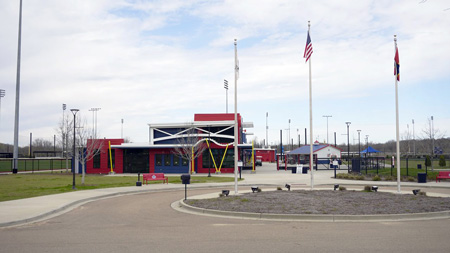
One recent example of the timing of hiring a park manager is in Springfield, Ill., which will begin hosting tournaments at Scheels Sports Park, a 70-acre indoor and outdoor complex that opened this year.
The sports park includes eight outdoor, all-synthetic turf, lighted fields that will be convertible for multi-sport play, including up to 15 youth baseball or softball diamonds, which can also play as six full-size adult baseball fields, if needed, or eight full-size soccer fields at one time. It also features what the project team calls the world’s largest air-supported sports dome, 710 feet long, 275 feet wide and 98 feet tall.
The facility’s operations manager, Brandon Doherty, experienced in sports park operations, was brought in just after groundbreaking.
“I have seen how these sport complexes can transform communities, and I am excited to help in all the ways I can getting things set up,” Doherty told the Springfield State Journal-Register in 2024.
The site will include a 91-room Marriott property to house tournament visitors.
Springfield Mayor Misty Buscher told WAND News last summer, “We are expecting the Scheels Sports Park to bring 250,000 new visitors to Springfield, providing $25 million in an annual boost to our local economy and over 50,000 new hotel nights.”
Arave said evolutionary changes in sports park project design have occurred so continuously and frequently that while it is vital to understand and pursue the business model outlined for the project, it is equally important to be proactive in regularly assessing the market and project objectives, and make relevant adjustments to the business model and facility as needed.
Kennard agreed that agility is crucial to evolving a park’s attractiveness and that it begins with communication, whether that be with the event organizers or the community as a whole.
“The goal is to bring tournaments that eventually lead to reoccurring events each year,” he said. “Sometimes there is trial and error with organizers to see what works best in our region. Over time, you will find your target market, but there is always room for growth. Diversification of sports and organizers help provide a park with a strong schedule that will be successful.
“Success has come through constant overview and feedback. Being willing to adapt and make changes as necessary has provided our ability to stay competitive at KCP. What has worked well or what we can improve on is a constant emphasis with staff at KCP. We have an open line with our event organizers, and they provide valuable feedback for our operations. The community is the backbone of Key City Park. Local businesses, restaurants and hotels all provide a safe and fun area for our guests to call their home away from home.”
Goris said today’s trends are clear. Flexible layouts are popular—convertible diamonds and multipurpose rectangles. Turf systems now have better shock and drainage, LED lighting is the standard, and low-maintenance finishes save money over time.
“Revenue streams have diversified: training memberships, small-group skill work, esports corners, premium seating, even party rentals,” Goris said. “Marketing has shifted to short-form video, creator content and direct list-building. Concessions are faster and more local—grab-and-go, bundles, cashless. And design is increasingly inclusive—Miracle League (specialized for all abilities) fields, sensory-friendly rooms and year-round non-sport programming.”
Coleman said even in his short time trying to maximize the appeal and revenue of two sports parks, he can see the challenge clearly.
“The future is limitless,” he said. “More communities are investing in state-of-the-art facilities, fueled by the rise of youth and amateur sports. Every year, new sports and rights-holders emerge, and sports tourism continues to grow as a major industry and economic driver for host destinations.”
Goris said the communities that fare best build balanced calendars—anchor tournaments, league play, training programs and local events. They tie hotel nights and economic impact directly to a predictable schedule.
“The most successful parks also earmark a slice of revenue for reinvestment, so the facility improves over time, and they create visible community benefits like Miracle League fields or school partnerships,” said Goris. “That combination wins both hearts and hotel nights.” RM