


Just as pickleball has a quirky origin story involving older folks seeking a sport they could play without having to cover too much ground, Rachel Williams’s tech company began because of pickleball.
The co-founder and president of a firm that specifically targets helping parks and recreation departments streamline many vital administrative functions got the Eureka moment several years ago in California when she tried to take up the sport sweeping the nation. “It’s the sport that’s brought incredible community engagement—and more than a few scheduling headaches—to every recreation department in America,” she recalled. “The question that started it all was simple: ‘Why is it so hard to learn pickleball in San Francisco?’
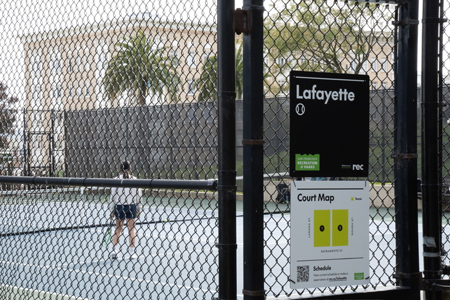
“We were simply trying to find a local instructor and a place to play, and quickly realized how disconnected everything was. Cities had courts, coaches were eager to teach and residents were ready to play, but there was no easy way to connect it all. That challenge became the spark.
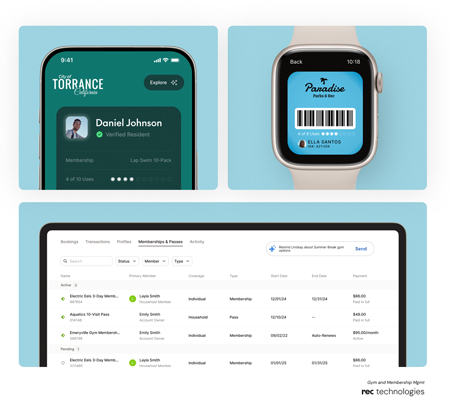
“We started by helping cities like San Francisco modernize how they manage their pickleball and tennis courts—giving them tools to license local pros during off-peak hours, open more access to the community, and generate meaningful new revenue along the way.”
The company built on that first mission to provide a comprehensive recreation platform that brings everything together—program registration, facility management, memberships, payments, CRM and now AI-powered tools.
“Today, we connect every part of a city’s recreation ecosystem into one seamless, modern experience—and we’re just getting started,” Williams said.
Technology helps every part of the recreation industry, from innovations in turf management equipment to automatic chemical feeds in aquatics to services like Williams’s company provides to state-of-the-art weather predictions and alerts.
These advancements are rarely used as window dressing; savings in labor, time and money have recreation professionals always on the lookout for what can free up staff to better engage the community and create new fun.
Not counting the technology used in various ways to keep the golf course looking and playing its best, Columbus Country Club employs five different services, according to golf director Ryan Coll.
“Technology is a key piece in the golf professional world,” said Coll. “At Columbus Country Club, we have over 350 full golf members, so it is crucial for us to be able to communicate to all of them.”
One platform the club uses helps communicate tournament information. Another allows members to book tee times online, but it also helps get information to members in case of weather delays, and allows staff to track demo clubs. A third service communicates the club calendar and special events to members and a fourth is used in the club, fitting members for new equipment.
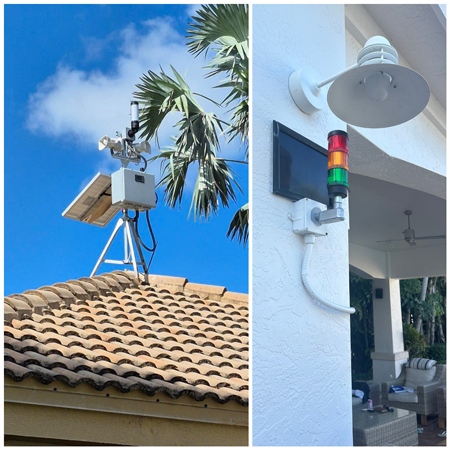
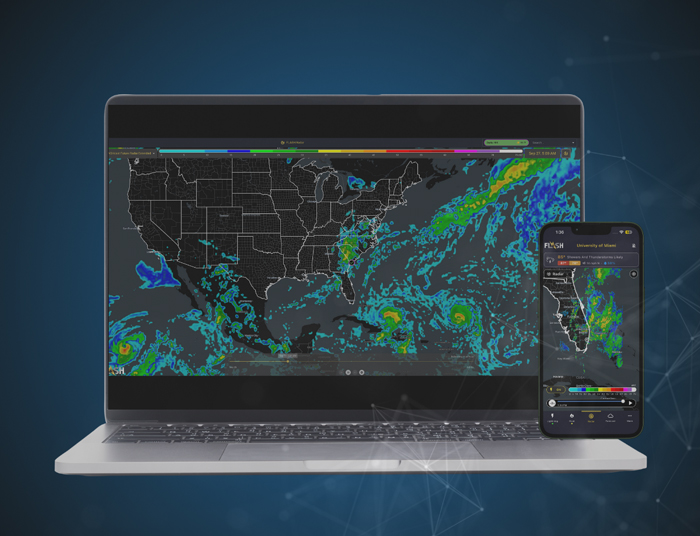
A fifth service the club uses is more about safety than saving money or time; it warns of lightning activity much more frequently than weather services of old, said Jamie Castle, chief operations officer for the company that developed the service.
Using atmospheric data uncovered in 2016 using the Freedom of Information Act, in 2019 the founders of the service developed a patented AI algorithm that could predict lightning with “remarkable” accuracy, said Castle.
“Once we had proven the science, our focus shifted to making this intelligence accessible and useful for anyone who relies on the weather,” he said. “We brought together a team of meteorologists, software engineers, and AI specialists to refine the technology. Today, we provide predictive weather insights every two minutes, compared to the one-hour updates of most systems.”
What started as a lightning prediction solution has evolved into a comprehensive weather intelligence platform, Castle said. It now offers a mobile app, enterprise solutions, integrated hardware and AI-driven models for tornado, hail, wind and tropical forecasting. By 2026, it plans to have 14 predictive models working together to reshape how the world prepares for severe weather.
“Before, lightning safety depended on detection,” said Castle. “The first strike had to occur before anyone could take action, which often meant it was already too late. We change that reality.”
While safety is the main benefit of the service provided by Castle’s company, time and money are saved as well, he said. Recreation organizations can avoid unplanned shutdowns or evacuations by knowing exactly when a weather risk is approaching and when it is safe to resume. Heightened safety reduces liability, prevents revenue loss from unnecessary closures, and optimizes staff scheduling with predictive alerts that remove guesswork.
Coll said the day-to-day reality of the weather service is as advertised. “Where they differ from everyone else is that we are notified roughly 50 minutes in advance of a weather disturbance,” Coll said. “They also notify multiple times until the storm arrives in the danger zone. That gives us enough time to get in a cart to inform all the groups on the golf course of potential weather.
“We have undulation changes on the course that prevents a horn blast from being heard from one single location. This gives us enough time to get on to certain points of the golf course to make sure everyone hears the horn for weather so that they can exit the golf course in a safe and timely manner.”
Coll said he gets his tech ideas from networking through various golf associations and tradeshows, but said he’s careful about selection. “The only issues that we have with tech is that there are a lot of options,” he said. “We have members of all ages, so it’s difficult at times to keep adding technology to the golf club world. Members like simplicity and they like routine. We have to be very mindful of what we add to their plate and how much we add as well.”
Tony Small is cofounder and CEO of a company that provides technology that makes life easier for staff, which in turn frees staff to improve member experiences. His company’s service eases the process of converting interest to membership.
“It started with a simple idea: help busy teams stop missing leads,” said Small. “We saw gyms, recreation centers and wellness operators juggling constant calls, texts and emails, often after hours, and losing revenue in the process.
“We built an AI that could actually handle those conversations, not just forward them. Today, we work with multi-location operators and national brands, and our platform powers both inbound and outbound communication across phone, chat, text and email.”
Through their work together at Fortune 1000 companies, Small and his partner saw the huge impact of always answering the phone and responding to leads within five minutes. “So when AI got huge three years ago, we knew there was a way to apply it to solve that,” he said. “I’ve also always been passionate about fitness and recreation, and I saw firsthand how much time staff spent answering repetitive questions instead of focusing on members and community. The idea was to take that pain away.
“AI should do the boring, repetitive work so humans can do what they’re great at—building relationships, running programs and growing the business.”
Small said what really excites revenue-focused clients is that the AI doesn’t just answer questions, it helps convert interest into sign-ups, renewals and bookings. “We save time and reduce labor costs, absolutely, but we also help them stop leaving money on the table,” he said.

At a Gold’s Gym in Washington, D.C., for example, Small’s company caught thousands of missed leads that would have otherwise disappeared when calls went unanswered.
Any gym, recreation center or multi-location operator that’s missing calls, overwhelmed with inquiries or struggling to follow up fast enough are candidates for Small’s company’s service, he said.
“The people who derive the most value are operations leaders, owners and marketing directors who prioritize capturing every lead, enhancing service, and allocating time to their staff to focus on the experience that keeps members coming,” said Small.
The world of recreational aquatics has its own needs and Kate Connell is senior manager of sales and strategic partnerships for a company whose AI solution helps operators and managers deal with everything from safety audits and maintenance tracking to training records and incident documentation. It’s all designed to streamline operations and improve accountability, reduce risk and improve operator decision-making across aquatic facilities, Connell said.
“We originally started as a sister company of a leading aquatic design firm, and later became our own company and brand, with a simple goal: to make daily documentation and facility management easier, more consistent and more efficient,” she said. “What began as a way to replace paper forms and clipboards has grown into a full suite of digital tools.”
Connell said her company isn’t simply a general back-office tool; the company was founded by aquatic professionals with aquatics operations specifically targeted. “The tools available to recreation and aquatics professionals just weren’t built with our workflows in mind,” she said. “We wanted something that spoke the same language as the people running pools, training guards and managing teams, to bridge that gap, bringing everything together in one modern, all-in-one platform.
“Our focus is on reports, results and actionable data that facilities can use to make informed decisions, save time, increase efficiency and improve staff accountability, helping teams run safer, smarter and more effectively.”
The technology helps recreation clients streamline documentation and communication across their aquatic operations, Connell said. It’s designed for everyone, from temporary or part-time staff to operators and middle managers, with options to give director-level leadership access. Everything is housed in one centralized platform, giving teams instant access to reports, trends and compliance records.
“It supports better decision-making, risk management and staff accountability, while also tracking data important to city councils and leadership,” said Connell. “At the same time, it helps aquatics teams focus on safety, equitable access and improving the guest experience, rather than chasing paperwork.”
Cutting down on repetitive tasks and organizing data automatically, the app saves staff time, and that time savings leads to cost savings, including fewer incidents, faster maintenance response and smoother training management, Connell said.
“But it’s also about being best in class: using every tool available to mitigate risk, follow industry standards, and reduce the inefficiencies that often come with staff turnover, burnout and frustration,” she said. “By streamlining operations and supporting staff, we help your team do their best work, keeping people safe and delivering excellent service.”
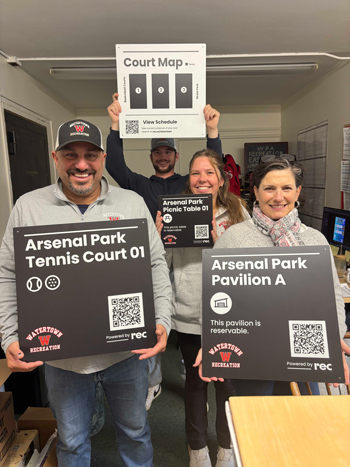
By adopting modern technology and streamlining administrative processes, Watertown (Mass.) Parks and Recreation has realized significant time and cost savings in its day-to-day operations, said Parks and Recreation Director Ernie Thebado. Flexible refund processes have enabled staff to exponentially reduce the amount of time previously spent on time-consuming refunds, while online registration and payment systems have reduced the need for in-person transactions and manual data entry, saving staff hours each week that were once spent processing paper forms and handling cash or checks.
“Digital communication tools, including automated email notifications and mobile access to schedules, have minimized phone calls and paperwork, freeing up staff to focus more on program delivery and community engagement,” said Thebado. “Centralized scheduling and reporting tools have also improved coordination across multiple facilities, helping to prevent double-bookings and optimize resource use.
“Overall, the department’s shift toward more efficient, tech-driven operations has not only reduced administrative overhead but also enhanced the customer experience—creating measurable savings in both staff time and operational costs.”
Thebado’s staff uses Williams’s company’s service and said he’s on the lookout for more technology to solve several issues. The department is also seeking better tools for on-site staff to manage field operations in real time, such as mobile apps for check-ins, maintenance tracking and program attendance.
“Improved data dashboards and reporting capabilities would help staff make more informed decisions about program performance and resource allocation,” he said. “Additionally, enhanced communication features, like text alerts and automated updates, would strengthen connections with residents and reduce administrative workload.”
Amber Ridings, assistant director of parks and recreation for Jeffersonville, Ind., said summer camp demands have her department searching for more tech help. She said the program is “incredibly” important to the community, but it also introduces some challenges.
“The pickup and drop-off process is especially complicated as we need to keep track of which children have checked in and out, and which adults are authorized to pick them up, all of which must be done out in the field on a mobile device,” said Ridings. “Our team is looking forward to new solutions to make it easy for the counselor staff to check kids in and out, and look up those authorized for pickup quickly and easily from their phone.”
Jeffersonville also uses the service provided by Williams’s company, choosing its time- and labor-saving solutions because Ridings said it wanted staff to spend more time administering programs or engaging with residents, instead of answering questions that could be answered online or through self-service portals.
Ridings said Williams’s company is crucial to helping with rentals, from shelters at the aquatics center to entire baseball fields.
“Previously, most of these rentals required residents to contact a parks and recreation employee to talk through what and where they want to rent,” she said. “Residents can now either book directly or submit an organized application that is easy to review and approve, making it easier to accept and facilitate more rentals.”
That easing is what Williams and many rec-minded tech solution companies have in mind when they create solutions.
“We built it because we believe in what this industry stands for: connection, health and community,” said Williams. “Parks and recreation professionals make magic happen every day, often with outdated tools and little support. Our mission is to be their technology powerhouse—empowering them to reach more residents, remove friction and ultimately enable more play.” RM