


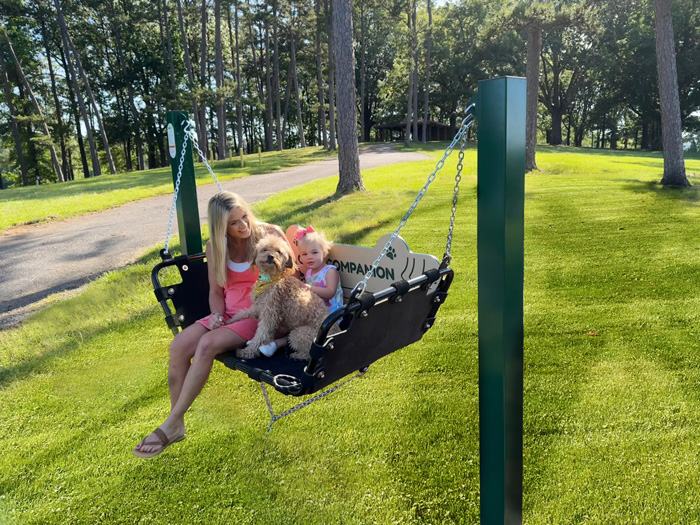
Dog parks are a popular addition to parks and other spaces, especially in populated areas where pets have limited chances to roam off leash with their people. According to the American Veterinary Medical Association, the U.S. dog population has increased from roughly 52.9 million dogs in 1996 to 89.7 million in 2024. This feature considers some of the newest ideas in dog park design, equipment, layout considerations and trends to meet the needs of this growing constituency.
Jason Miller is park resource design and development project manager for the City of Boise parks department—a city ranked as the nation’s leader in dog parks per capita. He recommends that other parks departments also embrace and welcome dogs to the parks. “The pets will be there at the park regardless of if there is a place for them or not, so make the best of it and find ways for them to feel included and welcomed in the park,” Miller said.
A Fenced-In Area Is Not Enough
Several experts noted that a good dog park today needs to offer more than a small fenced-in area with a bench in it. “My question to people even at this year’s NRPA was, would you have a ribbon cutting and public event for a new kids’ playground if you fenced in an area and put a bench in it?” said Harrison Forbes, a spokesperson for a dog equipment manufacturer based in Red Bud, Ill., and the host of Pet Talk with Harrison Forbes. “They laughed and said of course not. In the pet business, that’s a relief area. And relief areas have their place for sure, but a relief area and a dog park are different things.”
John Sarver, founder of an Indianapolis-based dog park design and equipment company, sees more developers and park managers starting to understand the importance of dog parks that offer more. “A dog park with just a fence doesn’t allow the dogs to really excel in an unleashed environment,” Sarver said. “A best-in-class dog park would incorporate several areas for dogs to play in an unleashed environment.” This could include play equipment scattered around the park to create several unique play areas, a drinking water fountain, wet pad area with a drain, and also a shade structure or shade trees.
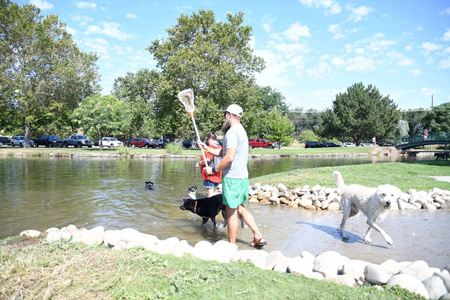
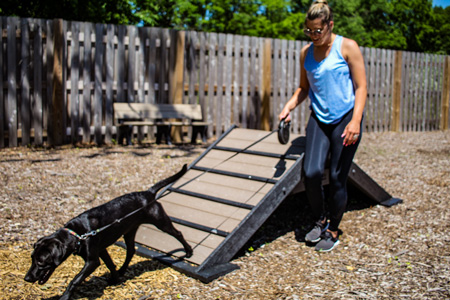
Forbes noted that basic agility features like A-frames, tunnels, walk planks and small jumps offer real-life applications for dogs. “They’re not just equipment for people who like to do dog sports—those are confidence-building tools for your dog,” Forbes said. They offer several advantages for dog owners too, including strengthening the dog-owner bond, teaching the dog to listen better, and teaching people how their dog reacts to things it doesn’t know or places where it might be uneasy. “So then when you’re out in the regular world, if you see your dog react a certain way, you’re able to read what’s about to happen.”
Forbes also noted that dog bites often happen in situations like a dog and their owner going up and down stairs that a dog is unsure about and someone appears out from around the corner right in their face. “Those situations where the dog feels uncomfortable or is unsure triggers a lot of that kind of behavior. The more confident your dog is, the less likely they are to react to something like that,” Forbes said.
Sarver recommends that any dog park bigger than 10,000 square feet have at least six to eight play elements and three to six benches, and strongly suggests placing both in variable locations throughout the parks to help spread dogs and people out. “That way, everyone is not gathered in a compacted area, creating cliques of people that can lead to an uninviting look for new park visitors,” Sarver said.
Be Careful With Water
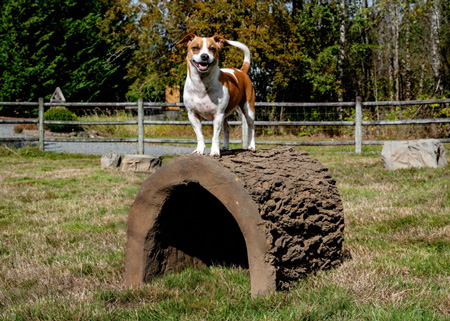
While water features can be great amenities, it’s important to get them right—something that’s currently an issue in many dog parks nationwide. “In the last year, there have been some outbreaks of disease… and it’s just so important to have filtrated clean water,” said Christina Clifton, sales support manager for a maker of dog park products based in Everett, Wash. “And then also that the water they have is draining, with a good drainage system in place so there’s no standing water.”
Because of these potential issues, and because some water features for dogs can get expensive, Clifton often recommends features like spray fountains that allow dogs to play and cool off without standing water or increased risk of illness.
In some cases, water features can not only be expensive but also have the unintended effect of lowering repeat visits to the park due to the wet-dog effect. “Depending on where you are, 50% or more of the people may be driving their dog to the dog park,” Forbes said. “And what’s happened many times is that people put water features in, and then the usage of that dog park plummets. Because people drive there in their nice, clean car, the dog jumps back into the car soaking wet with muddy paws, and then they just quit coming.”
To overcome this issue, Forbes recommends always making water features an opt-in, separate area as part of the larger dog park. He also notes that while dog baths are very popular, an effective low-budget alternative can be simply providing a hose with a spray nozzle on a slab of concrete near the park exit.
Keep ’Em Separated
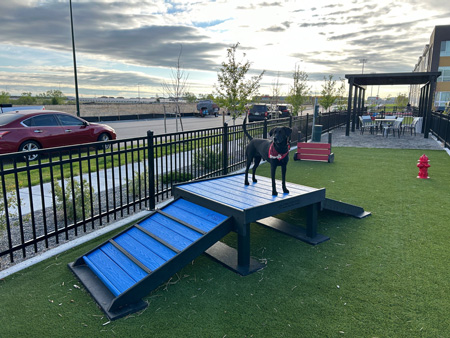
When room allows, separate areas for large and small dogs can help keep conflicts low and keep dogs safer. “Little dogs do feel more comfortable around their own-sized buddies. And it’s just a nice break in the park, and you can have a mix of agility equipment between the two parks. So there’s some variety to look at,” Clifton said.
According to Forbes, a common area split is 2/3 large to 1/3 small for the separated dog areas, though this can vary based on the community of dog owners and may be more of a 50/50 mix for dog parks for urban HOAs where more people own small dogs. In Boise, some of the larger dog parks feature what is called a shy dog area for smaller and less aggressive dogs that takes up roughly a quarter of the larger park.
Forbes is also now seeing the addition of a smaller third area that he calls a singles area. This space, typically 10 to 12 feet wide and 30 to 40 feet deep, features its own entrance gate, and has signage saying it’s for a single dog/owner only and to limit your time to 15 or 10 minutes. This can be helpful to help dogs that are new to the park get acclimated. It can also be a good option for young puppies that aren’t ready to play with the big dogs, or for elderly or post-surgery dogs.
“Dogs are aging and living so much longer now that owners are dealing with multiple years of mobility issues sometimes, especially in larger breeds,” Forbes said. “The singles area is a good way to let a dog get some relief walk without having to get bumped around by a bunch of young dogs that are kind of running wild.”
Park Placement
Shade is also an increasingly important consideration that needs to be top of mind, whether it’s intentionally placing the park within an environment partially shaded by trees or by providing additional shade infrastructure. “Dog parks that have good shade, whether it’s trees or structures, get a lot better midday usage, and I think that’s important, especially if it’s a heavily used park,” Forbes said.
While dog parks were once most often relegated to more remote, underutilized areas of parks, that thinking is shifting. “Now we’re seeing the dog parks in more of a central location to the social community main areas,” Sarver said. “This makes it more fun for the pet owners and their dogs as there is more stimulation around the park, which can provide energy and excitement for pet owners and their dogs.”
Given that dog owners are heavy park users at all hours, dog parks are also being deployed in more central locations to help keep eyes on the park and help mitigate crime issues. Forbes has been working on a new municipal dog park that was located that way intentionally, and previously on another dog park where similar results were achieved more serendipitously. “Crime fell like 200% as soon as the dog park opened,” Forbes said. “Because enough people walking at night with big dogs encourages people to stay away from it. Good lighting is a big part of that also.”
Lighting accompanied by security cameras can assist with crime prevention, and the prices of both have come down significantly. Forbes noted the example of cheap solar-powered lighting that might not stay on all night
in the winter but may keep the park lit through the
evening dog-walking hours. “I would just say, spend two, three hundred bucks, put it up, let it run the season,” Forbes said. “See how everybody likes it. It’s not an
expensive risk.”
Security cameras have likewise come down dramatically in cost. “You can go to Sam’s Club and have two cameras up by this afternoon that feed into the police department,” Forbes said. “And it’s good from a liability standpoint for the city. If somebody says, my dog got hurt, or this guy kicked my dog, whatever, having that video footage really helps from a law enforcement standpoint of being able to flesh out what really happened.”
When it comes to small-time crimes, like failing to pick up your dog’s poop, Clifton is even seeing entities like apartment buildings that are sick of dealing with the issue test new tenants’ dogs for DNA. “And if they find poop, they’ll test the poop, and they’ll know who is not picking up after their dog based on the DNA evidence,” Clifton said.
Sarver noted that bigger isn’t always better when it comes to a dog park. “When planning a park, you must consider daily maintenance and regular maintenance duties,” Sarver said. “The most important aspect is making sure the dog park is clean and safe for dogs at all times—and the bigger the park the more responsibilities for waste management, fencing and landscaping maintenance.”
In creating a network of dog parks, it can also often be best to create several smaller, more walkable parks but then also have a larger destination park. “If I were a city and I had a big area to cover, I’d maybe spend an extra $10,000 or $15,000 on one of the central ones that had a lot of parking but then do more smaller neighborhood parks that are a little more minimalistic,” Forbes said.
Co-Locating Dog-Friendly Amenities
Beyond some dog parks being more centrally located within a larger park, they are increasingly being located near other amenities like parking and restrooms to make the parks more convenient for dog owners. In some cases, they’re also being co-located near to other dog-friendly amenities.
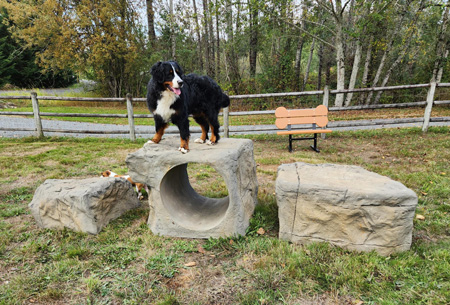
In the case of Boise, the city’s most-used dog park is Ann Morrison Together Treasure Valley Dog Island, which includes a 5.4-acre active-dog area, a fenced shy dog area and opportunities for dogs to swim and play in the surrounding pond. Its Military Reserve Dog Park also gets high usage, especially on weekends, in part thanks to its location near the Boise Foothills trail system. Several trails are designated “Controlled Off-Leash,” meaning that dogs are permitted if they stay within 30 feet of their owner and stay on the trail.
“I would recommend locating a dog park near other dog-friendly amenities,” Miller said. “I think it would encourage more use of the trails and give residents more options to spend time with their furry friends.”
To further increase use of selected trails and parks during low-usage times, Boise also has seasonal or designated hours for off-leash use. In parks that offer off-leash hours year-round, the most common approach has been to allow off-leash dogs from sunrise to 10 a.m. and from 4 p.m. to sunset. Other parks are open to off-leash dogs only in the winter months.
“What we have found is that during the summer our residents fill our parks, and it is best managed by having more restrictions during that time of year to keep everyone safe,” Miller said. “As the fall and winter arrive, the parks are less crowded, and we encourage residents to enjoy the off-leash areas outlined. This flexibility has been well-received by the community.”
An even more flexible approach is increasingly possible thanks to growing offerings in the area of portable dog agility equipment. “If you want to rearrange your park, make more room for a yappy hour, or just change the layout for an agility competition, it’s lightweight enough that you can move it,” Clifton said. This lighter equipment also makes it possible for parks to add pop-up dog parks to other dog-friendly events or to offer dog-park amenities to new parks on a temporary basis.
The Rise of the Dog Bar
One growing trend that several experts noted was that of new dog park bars that are popping up in cities nationwide. One of the biggest is Fetch Park, which launched its first location in Atlanta’s Old Fourth Ward roughly a mile from the heart of downtown Atlanta. Today, the chain has four Atlanta-area locations and has headed north to launch its first Philadelphia location soon.
Founder and CEO Stephen Ochs, a former Florida State baseball player, got funding for his initial location from athlete friends after being rejected by 86 banks. “Every bank got to underwriting and they were just like, ‘we’re not comfortable underwriting this because there’s nothing else like it,’” Ochs said.
As a son of dog breeders, Ochs brings deep knowledge of dog behavior to the operation and design of the parks with a focus on keeping the experience safe and fun for all. “In the Fetch Park design, safety is everywhere,” Ochs said. This includes the use of box tables that human patrons don’t find particularly comfortable, but that prevent their dogs from resource-guarding under-table shade.
While humans can enter for free except for ticketed events, there is a membership program and fee per pup and requirements that each dog be spayed or neutered and vaccinated for DHPP, Bordetella, rabies and leptospirosis.
And while the dogs are free to have fun off leash in the park, they’re expected to behave and are supervised by Woof Wardens. “They have dog training and also go through a training session with us,” Ochs said. “Because with dogs, 99% of the issues you have can be predicted if you understand the behavior to look for.”
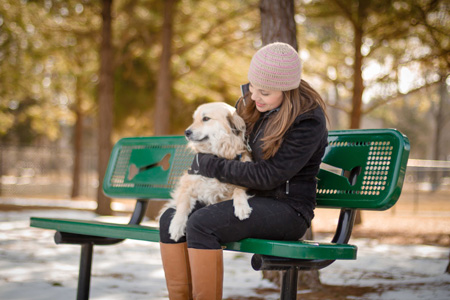
And, like smart dog parks, Fetch Park uses cameras to assist in this effort too. “The cameras help, because you can walk people through it—if the dog has humping issues or anxiety, we can show them,” Ochs said. “These are the behaviors your dog is showing. Here’s how to correct it.”
Ochs also noted that Fetch Park isn’t tolerant of the dominance hierarchy that can sometimes be seen at typical dog parks. “That’s not okay at Fetch,” Ochs said. “If you show aggression, if you show certain behaviors, you’re going to get a strike, or you’re going to be banned.”
Ochs also drew on his baseball experience in the park’s design, which emulates a minor-league ballpark with a jumbotron, wood fencing, murals and concession stands. “I really wanted to create a vibe when you walk in,” he said.
An estimated 30 to 40% of Fetch patrons are not dog owners, and many of the scheduled events are things like movie nights, trivia nights, concerts, singles mixers and karaoke instead of events that are specifically dog-focused. “Something I’ve always struggled for is to have communities in these parks,” Ochs said. “What I really step back and think about is we’ve had 15 couples meet at Fetch and get engaged at the park. It’s amazing to see. We have little Fetch families rolling around now,” Ochs said.
And whether it’s at a regular dog park within a larger park, or at a dog bar like Fetch, meeting the needs of community members is what it’s all about. Even people who don’t have dogs often enjoy being around them when the environment created is pleasant and safe. “I wanted to create the happiest place people could experience in their day,” Ochs said. “So if you travel a lot for work or you’ve just had a bad day, you can come grab a drink, watch the game, pet some dogs and get some summer.” RM