


By Chad Kennedy
When inclusive play is designed well, the proof shows up regardless of the weather: families choose the space, teachers return with their students daily, and children linger because there is always something engaging to do. On a rainy, cold November morning at Harper’s Playground in Portland, Ore., the playground was packed with children from the neighborhood and the adjacent school’s classes—rain or shine, they come because the children love it and never lose interest.
Those outcomes are not accidents; they grow from environments that are both sensory-integrated and socially inclusive, supporting eight sensory systems and multiple comfort levels for interaction rather than stopping at ADA checklists that only offer minimum accommodations. When spaces offer choices—from movement-rich equipment that satisfies sensory seekers to gentle, low-sensory input areas for sensory avoiders or self-regulation—more people can participate for longer, together.
With a clear vision, phased design when appropriate, and consistent communication, teams can avoid common pitfalls and transform routine playgrounds into engaging intergenerational hubs rather than one-off ribbon cuttings. Thoughtful infrastructure—from accessible restrooms to low-effort-requiring walkways—turns potentially short visits into opportunities for sustained social learning and community connection.
This article explores how intentional design, strategic planning, and continuous community engagement can elevate inclusive play beyond minimum ADA compliance standards to create genuinely transformative public spaces.
Redefining Inclusion Beyond Accessibility
Understandably, stakeholders often have different definitions of inclusive design, which can unintentionally lead to inconsistent outcomes and missed opportunities.
Actual inclusive design extends far beyond physical accessibility for individuals with disabilities.
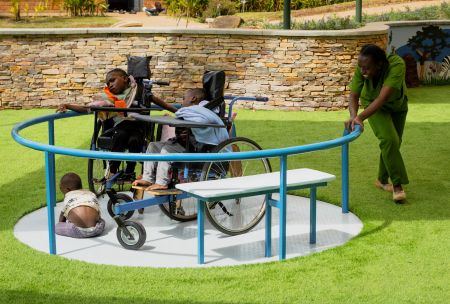
A more effective approach involves designing spaces that are both "sensory-integrated and socially inclusive." While this terminology may seem cumbersome, it captures the essential elements that support a broad range of users through diverse sensory experiences and shared spaces for social learning.
Most people learn about the five basic senses in grammar school: sight, sound, touch, taste, and smell. However, human beings process information through a minimum of eight sensory systems. In addition to these typically known sensory systems, there are three additional very important systems: proprioceptive (body position awareness), vestibular (balance and movement), and interoceptive (internal body awareness). These additional systems play crucial roles in how individuals experience and navigate their environment.
Differences in how sensory input is individually registered create a broad spectrum of needs within the larger community. Some children require intense sensory input to feel engaged and regulated, often seeking out spinning equipment and jarring/high-movement activities. Others, however, become quickly overwhelmed by sensory input and require quieter, gentler experiences to participate comfortably.
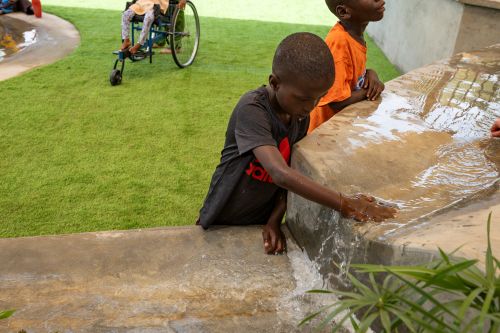
The practical implications of sensory processing become clear in everyday scenarios. Consider restroom facilities, which are often eliminated from playground projects in order to reduce construction costs. Unfortunately, children (and adults) who struggle with interoceptive awareness may have difficulty recognizing bathroom needs until those needs become urgent.
Without accessible restrooms on-site, families often leave for the day. Any parent of small children can recognize the reality that once a family leaves the playground for any reason, the likelihood of returning that same day drops to nearly zero.
The design decision to eliminate restrooms significantly compromises valuable play experiences, social interactions and developmental opportunities, as do many other design decisions. Restrooms are just one example of many design considerations that impact everyone who visits recreational spaces. Children aren't the only ones affected, as complete social groups normally come with them including parents, grandparents, siblings, caretakers and friends. Anyone in this social group could have a challenge with sensory processing.
The Intergenerational Advantage
Effective inclusive playground design recognizes that a child’s development doesn't occur in isolation. When playground design enables meaningful intergenerational interaction, benefits that extend throughout the community are established.
Traditional playground design often relegates adults to passive supervision roles, sitting on perimeter benches while children play
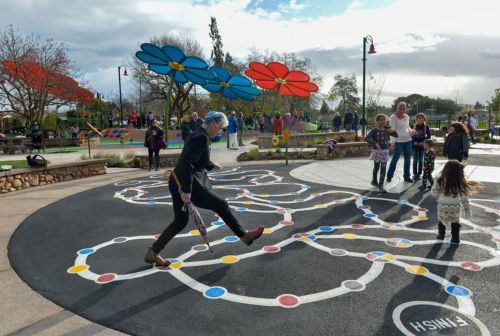
separately.
Truly inclusive design creates opportunities for grandparents, parents and other adults to participate actively in play experiences alongside children. This intergenerational engagement accelerates social learning and community building.
Children learn conflict resolution, cooperation and social boundaries through play experiences. Playgrounds that address different comfort levels, with social interaction ranging from extroverted to introverted, provide natural settings for the gradual development of skills and comfort with others in varying age demographics.
The social learning that occurs in well-designed play environments addresses broader community challenges around social cohesion and interpersonal relationships. These spaces offer a relatively safe and low-risk environment where both children and adults can practice the social skills necessary for success in other community settings.
Avoiding the Phased Development Trap
Budget realities often necessitate phased development approaches for playground projects. Often, “Phase One” funding is achieved and construction is completed and celebrated, creating an unintended perception of project completion that can kill momentum for subsequent phases. This outcome represents a disaster for comprehensive playground design.
Truly inclusive playgrounds require balanced play experiences that cater to all sensory and developmental needs. Incomplete projects fundamentally fail to achieve their intended complete benefits, in essence diminishing the value of initial investments.
To counter this, establish a clear long-term vision from the very beginning. Consider completing all infrastructure work—including grading, utilities and site preparation—for every planned phase during the initial construction. In this way, an element of the project looks incomplete, even if early phases are completed. Pre-graded areas or visibly incomplete infrastructure, like a restroom foundation, offer visual clues that signal "we're not done yet." It's not just a flat patch of grass; it's a tangible promise of more to come.
Consider framing each phase as a milestone while emphasizing what is to come in the next phase. The goal is to keep the community invested, preventing a "foot off the gas" mentality that can prevent projects from reaching their full potential. Smart phasing ensures each stage adds balanced elements, keeping the overall design cohesive even as it grows.
Managing Community Perception
Perception management requires communication strategies that consistently frame completed phases as progress toward a larger vision rather than endpoints. This messaging must remain visible throughout the entire project timeline.
Fundraising thermometers, project timelines and phase completion indicators help community members understand current progress relative to final goals. These tools work particularly well for grassroots fundraising efforts where communities need clear information about remaining needs.
Communication strategies must respond to how people consume information today and in the future. Traditional newspaper and television news coverage seems to reach diminishing audiences daily. Meanwhile, social media platforms, such as Facebook, X, Instagram and TikTok, serve as primary sources of information for many community members.
Dedicated project websites and consistent social media campaigns will always outperform sporadic communication efforts. If project communications go silent on social platforms, community members often create their own narratives to fill information gaps. These self-generated stories frequently assume either project completion or abandonment—both of which are damaging to continued fundraising and political support, and should be avoided.
Comprehensive Community Engagement
Even well-planned projects can face significant community backlash when residents feel excluded from the development process. A recent project illustrates this challenge perfectly. Construction began on a major playground renovation, with neighbors across the street immediately calling city offices to complain about tree removal and the park’s "destruction." These residents claimed they had never heard about the project despite extensive prior outreach efforts.
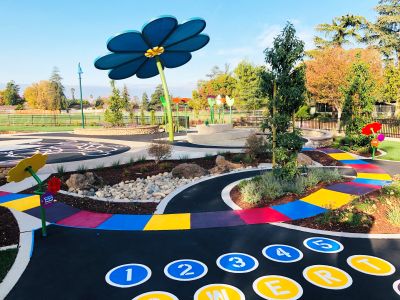
The project team had conducted multiple community meetings, distributed door-to-door flyers, secured newspaper and TV news coverage, maintained active social media campaigns, and worked with local neighborhood groups. Yet these particular residents felt completely uninformed about work happening directly in front of their homes.
Their feedback revealed gaps in the communication strategy: "We never got door flyers. Nobody reads newspapers or watches the news anymore. The neighborhood group only includes 50 people." While it is impossible to reach every resident through every channel, this experience demonstrates the need for multiple communication rounds through diverse methods and at all phases along the journey.
Successful community engagement requires sustained effort throughout all phases of the project, not just during the initial design. Community meetings during construction phases enable residents to voice their concerns and provide input as the work progresses. This approach prevents frustrations from stacking up and creating larger political problems.
Parks and recreation professionals particularly benefit from comprehensive community engagement because it will help reduce or avoid completely the volume of individual complaints and inquiries that can overwhelm staff. When residents have easy access to current project information, they are less likely to contact city staff directly with questions or concerns.
Learning from Experience
Creating exceptional, inclusive playgrounds requires an honest evaluation of completed projects and a commitment to continuous improvement in future efforts.
This evaluation process can be uncomfortable because it requires acknowledging that well-intentioned work could have been executed more effectively.
Many organizations will skip post-project evaluation because team members prefer to celebrate successes rather than examine shortcomings. However, this approach wastes valuable learning opportunities and perpetuates the same limitations in subsequent projects.
Taken to the next level, external evaluation often provides more objective feedback than internal review processes will. Outside consultants can identify design and process improvements that internal teams might miss due to emotional investment in their work.
These evaluations should examine both design outcomes and project management approaches. Questions might address the effectiveness of community engagement, team composition decisions, procurement processes and specific design choices that either supported or hindered inclusive objectives. Accepting and embracing these evaluations requires organizational maturity to receive constructive criticism productively, and when used properly, can result in magical places.
Playgrounds That Serve All
Creating truly inclusive playgrounds requires more than good intentions and ADA compliance. Success demands a comprehensive understanding of sensory integration principles, strategic project management across multiple development phases, sophisticated community engagement reaching diverse populations, and collaborative design processes that leverage multidisciplinary expertise.
Communities that embrace this comprehensive approach discover their playground investments extend far beyond equipment purchases. The playgrounds become gathering spaces that strengthen intergenerational relationships, support diverse developmental needs, and foster social connections that form the foundation of thriving communities.
The path forward requires sustained effort, careful execution, and honest reflection on both successes and areas for improvement. Communities willing to adopt this holistic approach to inclusive design will create public spaces that not only address differences but also actively celebrate and support every visitor… with playgrounds that serve all.
About the Author
Chad Kennedy, CLARB, CPSI, LEED BD+C, ISA Certified Arborist, is a director with Westwood. For more information, visit https://westwoodps.com/.