


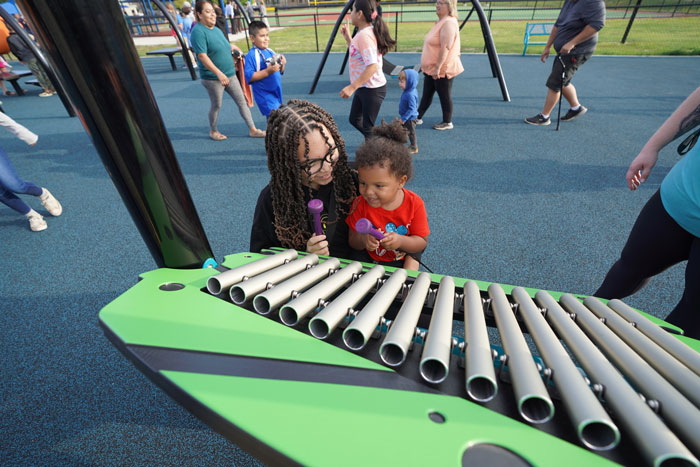
Bringing music outdoors expands how communities experience play, movement and connection. Outdoor music play enriches development across all ages and extends engagement far beyond the playground—into parks, plazas, trails and more. Thoughtfully designed music invites fun, discovery and belonging in spaces where people naturally gather.
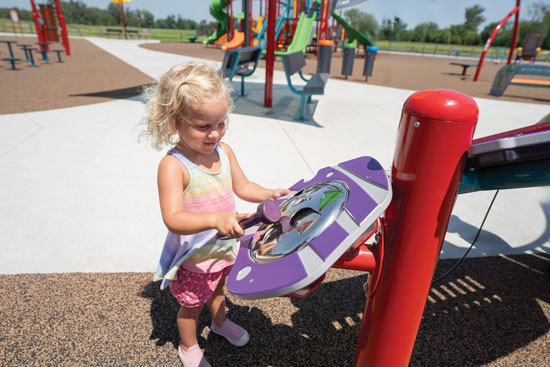
Outdoors, music becomes communal and encourages participation, curiosity and experimentation. Whether you’re 5 or 85, music activates the senses and invites the body to move. Placing instruments together and incorporating seating, shade and other amenities invites people to pause, play and engage together. In these moments, music fosters a spontaneous sense of belonging, collaboration and cultural appreciation without requiring instruction or performance.
Including music in outdoor spaces supports cognitive, physical and social-emotional development. Musical play enhances creativity, coordination, language and teamwork. It also offers a powerful form of nonverbal communication, giving people a way to communicate without words. What might otherwise be a passive environment becomes a rich, multisensory experience that supports inclusion and self-expression for all ages and abilities.
Research reinforces what we often observe about music play. The right side of the brain governs creativity and intuitive thinking, while the left manages logic, language and reasoning. Music is unique in its ability to engage both hemispheres and the bridge between them, known as the corpus callosum. As Elena Mannes notes in her book “The Power of Music,” scientists have found that music stimulates more areas of the brain than any other human function.
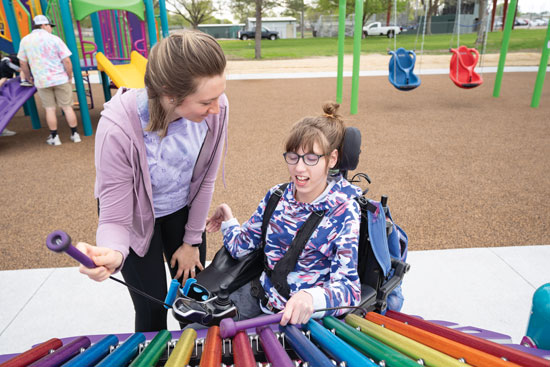
In outdoor spaces, the benefits of music are unmatched. Cognitively, music supports sound processing, language development, memory and focus. Exploring rhythm and melody builds problem-solving skills and pattern recognition. Physically, tapping drums, striking chimes or moving to a beat strengthens fine and gross motor skills while supporting balance, body awareness and grip strength. Socially and emotionally, music helps regulate mood, encourages cooperation, offers a basis for socialization, and creates shared moments of success and joy.
Here, like all outdoor spaces, smart space design is essential to success. Inclusive outdoor music environments prioritize universal engagement, flexible options and thoughtful sensory integration. Designing with vertically mounted and clustered instruments makes the most of available space while encouraging exploration and interaction. Visual cues through colors or surfacing patterns support easy wayfinding, helping people of all ages and abilities intuitively find and engage with sound. Instruments that blend with nature, carefully considered soundscapes and the use of color help music feel like a natural extension of the environment. When designed with intention, outdoor music spaces move people through sound, discovery and connection.
Music belongs outside because it brings people together and transforms everyday spaces into places of movement, joy and shared experience—all things we need more of. RM
ABOUT THE AUTHOR
BCI Burke Communications and Education Manager Sarah Lisiecki combines a passion for play, the outdoors and movement with more than 10 years in the play industry and hundreds of presentations given on topics such as inclusive design, musical play and trends in play at parks and recreation conferences, district meetings, landscape architect firms and representative trainings.