

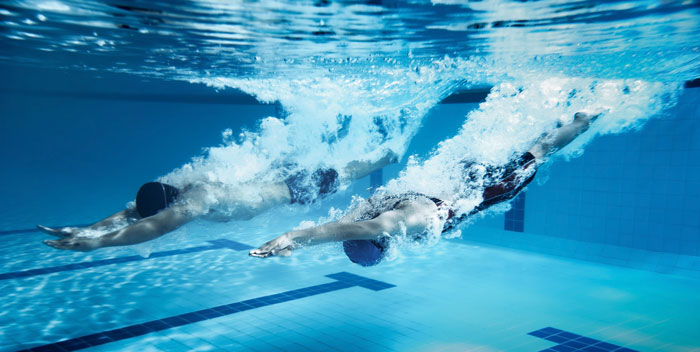
It seems such a simple pleasure: jumping into a pool of water on a hot day. But for those who maintain pools, it’s anything but simple. They need to be knowledgeable about pool mechanical equipment, water chemistry, pool decks and shells, HVAC systems, gutters and drains, waterslides and diving boards, competitive equipment and more.
The Association of Aquatic Professionals (AOAP) has unveiled a new Aquatic Technician School, which reimagines professional training in this area, according to Juliene Hefter, executive director and CEO of AOAP, who said the gap between classroom theory and real-world practice can be frustratingly wide. “You can memorize chemistry formulas and equipment manuals, but nothing quite prepares you for the moment a splash pad malfunctions on the busiest day of summer, or when a feed pump fails and you need answers—fast!”
In the new technician course, a full 50% of instruction time is dedicated to hands-on training, explained Hefter. “Students will test water chemistry with professional-grade equipment, weld PVC pipes until the joints are flawless, and troubleshoot ADA lifts and splash pad systems that mirror what they’ll encounter on the job.”
Sessions are collaborative, with technicians sharing insights and solving problems together, programming controllers, and experimenting with feed pumps, UV disinfection systems and multimeters, where mistakes become learning opportunities. “The school fosters connections between technicians who might otherwise work in isolation, creating a network of professionals who can troubleshoot together… and support each other through the industry’s unique challenges,” said Hefter.
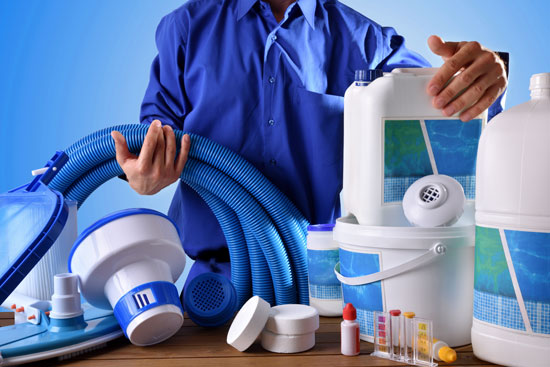
She pointed out that technicians enter the field with vastly different experience levels, and even seasoned professionals sometimes like to “sharpen their competitive edge.” Therefore, AOAP has structured the program around tiered learning, with the first tier laying the foundation, covering things like circulation systems, disinfection equipment, essential maintenance routines and critical safety protocols.
The second tier covers subjects like advanced diagnostics, equipment upgrades and full system replacements, “the kind of complex work that separates competent technicians from indispensable ones,” said Hefter. And a third tier—Master Aquatic Technician—is in development, offering “elite-level training,” and encompassing diverse facility types, “from competition pools to waterparks to therapeutic aquatic centers.”
In Crown Point, Ind., Chris Nawracaj is general manager of the outdoor Deep River Waterpark, offering multiple bodies of water and many attractions. He explained that they have two main filter buildings in the park: One houses filtration for the lazy river, children’s pool and wave pool, while the second houses filtration for their action river and interactive play structure. Filtration for specific attractions is located within smaller buildings, with seven systems total, circulating and filtering about 1.4 million gallons of water “at any point in time.” Closer to the attractions, “we also have motor pit areas which house the various filter pumps and pumps that push water to the various attractions.”
In recent years, Deep River installed its first regenerative media filter (RMF) system, and while Nawracaj said they love it, budgets don’t currently allow for adding more. “The amount of time saved on backwashing and maintaining your systems is immense,” as is the amount of water and pool chemicals saved by not having to backwash as much. He said maintenance has been relatively simple, “other than giving it a good, deep clean at the end of the season.”
He said maintenance on the park’s sand filters is different, “especially when you have to change out the sand.” For this they bring in outside help as it’s a huge project. “They have to come vacuum out all the old media, then repair any broken laterals within the filter, then load new sand in them. That’s something that needs to happen about every 10 years, or if something breaks, much sooner.”
For water treatment, Nawracaj said they use calcium hypochlorite tablets for chlorine and hydrochloric acid to balance out the pH. “One of our attractions uses CO2 to control pH… as it’s harder to get acid delivered to that particular filter building.” Maintenance for the systems is “very intensive. Because of the corrosiveness of the various chemicals, something is always in need of repair or replacement. It’s something you have to be proactive on, or you run the risk of dealing with a leak, and that’s a much bigger problem.”
As for secondary sanitation sy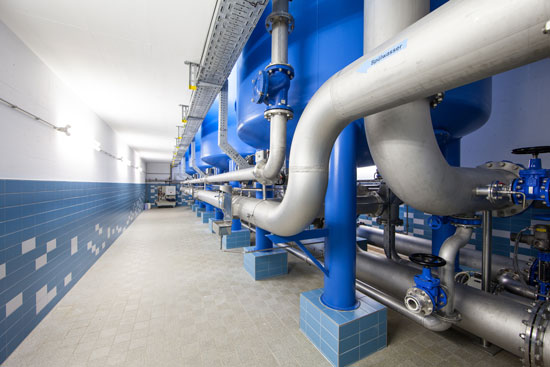 stems, Nawracaj said they have two UV systems installed, which have worked out great. “They’ve really helped us deal with various water quality problems, especially in our pools where the surge tank is underground.”
For splash features and attractions, Deep River uses recirculation systems, and Nawracaj said “everything has its own challenges. Fiberglass slides need maintenance, waxing, refinishing; outside of the slides painted and the seams caulked to control drips. The support towers all need to be painted and kept up on for rust. Motors and pumps need greasing, packings replaced and monitored for any leaks that may pop up.”
Nawracaj said they’re “always patching, painting and sealing things” when weather permits in the off-season, and they’ll sometimes even paint the pools in the fall instead of spring as the weather can be better. “We also have a lot of buildings that need exterior paint and repairs.”
For decks and surface areas, “you can never have enough people pressure-washing at an outdoor facility. Things like our slide towers are on a weekly schedule of getting pressure-washed from top to bottom. It keeps them looking clean and algae-free to prevent trips or falls.”
Other off-season tasks run the gamut, according to Nawracaj. This includes repairs to things that broke over the summer or are “preventive in nature to save on a repair in the spring. It could be painting, repairing concrete, cutting out and replacing climbing netting on our play structure.”
He said plumbing repairs are addressed, and sometimes if a leak occurs and it’s not critical to an attraction’s function they’ll postpone repairs, so they don’t have to shut down the attraction. “We also work on IT upgrades and POS (point of sale) system changes as it’s the best time to do them. This year we’re working on building a hammock area for the customers to relax and enjoy for next year.”
During the season, Nawracaj said their entire facility gets inspected daily by team members, “checking everything from slides, filter buildings, food stands, to all the various guest areas. These reports then help generate our maintenance workflow and what the next project is for our team.”
Other tasks are performed on a weekly or monthly basis, “such as greasing pumps and motors, giving them oil changes if needed, and making sure everything for our wave pool is working and lubricated properly. We even have cleaning of our chemical feeders on a monthly schedule to prevent buildup that keeps them from performing like they should.”
Hefter said that many facilities do have maintenance plans outlining daily, weekly, monthly and annual tasks, but pointed out that “Every pool/spa facility is different with varying budgets, size, goals, resources and assets, so there is no one-size-fits-all preventive maintenance program… each one must be tweaked and changed to fit specific needs.” And for facilities looking for help when creating maintenance plans, “Pool consultants provide consulting services pertaining to all aspects of swimming pool regulations, maintenance and training, including services for general evaluation, safety, government regulations, equipment, structures or preventive maintenance.”
Dewey Case is technical director at the Council for the Model Aquatic Health Code (CMAHC), and he mentioned a section in the MAHC that “directs the aquatic venue to have a written maintenance plan, (and) provides a road map… to start putting one together.”
He said consulting with a third party is crucial for those without a proper plan, which he often sees, where a venue might “wait until something breaks then try to find a quick fix, typically by a local company who really just specializes in residential pools.” He explained that while qualified consultants aren’t cheap, they can save a facility lots of money on unnecessary repairs or a lawsuit resulting from a preventable accidental chemical release or other event.
Documentation and detailed record-keeping are also “critically important,” according to Hefter, who explained that pool operators are required by state or local agencies to keep accurate and consistent pool logs for anywhere from a couple years to “forever.” One reason for this is liability protection. “Pool maintenance logs are an important piece of insurance… to show proof that ideal and safe pool conditions are maintained,” should a swimmer fall ill, for instance. “Failing to produce logs during inspections can lead to citations, fines or even temporary closures.”
Auditing past maintenance logs can also “help show trends for preventing expensive equipment malfunctions and other potential maintenance issues,” said Hefter. “Regular logging can reveal inefficiencies in chemical usage; a historical record lets you fine-tune your dosing schedules, saving money on chemicals.
“Tracking activities such as employee training, maintenance and safety inspections prevents hazards and ensures smooth operations,” Hefter continued, while failure to do this can lead to irreparable harm. “Neglecting regular maintenance logs can lead to unnoticed wear and tear on equipment,” which not only disrupts operations but can prove costly and create safety hazards. “Comprehensive documentation protects your facility legally, operationally and financially, while providing valuable data for continuous improvement.”
In Arvada, Colo., the Apex Park and Recreation District (APRD) operates more than a dozen facilities, including three indoor pools, three outdoor pools and two splash pads. Samira Tadayon, aquatics and HVAC technician with APRD, is responsible for the maintenance and repairs of them all. “Last summer I was able to hire a seasonal technician to help me out, and that’s made a world of difference.”
Tadayon said they have eight bodies of water  using sand pool filters, while five bodies use diatomaceous earth (DE) filters. “For our sand filters we regularly need to backwash the filters to maintain proper flow and filtration rates, and backwashing times vary from pool to pool.” Depending on pool usage and other factors, some pools need to be backwashed maybe once a week while others may need it daily. “We try to do a full sand media replacement about every five years. Our DE filters have more automated technology but require media replacement more frequently than sand filters.” She said this also varies depending on certain factors, “but can be anywhere from a couple of weeks to months.”
Tadayon said they use automated chemical control systems at all their pools, spas and splash pads to maintain chemical balance. “Most state codes require an automated system for regulating pH and chlorine because they can fluctuate quickly, and these chemical readings are essential for the safety of the pool chemistry.
“Both indoor and outdoor pool decks need to be inspected daily for immediate safety concerns such as trip hazards or sharp protruding objects,” said Tadayon. “We often find ourselves grinding down and/or sealing parts of the pool deck to address these issues, and any potential cracks or weak spots in the concrete where water can get in and cause further damage. We also need to make sure the finish of the pool decks is not too slippery or too rough for our patrons, who are often barefoot.”
As far as pool features, Tadayon said waterslides tend to be the biggest maintenance consideration. “Slides get walked and inspected daily for immediate safety concerns. Regular maintenance on slides includes waxing the surface of the slide and recaulking joints. Splash pad features get thoroughly inspected at the beginning of the season, and daily inspections after that. Diving boards and platforms also get inspected for cracks and structural issues that may need to be addressed.”
The new Arvada Aquatics Center is home to a variety of swimming and diving teams, hosting large meets and events. Tadayon said starting blocks and bulkheads at the facility are inspected regularly. “Maintaining these looks like cleaning the stainless-steel components and making sure the parts of a starting block are secure and not moving on a swimmer.”
Case said there are many maintenance references in the MAHC, and he shared some specific issues that are covered and often get overlooked. “UV shutdown alarms have to be maintained. Spas should be drained no less frequently than every two weeks.”
He said ground-fault circuit interrupters (GFCI) should be checked monthly, with a visual bonding inspection done every six months. And one he stressed: “Monthly testing of interlocks for chemical feed systems and automated controllers. If I could get every aquatic venue in the country to get into one regular maintenance habit it would be that one.”
CMAHC offers webinars and trainings, some of which “can help fill learning gaps on various maintenance practices and generalized equipment,” said Case. He said they recommend the AOAP service technician course, and added that aquatic design, planning and operations firm Counsilman-Hunsaker “has a really good presentation on general maintenance.” And he recommended technicians also look at non-pool-related training. “Need to work on a 50M pool heater? Look at trainings on industrial boilers. Need to work on eight-inch schedule-80 pipe? Look for industrial plumbing trainings. Same thing with electrical… the basic principles will still apply.”
Case also mentioned newer technologies that are proliferating, including modern automated controllers, drowning detection systems, regenerative filters, complex UV systems with chloramine controllers, and modern air-handling systems. New equipment includes high-performance ceramic membrane filtration systems, poolside testing systems for pathogens like Legionella, and photometric water quality testing devices. “It’s going to be extremely important that pool service technicians are tech-savvy in the years to come.”
Added Hefter, “The days of purely mechanical skills are evolving; today’s pool technicians increasingly need to understand digital controllers, automation systems, remote monitoring platforms, smart sensors and cloud-based management software in addition to traditional mechanical and chemical knowledge. Ongoing education and technical adaptability are becoming essential parts of the job.”
“Pool techs/operators certainly need to be more tech-savvy, as things have so many more electronic controls and fail safes… than they did in the past,” said Nawracaj. “It’s usually the smallest thing that prevents something from working the way it should, and if your system has all these things tied together, it could be preventing your whole system from even functioning.” For example, he mentioned the tiny fuses in chemical controllers that can blow and knock the whole system out.
Nawracaj said attending industry conferences is great for both education and networking. “It’s always good to have another operator to talk to about problems and issues you might be having, in order to help find solutions to remedy them, as often the solution is right in front of you. It’s also great to be able to talk to people about products or solutions that you’re considering, to get real-life pros and cons of something that a salesperson won’t tell you.”
Tadayon said they make sure their full-time aquatics staff are either Aquatic Facility Operators (AFOs) or Certified Pool Operators (CPOs). She has attended the annual AOAP Conference and Colorado Parks and Recreation Association (CPRA) annual conference and aquatics symposium. She became an AFO instructor through the National Recreation and Park Association (NRPA). “All these organizations have been great for me personally networking and growing in the aquatics and aquatic maintenance field.
“As a female pool technician, I’ve been noticing more women getting into the industry,” Tadayon continued. “I have a seasonal maintenance technician who I work with and am teaching who is female, and I know many females in the industry who are trying to get more into the mechanical and pump room side of aquatics. I hope to see this trend continue in the future!” RM