


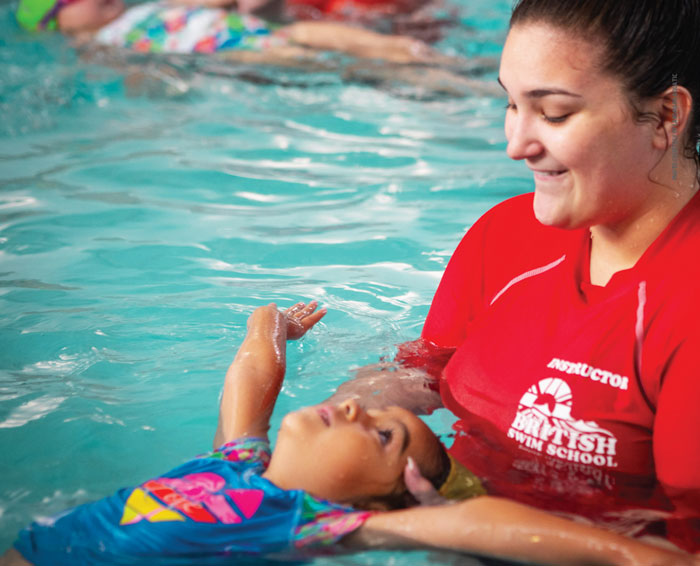
Swim lesson programs have evolved from one-size-fits-all instruction to inclusive, individualized models that recognize sensory needs, emotional readiness and family involvement. There is also a stronger emphasis on drowning prevention and early water safety.
As drowning continues to be among the top threats to children’s lives, according to the Centers for Disease Control and Prevention, parents are willing to pay for quality instruction. In private business alone, swim school franchises in the U.S. were worth $1.2 billion in 2025, according to Verified Market Reports, which predicts that number to rise to $2.8 billion by 2033.
Inclusivity has grown in all areas of recreation, and swim lessons today are designed for all ages, abilities and incomes. Expense should not be a barrier to a lifelong and crucial skill set, said Rowdy Gaines, three-time Olympic gold medalist, vice president of partnerships and development for the Pool and Hot Tub Alliance (PHTA), and leader of the organization’s Step Into Swim initiative.
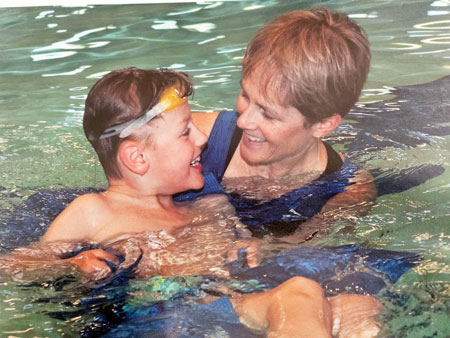
Step Into Swim is dedicated to drowning prevention and promoting water safety by funding learn-to-swim programs across the U.S. and beyond. The program provides grants to organizations that offer free or low-cost swimming lessons, primarily targeting children and families in underserved communities, regardless of age, background or ability.
It aims to create more competent swimmers, reduce drowning rates, foster a lifelong love of swimming and open up opportunities in water sports or related careers. Since its launch in 2012, Step Into Swim has raised millions—including more than $1.5 million raised in 2025 alone—and funded more than 500,000 swim lessons in 43 states, the U.S. Virgin Islands, American Samoa, Grand Cayman, and Canada.
“Every dollar we raise is matched by our board, and every dollar we raise goes directly out the door to lesson providers around the country,” said Gaines. “I am so proud to be part of this incredible organization.”
Grants are awarded through an application process on the program’s website, with partnerships from PHTA industry leaders.
“The focus is on extending safe, healthy pool experiences to those who might not otherwise have access, emphasizing that swimming is a lifesaving skill everyone deserves,” Gaines said.
Gaines said that as a Florida native he had been swimming since before he could walk, but he didn’t compete until high school. He turned his obsession with improvement into a college scholarship and then three gold medals at the 1984 Los Angeles Summer Olympics.
“Swimming gave me direction when I needed it most, pulling me out of potential dark paths and into a life of achievement, travel and purpose,” he said. “It literally saved my life in those formative years by providing structure, discipline and success. Today, that experience fuels my work with Step Into Swim.
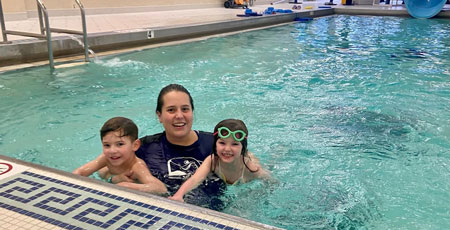
“I’ve seen firsthand how swimming transforms lives not just through competition, but as a basic survival skill. Drowning is preventable, yet it devastates families every day. Leading this program is one of the greatest honors of my life; we’re funding lessons for kids who might never have the chance otherwise, just like swimming opened doors for me. It’s about paying it forward, making sure every child receives the ‘gift’ of swimming to stay safe, build confidence, and maybe even discover their own passion.”
Gaines’s emphasis that swim lessons are much more than learning to swim is shared by every program director and instructor reached for this story. Today’s lessons prioritize water safety, comfort in the water, overcoming fear, and building a confidence that carries over to other aspects of life, said Sharon Fagan, program coordinator at the Aquatic and Rehabilitation Center of the Hospital for Special Care in New Britain, Conn.
Fagan works with the Miracle League of Connecticut (MCT), a nonprofit that helps people of all abilities enjoy recreational activities. Through a grant from the Step Into Swim program, MCT delivers adaptive swim instruction in a fully accessible, warm-water environment.
“Our lessons are highly personalized, focusing on safety, skill-building and independence in the water,” Fagan said. “Participants learn essential swimming techniques while gaining confidence, developing water safety awareness, and enjoying the many physical and emotional benefits of swimming in a supportive, encouraging environment.
“My philosophy is that swim lessons begin with trust and encouragement. Success is measured by comfort, confidence and safety—not just technical skill. Every swimmer progresses at their own pace, and lessons are designed to support emotional readiness, independence and lifelong water safety.”
Fagan’s colleague Sarah Castellani said the lessons are marketed with just those educational goals in mind. She said that any lesson program that wants to include people of all abilities should consider building knowledge through webinars, workshops, lectures and professional resources as an essential first step. Sharing that knowledge with staff through in-service training and mentoring ensures everyone is prepared, she said.
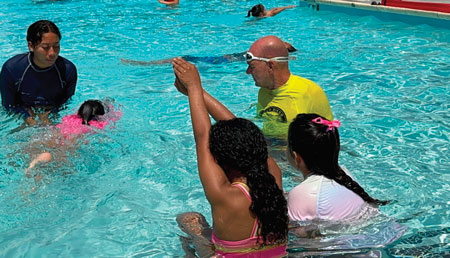
“Partnering with organizations that specialize in adaptive programs, such as Miracle League, provides valuable guidance and insight,” Castellani said. “The most important goal is to create an environment where all participants feel welcomed, supported and able to succeed.”
That focus on much more than stroke technique is essential, especially for people with a strong fear of the water or later-in-life learners, said Karyn Bonner, camp director at nonprofit College Settlement Summer Camps and Outdoor School in Horsham, Penn., near Philadelphia.
While Bonner learned to swim early on as part of school programs in Edinburgh, Scotland, Bonner’s mother didn’t learn to swim until she was an adult. “I watched her avoid swimming and water activities because she was incredibly scared of the water,” Bonner said. “Seeing how much she missed out on really stuck with me and helped me understand how lasting that fear can be when someone doesn’t have the chance to learn early on.
“When I started teaching in Edinburgh, and then at College Settlement Camp, I was struck by how many children and adults came to pools not knowing how to swim and how much fear or embarrassment that caused,” she said. “I also got a very keen awareness of how dangerous a situation this creates. Those experiences shaped how I hire, train and supervise pool staff for our camp.”
Bonner said that over the years the camp has moved away from a formal, one-size-fits-all curriculum and toward something that’s more flexible and realistic for camp. The focus is on what a camper can actually achieve in two weeks, rather than trying to push everyone through the same checklist. Lessons are a blend of activities, games and skill drills pulled from many different teaching backgrounds, she said.
“Part of my role has been hiring pool staff who teach counselors how to teach swimming—how to break skills down, how to spot fear, how to keep kids safe while still making lessons fun,” said Bonner. “We emphasize pacing, patience and confidence-building, knowing that technique comes more easily once a camper feels safe in the water.
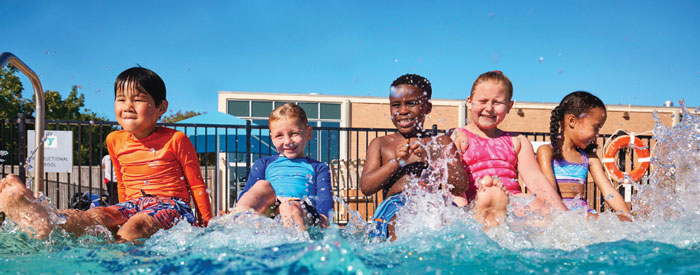
“In a two-week session, progress might mean putting your face in the water for the first time, floating independently or swimming a short distance, and we treat those moments as real successes. Lessons have become more game-based and less intimidating, which helps campers stay engaged and willing to try.”
Melon Dash has written a book on teaching those afraid of the water, “Conquer Your Fear of Water: A Revolutionary Way to Learn to Swim Without Ever Feeling Afraid.” The CEO and founder of Miracle Swimming School for Adults in Sarasota, Fla., Dash said swim strokes are the least of what people need.
“My philosophy is that comfort is more important than mechanics,” she said. “Our job in aquatics is to teach every human to be safe in water over one’s head. That means they need to know beyond a shadow of a doubt that they float. And how to get air at will. They do not need to know strokes for any reason except to be efficient and to swim fast.”
Melon said in the 1990s, swimming lessons stopped focusing on floating and switched the focus to “getting there fast.” Her instructors and students use float bars and tethers as the main lesson accessories. The float bar is an individual learn-to-float station so that each student can learn and experiment and repeat on their own without having to wait for the instructor or spotter to come along, she said.
“This speeds up learning,” said Melon. “The tether is what makes it work: Connected to the float bar, afraid people are willing to let go knowing they can’t drift further than their adjusted tether allows. We make sure people are within easy reach of the bar.”
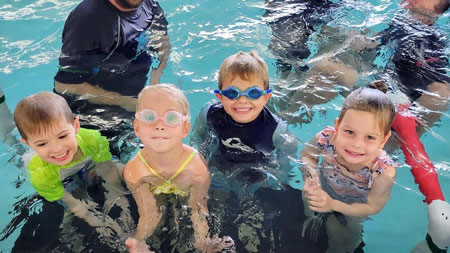
Common swim lesson tools like noodles, diving rings and platforms are essential for safety and comfort and games, program directors said, but the most important aspect of swim lessons is the staff. Enthusiasm for the job is crucial, of course, but other requirements are more amorphous.
Melon, for instance, seeks instructors who “must demonstrate oneness with the water: play and rest in deep water peacefully for 15 minutes and demonstrate ease going between the surface and the bottom in the deep.”
Mike Koleber owns Nitro Swimming, a three-location swim school in the Austin, Texas, area. He said swim lessons have evolved into a more “concierge-like” approach, with smaller instructor-to-student ratios, more individualized attention and teaching tailored to a student’s needs. All his instructors are put through extensive background checks, must certify in CPR, have flexible schedules and maintain “a fun culture.”
“Always be inviting, happy, deliver a total pleasant experience while still pushing the kids to succeed,” Koleber said. “Lots of love, celebrate every victory no matter how big or how small.”
While certifications and creating a welcoming, encouraging and celebratory atmosphere is universal among swim lesson programs, the philosophy behind what each program chooses to prioritize beyond safety and how lessons are taught is more varied.
Leslie Donavan, president and CEO of Starfish Aquatics Institute of Savannah, Ga., said that at its core, swim instruction is about saving lives while building confidence and competence. She said every swim lesson should move a learner closer to being safer in, on and around the water. “That means prioritizing functional skills and self-rescue before aesthetics, endurance or competition,” said Donavan. “Equally important is recognizing that learners are individuals. Effective swim instruction must be learner-focused, meeting swimmers where they are developmentally, physically and emotionally.
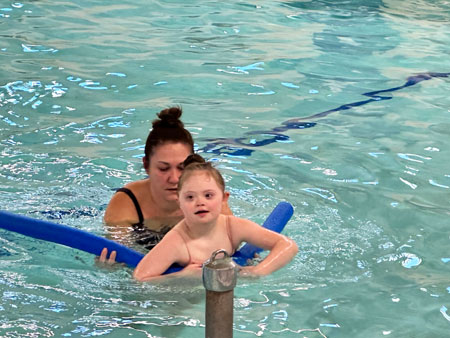
“Instructors are guides—not script readers—and their role is to create a safe, motivating environment where progress is meaningful and measurable. Finally, swim lessons should empower families. When progress is clearly tracked and communicated, parents and caregivers become partners in the learning process, reinforcing skills and safety behaviors beyond the pool.”
In 2016 YMCA of the USA instituted a standard swim lesson policy for its member locations. Lindsay Mondick is the YMCA’s current director of aquatic strategy, overseeing the YMCA’s Safety Around Water and Swim Lessons programs. Mondick said day-to-day best staffing practices include following an evidence-informed and research-based curriculum, ensuring quality and safety through following leading practices of that curriculum, balancing instructor-to-student ratios, and using positive reinforcement with student-centered learning strategies.
“Ensure there is fidelity and rigor to the program,” she said.
Staff policies mandate that staff receive formal and on-the-job training. YMCA Swim Instructor, CPR, and First Aid certifications are required, as is regular in-service training. There should be a culture of safety, clear aquatics safety policies with an aquatic safety plan, and clear and practiced emergency action plans, said Mondick.
“Historically, staffing was often seasonal, which sometimes led to limited training and inconsistent standards,” Mondick said. “In today’s swim lesson programs, Ys prioritize certified instructors, ongoing professional development and year-round programming. There’s also a growing emphasis on staff retention strategies, such as flexible scheduling and leadership pathways.”
Merri-Lynn Lathrop is director of aquatics operations for YMCA of the North Shore, a multi-location group based in Beverly, Mass. She follows the national guidelines, of course, and has a personal view on instruction that aligns with the programs.
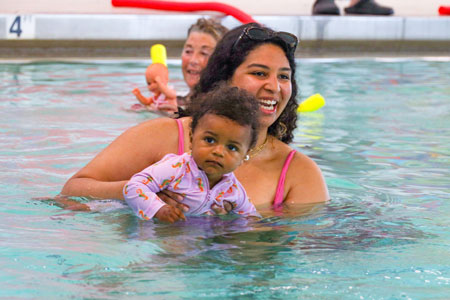
“Traditionally, swim lesson programs focused first and foremost on teaching children how to swim across the pool,” she said. “That is still important, but our approach has evolved, especially for non-swimmers. Today, the initial goal is often not distance; it is safe self-rescue. Skills like jump/push/turn/grab, and swim/float/swim are designed to help a child recover if they unexpectedly enter the water.
“Once students demonstrate those essential safety skills, we build toward stronger swimming strokes and endurance. That ‘safety first, skills next’ progression reflects what we have learned over time: When kids feel capable of keeping themselves safe, their confidence rises, and their swimming improves faster, too.”
From her position on the front lines, Lathrop said after the pandemic ravaged swim instructor staffing and the pool of candidates, the focus on candidate traits shifted.
“Nowadays, instead of focusing only on candidates with strong swimming backgrounds, we look for what we call water people, individuals who genuinely love the water and want to share that joy with others,” Lathrop said. “We can teach the technical skills, instructional methods and safety protocols. What is harder to teach is that natural ability to connect with learners, especially nervous beginners, and help them feel safe.
“Today, our onboarding also includes professional certification, which is critical given the inherent safety responsibilities that come with aquatics. And while technology keeps advancing, I can confidently say: We are still a long way from AI taking over for swim instructors. The relationship, trust building and real-time decision-making that happens on a pool deck is very human work.”
Lathrop said she tells parents to look for these signs of a quality program:
- Swim instructors are the first to enter the water and the last to exit.
- Swim instructors keep students in front of them at all times.
- Students are in motion, which increases exercise and keeps them warm.
- Flotation is adjusted per student per activity.
- All students have multiple opportunities to swim without flotation.
- Skills are introduced in a sequential pattern with plenty of time provided to practice.
- Safety is emphasized throughout.
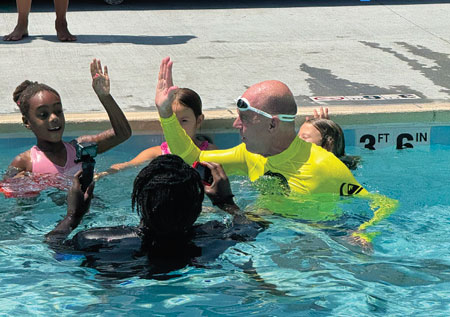
“We set clear expectations and coach constantly,” she said. “We emphasize active scanning, positioning, communication and professionalism because the pool deck is not the place for autopilot. It is not work for the faint of heart, but for the right person, it is incredibly rewarding.”
Once a program has good staff, it works hard to keep them, said Debbie Sayers, founder of DolFUN Swim Academy in Portland, Ore. “Over the years, I’ve learned that supporting our educators through strong leadership, manageable schedules, competitive pay and continued education is essential,” Sayers said. “When instructors feel valued and prepared, the entire program benefits. The quality of a swim program will never exceed the quality of the people teaching it.”
Sayers is a U.S. Swim School Association board member, as is Susie Van Ekeren, owner/operator of Wisconsin Swim Academy of Appleton, Wis. Van Ekeren said for bringing new pupils to the program, marketing begins with a referral credit program and having a good reputation in the area. “We are actively present in the community with fundraising for important causes, participating in chamber events and volunteering when needed,” said Van Ekeren. “We get to participate in food drives, raising funds for scholarships through Hope Floats as well as the Flap Foundation, which is a local swim scholarship program, and donating to local business fundraisers.”
Lisa Zarda, executive director of the U.S. Swim School Association, said her favorite marketing tactic is one that doubles as encouragement for parents to understand that they are an important part of their child’s safety.
“Adults who have brought children to swim lessons are asked to leave their cell phone at the front desk with their name on a Post-it attached to their phone,” said Zarda. At the end of the lesson, they can pick up their phone and drop the Post-it into a bowl for a drawing at the end of the week for one week or one month of free lessons.
“It’s a great opportunity to share important water safety tips with adults during lessons, as well as an opportunity for the adult to focus on the child during lessons and learn more about the skills they are gaining during lessons,” she said. RM