


By Kris Alderson
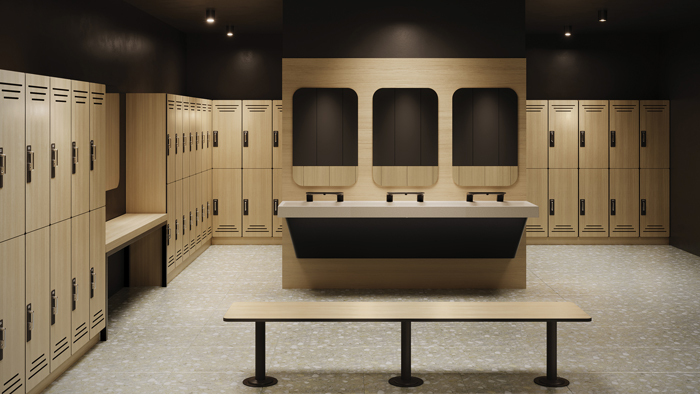
Locker rooms and restrooms are among the most frequently used—and closely judged—spaces in recreation facilities. These high-traffic environments significantly influence visitor confidence, satisfaction and overall perceptions of cleanliness.
Findings from the 2026 Healthy Handwashing Survey reinforce how much these spaces matter. While most Americans recognize the importance of handwashing, many remain cautious about public restroom conditions. The survey found that 65% of respondents use a paper towel or their clothing to avoid direct contact with fixtures, underscoring strong preference for touch-free solutions.
Restroom conditions also directly impact facility reputation and return visits. According to the survey, 84% of Americans have a more negative impression of a facility with a dirty restroom, while 71% are more likely to return to one that is clean and well maintained. For recreation centers that rely on repeat visits and memberships, restroom and locker room design plays an important role in supporting user satisfaction and long-term success.
Facility leaders are increasingly prioritizing materials, layouts and fixture selections that improve cleanliness, simplify maintenance, and create cohesive, modern environments that reinforce user confidence.
Durable Materials
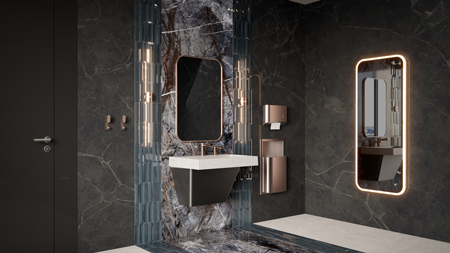
Locker rooms in recreation and athletic facilities must withstand constant use, high humidity and frequent cleaning. Material selection plays a significant role in long-term performance.
Traditional painted metal lockers can be susceptible to dents, scratches, rust and corrosion—particularly in humid and aquatic environments. Over time, surface damage can detract from appearance and increase maintenance requirements.
Phenolic and solid plastic lockers offer durable alternatives designed for demanding recreation environments. Solid plastic lockers resist moisture, corrosion and impact. Their nonporous surfaces do not rust or absorb moisture, making them well suited for aquatic centers and high-humidity locker rooms.
Phenolic lockers provide similar durability while offering greater design flexibility and sustainability. Their dense construction resists scratches and wear, and smooth surfaces support efficient cleaning and long-term performance.
Both materials offer flexible sizing and configuration options. Full-height lockers accommodate athletic gear, while multi-tier designs maximize capacity. Color selection can reinforce branding, improve wayfinding, or create a brighter, more welcoming environment.
Cleanability & Reduced Maintenance
Cleanability is a top priority in recreation restrooms and locker rooms, where high traffic requires frequent upkeep. Selecting materials designed for easy cleaning can significantly improve maintenance efficiency.
Nonporous materials such as solid surface and natural quartz help resist moisture, bacteria, mold and mildew. Smooth, seamless surfaces eliminate crevices where dirt and grime accumulate, allowing staff to clean fixtures quickly and effectively.
Wall-mounted fixtures and accessories improve access to floors, allowing more efficient cleaning and reducing labor time. Durable materials that resist scratches and corrosion also help maintain appearance and reduce repair needs.
Maintaining a clean, well-kept appearance is especially important, as survey findings show restroom conditions influence how users perceive overall facility quality.
Reduce Contact, Improve Hygiene
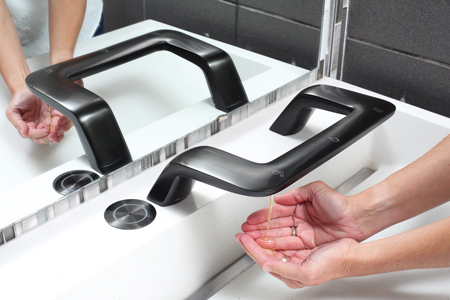
Touchless fixtures have become an increasingly important feature in recreation restrooms and locker rooms. The Healthy Handwashing Survey shows that many users actively avoid touching restroom surfaces, reinforcing the importance of reducing contact points. Almost 80% of respondents believe touch-free fixtures are important restroom features.
Sensor-activated faucets, soap dispensers and hand dryers help reduce surface contact while improving convenience and hygiene.
All-in-one handwashing fixtures combine soap, water and drying in a single, coordinated unit. These integrated systems help contain water within the sink area, reducing splashing and helping keep floors dry—a key safety and maintenance benefit.
By consolidating handwashing functions, these fixtures also improve traffic flow and reduce congestion, particularly during busy periods.
Cohesive Design Connects Locker Rooms and Restrooms
In many recreation facilities, locker rooms and restrooms are located adjacent to one another. Coordinating design elements across these spaces creates visual continuity and reinforces a consistent, modern appearance.
Coordinating colors, materials and finishes across lockers, partitions, accessories and fixtures strengthens facility identity and creates a more cohesive environment.
Accessories such as towel dispensers, waste receptacles, grab bars and shelving with complementary finishes contribute to a more polished, intentional design. These coordinated details help reinforce perceptions of quality and attention to maintenance.
Mirrors Enhance Functionality & Perceived Space
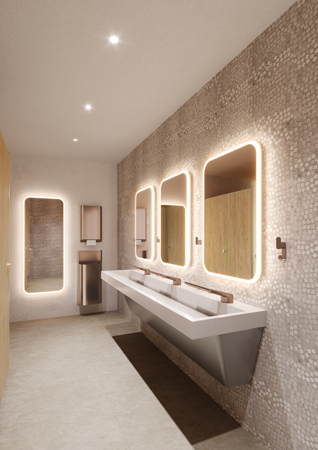
Mirrors play an important role in both functionality and visual appeal. Full-length mirrors in locker areas enhance convenience, while above-sink mirrors support handwashing and improve visibility.
Mirrors also reflect light, helping spaces feel brighter and more open. Many modern mirrors incorporate integrated LED lighting, which improves illumination, enhances ambiance and reduces energy consumption.
Proper mirror sizing and placement also support accessibility and ADA compliance, helping ensure restroom facilities are comfortable and usable for all visitors.
Designing for Today’s Recreation Facility Expectations
Recreation facilities must balance durability, hygiene, maintenance efficiency and user experience. Thoughtful material and fixture selection helps create spaces that perform well while maintaining a clean, modern appearance.
As public awareness of hygiene continues to evolve, restroom and locker room design will remain a critical factor in shaping user perceptions and overall facility satisfaction.
By prioritizing durable materials, touchless technology, cohesive design and low-maintenance solutions, recreation facilities can support operational efficiency while providing a safe, welcoming environment for visitors. RM
ABOUT THE AUTHOR
Kris Alderson, MBA, LEED AP, is senior marketing manager for Bradley Company, the 100-year-old global manufacturer of commercial plumbing fixtures, washroom accessories, emergency safety fixtures and electric tankless water heaters, now a division of Watts Water Technologies. For more information, visit www.bradleycorp.com.