

Aging pools don’t have to be demolished and replaced with new aquatic facilities. Across the country and around the world, communities are discovering that with thoughtful planning and smart design, existing pools can be transformed into vibrant, efficient spaces that meet modern needs.
From reimagined layouts to updated filtration systems and fresh looks that invite visitors back, renovation—not replacement—can deliver impressive results, say leading aquatic facility specialists when asked about the most creative and cost-effective ways to rejuvenate outdated facilities.
The word “renovation” is loosely used, suggested Chris DePaul, regional director of renovation for Landmark Aquatic, in St. Louis. Do users want to make the dive end of the pool deeper? Are all the mechanical systems working efficiently? Are you looking to install more fun elements to an under-utilized pool and deck?
A successful renovation project requires an architect or an engineer that is willing to do the deep dive on ensuring that the facility owners and users get what they are looking for. The facility might just need cosmetic renovations or, most frequently, mechanical and technological updating.
Several trends stand out, DePaul said. “We are seeing that the first generation of 20- to 30-year-old pools are dated, and stakeholders want a restart, so many of these facilities are going in and making changes.”
But change doesn’t come without a price, and often a substantial one, as the cost of equipment and construction material continues to increase. “Complete pool replacements are happening more in larger metropolitan areas where there is a larger tax dollar base to pay for it,” DePaul said. “When we’ve gone into rural areas, we don’t find complete replacements done very much because their economy doesn’t support such expenditures.”
This is one of the biggest challenges facing rural communities with pools that were born in the 1960s or early 1970s and haven’t been well maintained. The pool may have had catastrophic mechanical failures, and so for four or five years the facility has not been used. Eventually, the public gets upset about that and this is when real change sometimes happens, DePaul said.
“What we are seeing,” said Joshua Albertson, sales manager for Natare Pools, in Indianapolis, “is owners and operators realizing renovation comes with a price tag that doesn’t bring along sticker shock. If done right, a renovation can look like a brand-new pool.”
“Renovations are becoming more and more appreciated as a cost-effective way of maintaining existing facilities without the cost and expense of a full replacement,” added Jason Mart, CEO and founder of RenoSys, in Indianapolis. By choosing the renovation option, pool operators can get a like-new pool for a fraction of the cost of new construction. The result will be just as nice a facility and will get them 30 years of new life out of their old structure.
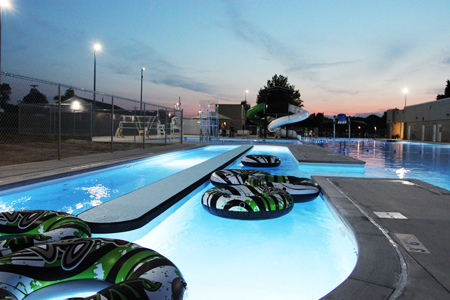
“From an appearance standpoint, a typical renovation looks like an absolutely new pool by the time it is done,” Mart said. “The casual observer would not realize it was a renovation. It is not a patch or a Band-Aid; it is a completely new facility.”
One of the key questions for any renovation project is how to approach updating the look and feel of a dated aquatic center while preserving its original character or community nostalgia.
A $14 million Astoria (N.Y.) Park project serves as an example of an effective renovation project. Located in the Borough of Queens, the Astoria Park Pool is New York City’s largest community pool at 50,000 square feet. It opened in 1936 and closed in 2022 to undergo a comprehensive renovation aimed at addressing its aging infrastructure and bringing the facility up to contemporary code standards, Mart said, adding that the project saved millions of dollars over new construction.
The renovation, Mart noted, included the reconstruction of the pool shell, gutter and deck replacement, and the installation of modern filtration, backwash and chemical treatment systems. About 1,000 feet of stainless steel gutters and grating were installed and more than 55,000 square feet of durable PVC pool liner ensured that the pool’s interior would remain watertight and visually appealing
The community leaders decided that this was the direction they wanted to go, Mart said. They found an engineer that was amenable to this sort of approach. They did the investigative research in selecting a system that would satisfactorily meet the needs of the community. The project was engineered to a specific bid just like any other construction project. “We then came in and did the complete installation with our own sources so that you have a single source of responsibility. The renovation has been a huge success.”
Infrastructure Upgrade Trends
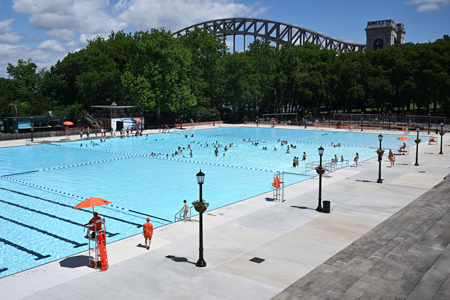
Photo Courtesy of RenoSys
The Astoria Park Pool project illustrates one of the biggest trends in infrastructure renovations today, Mart said. “Owners, and the industry in general, are increasingly seeing the benefit of an interior membrane for renovations. We have found that people who really understand the comparative cost will always look favorably, for example, on a PVC membrane and stainless steel gutter installation over new construction, unless they are changing the footprint of their pool significantly, and even then, you can utilize portions of the infrastructure and still get the new footprint or the new programming footprint of a new pool.”
Quite often a renovation project can offer better value or community impact than starting from scratch, Albertson said. “With any update or renovation, we are constantly working with the architect/pool consultant and reviewing the local codes to make sure the work being done provides everyone with a wonderful opportunity to enjoy the pool.
“We helped to renovate the city pool for Globe, Ariz. (The City of Globe Community Pool),” Albertson said. “The pool was important to the community. They wanted to preserve it, but they also understood it needed a lot of work.”
In 2014, the city’s pool was shuttered after years of persistent problems that left the facility inoperable, Albertson explained. Chronic water loss and outdated mechanical systems had pushed the infrastructure beyond repair. Inspectors found that hidden concrete gutters and perimeter piping had failed, the pool basin had badly deteriorated, and the filtration system had stopped functioning altogether.
Years later, in 2021, talk of reviving the facility resurfaced. As city officials began exploring options, residents weighed in on what they hoped a revitalized pool could offer. Their comments helped shape a shared vision: not just restoring the old pool, but redesigning it to meet modern needs and the expectations of a growing community. That vision ultimately guided a major overhaul.
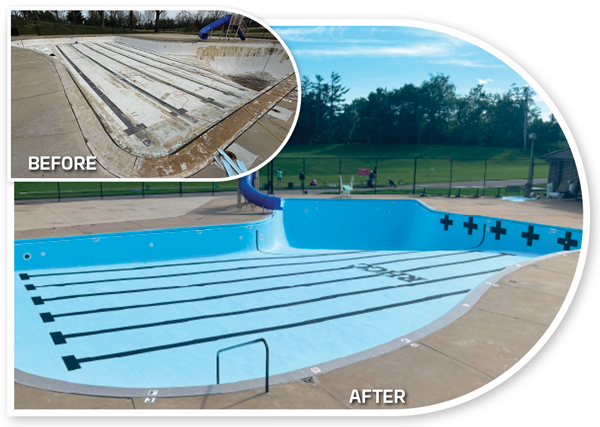
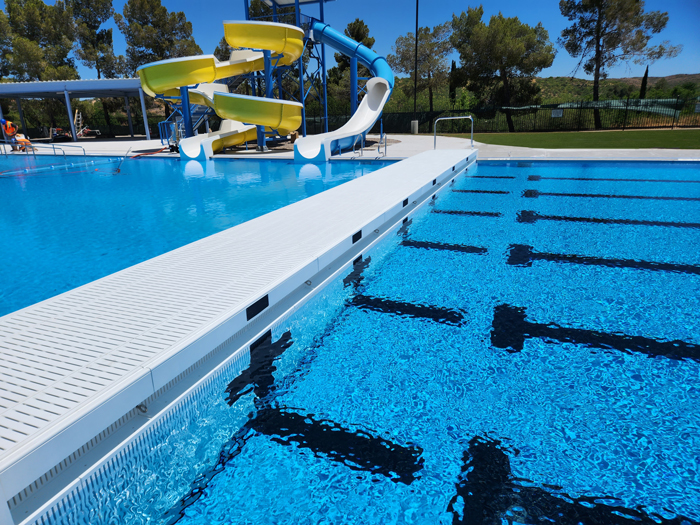
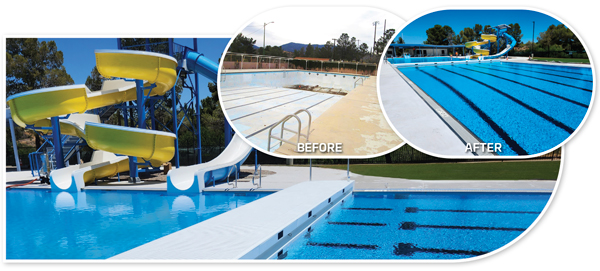
“Once the community leaders realized the cost to renovate was far less than building a new pool, they were able to include a new bathhouse and slides. Four major products and systems were a part of this renovation,” Albertson explained, including a stainless steel gutter system and a vacuum sand filter. “This was a great project because it took a failing concrete pool and once we were all done, it became a premier facility with a zero-entry area, splash pad and the capabilities to hold a swim meet.”
The new pool complex now covers nearly twice the area of the original and adds a range of features aimed at both recreation and competition. Among the additions are a splash pad, a zero-entry section for accessibility, expanded decking and a heating system to extend the swim season. A movable bulkhead allows the pool to host competitive swimming, while a new community center on-site expands programming opportunities beyond the summer months.
In the end, Albertson said, “the renovation turned out to be great because we were able to help the community, update the pool and give them back an important part of their everyday life.”
How to Approach Dated Pool Facilities
Many stakeholders feel that if they are going to spend the money for a renovation, they want change, DePaul said. “They don’t want the same looking pool. They want a refresh, an update.
“When I walk into these community facilities, one of the first things I notice is they lack attractiveness.”
Many older community facilities also lack shade. “In today’s day and age that needs to be addressed. Put more shade on the deck and over spray pads if the facility has spray pads. Add safety flooring to spray pads.
“We promote shade nonstop,” DePaul said. “It’s a health issue when you have direct exposure to the sun—so providing shade is a lot more relevant today than it was 20 or 30 years ago, when the older pools were being built.”
If there is shade available, grandparents are willing to take their grandkids to the pool and hang out more, DePaul said.
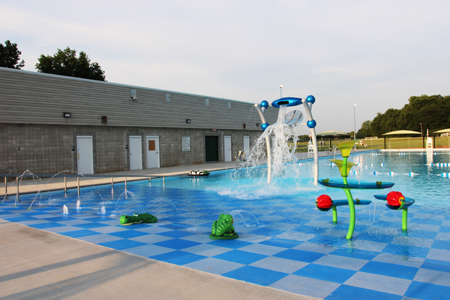
Some older pools aren’t ADA accessible, so renovations can introduce zero-entry, providing not only accessibility, but space for younger kids. Installing zero-entries is often at the top of everyone’s wish list for pools that currently don’t have existing zero-entry. When adding the zero- entry, it often allows owners the opportunity to add spray features, water tables, dumping buckets, play structures and ADA ramps, DePaul said.
If there are zero-entries or if the swimming pool cannot support a full zero-entry, then a renovation must see that the staircases meet ADA compliance. There are chair lifts that can be introduced to assist people getting in and out of the swimming pool.
The Fun Element
“For an older facility we look for ways to add color; looking for ways to add fun,” DePaul said. “We want to bring users back to the pool and that means adding fun features that can be done and might not even require water to function, such as a climbing wall or a modern day tree swing, diving boards, basketball goals. All these features don’t require water and they are easy to install.”
Aquatic center owners might consider installing a play structure in shallow water to “up the fun element of the pool. Slides can bring color and excitement to a pool space.”
There have been many play features introduced in the past five years, and they keep evolving and getting better. For instance, more thrill-seeking waterslides; where once people would slide down on a rubber tube, now there are waterslides that the user can slide down standing up.
Ninja courses and obstacle courses across the swimming pool space have also become more popular, fueled by the popular Ninja warrior-themed television series.
Some facility renovations add cold plunge tubs or convert some hot tubs to cold plunge tubs as a way of modernizing offerings, DePaul suggested.
Existing pool lighting can be retrofitted to provide new LED lighting, DePaul said. You can just add a conduit for the electrical lines and put in as much lighting as is required. “Remember that in a commercial facility you don’t typically have colored lighting. It’s just white lights and you just illuminate per the specifications of the local codes.”
Mechanical & Technology Upgrades
Addressing aquatic facilities with pools and splash pads, Bryan Had, a regional sales engineer for a commercial fountain manufacturing and design firm located in San Marcos, Texas, explained key mechanical upgrades that deliver greater efficiency or lifecycle savings. “The Department of Energy (DOE) passed legislation called the Dedicated Purpose Pool Pump (DPPP) that went into effect in 2021. The regulations are for residential and commercial pool pumps from 0.5HP to 5HP to utilize variable-speed technology to meet Weighted Energy Factor (WEF) requirements.”
According to the DOE, Had explained, “this results in average operating costs savings of $550 per year, for an average-size filter pump running 12 hours a day. As a result of the regulations, we have been utilizing variable speed pumps on each renovation project, not only for the filter pump but also for the larger display pump.”
There are technologies that can be transformative in aquatic retrofits, Had said. “With the renovation including splash pads, there are two impactful technologies that can be utilized for a transformative effect on the system. The first is the use of variable, full-port, water valves. These new valves do not clog, dramatically reducing the maintenance of the splash pad, while increasing the programming capabilities of the fountain or splash pad.
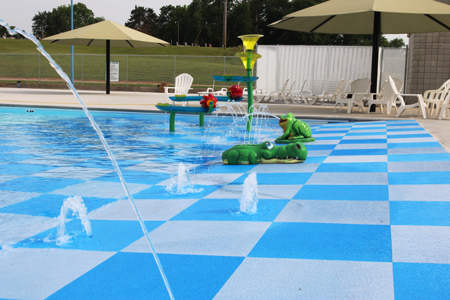
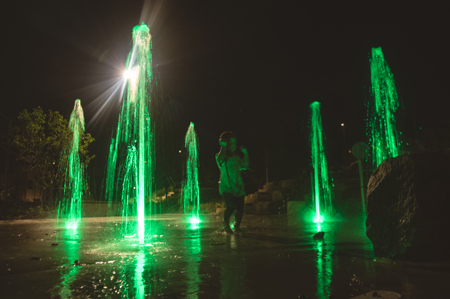
“The second technology with the most transformative effect is the utilization of ring style LED lighting on splash pads with evening and nighttime operation. The lights create glowing columns of water, with color-changing displays, and reduced operating costs from the previous off-set incandescent light fixtures.
“What we are finding with the variable frequency drives is an electronic element that basically controls your motors for your filters or your waterslide or whatever feature you might have,” Had said. “And you are able to dial in your motor to operate at a certain level that you need. You don’t want to overdrive and use more energy than you need. So, it is a neat tool to have; there are cost savings to be had.”
Chemical feeders are another common upgrade. “Back in the day,” DePaul said, “a pool operator would set a chemical feeder to a certain level and let it run that way all day long. But there are chemical controllers that are constantly testing the water, and those have been around for a long time. They only introduce chemicals when there is a demand.
“We find that in many rural areas, their pools do not have that technology and they are not using it, and it is a shame,” DePaul said, “because not only will it help you save money, but it also ensures water safety, since you will have different demands for chemicals at different times of the day.”
One of the biggest impacts in the past 10 to 15 years is replacing filtration systems in older pool systems, DePaul said. “Newer regenerative filters use a lot less water when backwashing or cleaning the filter. You won’t be dumping water out to clean them. And when you are not dumping that water out you are saving water; there is less water going to the storm drains, less heat loss if you are in an indoor swimming pool, less chemical loss and, quite frankly they are a lot easier and less time-consuming.”
Final Advice
If you have already decided to consider a renovation, look at different options and guarantees, Mart said. “But if you have an old pool and are trying to find the budget to accomplish what their planners would love you to do, they can achieve the same results and spend just a fraction of the price of new construction with a renovation.”
Flexibility is the key. Communities need to stretch their dollars as far as possible. The more the pool can be flexible and create more programming opportunities, the more use the pool will see, leading to higher potential revenues.
“If I could offer one piece of advice to a community considering a renovation,” DePaul said, it would be: Do a design-build approach. “As the owner-stakeholder, put out an RFQ (Request for Qualifications), to learn who is interested in the project and who is qualified to complete it.”
Then, narrow the contenders down to four contractors. Ask them to provide you with a design incorporating three or four things you’d like to see in that design. Tell them your budget. Ask the contending contractors to present their design. And once the design is presented, conduct interviews all leading to the owner selecting who they want to work with. This starts the collaborative experience.
“You’ll want to partner with someone you feel comfortable with,” DePaul said, “Especially with renovations because there are a lot of different options that can occur here. Experience is important because there will be challenges involved and the contractor has to be able to anticipate. That’s why there is greater comfort in working alongside a company you are already familiar with.”
Albertson’s final piece of advice was simple and direct: “Make sure your pool shell is structurally sound.” RM