

Since the early days of community pools, there have been advancements in materials and technology, new safety and design research and principles, as well as cultural changes. All have contributed to the modern version of a location for citizens to enjoy water recreation.
No two such pools are identical but one aspect of their design strategy is shared across the globe: Ask the end users what they want before building.
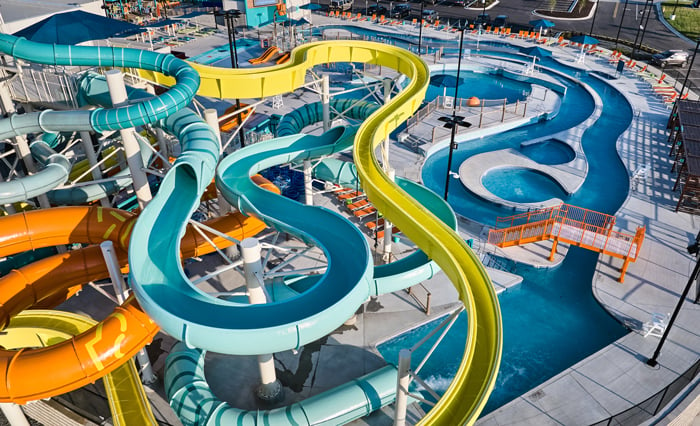
Danny Gleich is recreation manager for the Reno, Nev., parks and recreation department and was closely involved with the conception and building of the 52,000-square-foot Moana Springs Community Aquatics and Fitness Center. Fifteen years in the making, the location features three bodies of water—a 50-meter competition pool, a family recreation pool with slides, splash features and a lazy river, and a 95-degree soaking pool—as well as a fitness center and two rooms for meetings and classes.
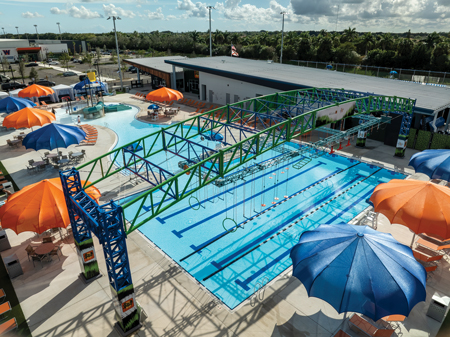
“The facility has something for everyone and was something clearly missing in the Reno area,” said Gleich.
Gleich said that above all, planners have to design the facility to match the use for 90% of the time. He said there will always be special interest groups or people passionate about something who will want something added or to make a space larger because of something that will occur once a year, but that cannot be the plan for a public facility that will be open to the general community.
“Another lesson learned is to think about how people will likely use spaces,” he said.
The renderings can be exciting, but practicality needs to be prioritized, he said. Are certain features safe? Can they be used properly? For instance, Gleich said many of the facility’s lockers are positioned outside of the locker room to alleviate concerns of people breaking into lockers and stealing items. “It allows for cameras to focus on the lockers since they cannot be in the locker rooms,” he said.
To gather these insights Gleich and the design team, including Aquatic Design Group as the aquatic design consultant, covered the basics by engaging the community.
“We took plans and designs to City Council meetings, we had focus groups with our heavy users to talk about the plans, we took the plans to independent consultants to review them for quality of use, ADA requirements and safety,” Gleich said. “We wanted to make sure the community was invested in the facility and knew why we were taking all the right steps to get people excited about what was coming to Reno.”
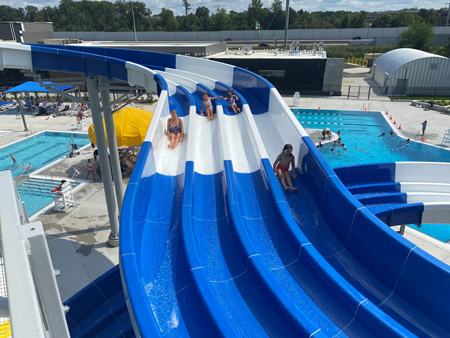
In Mayfield Heights, Ohio, Sean Ward and his staff at the parks and recreation department emphasized the wants and needs of the residents as well. Ward, the department’s director, said the 2-year-old, $34 million Mayfield Heights Aquatic Center “is designed to serve a wide range of ages and abilities while creating an engaging, family-friendly environment.”
The outdoor facility replaced a pool that was built in 1958. It boasts a zero-depth entry that gradually reaches a depth of four feet. Portions of the zero-depth area are shaded to enhance comfort, and the space includes a current channel, vortex feature, shallow-water lap lanes and a variety of interactive play elements.
In addition, the facility includes a separate deep-water pool with dedicated lap lanes, a low and high dive area, and a drop slide, allowing for both recreational and advanced aquatic programming.
The signature element of the facility is the 40-foot giant slide structure that offers multiple slide experiences, including a multi-lane racing slide, a drop slide that enters deeper water, and a shallow-water slide. Ward said the attractions didn’t come from imagination.
The city conducted two separate public input opportunities to ensure the project reflected resident priorities, said Ward. The first survey focused on gauging community support for a potential income tax increase to fund a new pool and upgraded recreation facilities. It also asked residents to rate potential amenities and indicate how likely they would be to utilize a new aquatic facility. The second survey expanded on that feedback and asked residents to more specifically rate and prioritize amenities.
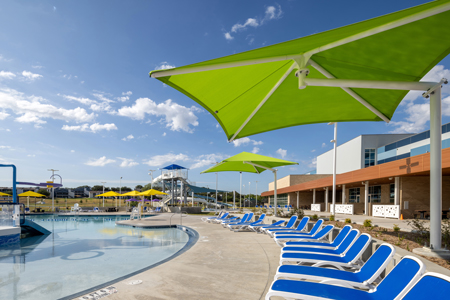
“This deeper level of input helped guide design decisions, space allocation and programming priorities,” said Ward. “Community engagement played a significant role in shaping the final design.”
The feedback influenced several decisions and helped prioritize features that residents valued most, Ward said. One consistent theme was the desire for ample shaded areas, both within the pool environment and across the pool deck. As a result, permanent shade structures and planned seating areas are abundant.
Another example was a request for slides and other active amenities that would appeal to a wide range of ages. Families expressed interest in features that would make the facility more than just a traditional pool.
“We dedicated significant planning time and financial resources to engaging, multi-generational attractions,” Ward said. “Ultimately, community input did not just inform the project, it helped shape it. We made a conscious effort to ensure the final design reflected the priorities expressed by our residents.”
One of Ward’s pieces of advice for anyone about to embark on such a project for the first time is informed by his feedback experience. “Design it as a community experience, not just a body of water,” he said. “Start with programming. Define how the facility will be used: swim lessons, lap swim, competitive swim, family recreation, or special events. The way your community uses the pool should drive the design.”
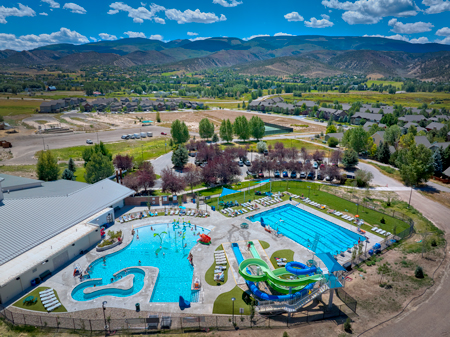
Maddie Monroe, a project manager with aquatics design firm Counsilman-Hunsaker, said feedback from clients works the same as work begins. “My favorite question to ask my community pool clients at a project kickoff is, ‘What do you love about your pool that has to be in the new pool? And what do you dislike about your pool that you don’t want to be included in the new pool?’” she said. “I think this is a great jumping-off point to understand what the community desires in a new facility, while also getting a good understanding of what they have struggled with, whether it be operationally or a feature that just doesn’t get used at the existing facility.
“It certainly does figure into the design. There is a reason a community is investing in a new facility, so we want to understand why that is the case, so it doesn’t get repeated in the future, especially as we make more detailed design decisions.”
One of the main goals of new community pool construction is to start fresh with the latest operational equipment and systems, said Monroe. “I have seen an increased interest in investing heavily in mechanical systems for our community pools, even for outdoor pools that are only operating Memorial Day through Labor Day,” she said. “I think this is due to many operators having to struggle through inadequate older systems and wanting to ensure the new pool doesn’t experience similar struggles in the long run. This includes investing in the best technology for pool filtration and chemical treatment, making the pool more sustainable, easier to operate and reducing operating costs.”
Monroe said cultural changes fuel design choices as much as the desire for efficiency, sustainability, inclusion, and staff needs. One trend has only been around since the turn of the century, she said.
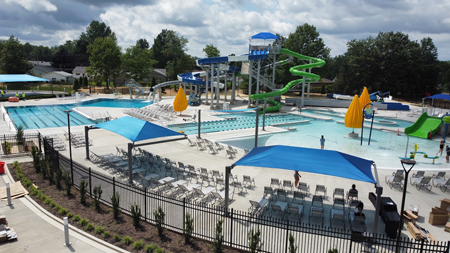
“Community pools nowadays are always fighting the ‘cell phone and iPad’ dilemma with kids, especially teens,” Monroe said. “I have seen ownership groups really try to incorporate more high-thrill and high-skilled elements that attract teenagers to get off their phones and into the pool.”
Slides fit that bill, from lower intensity into shallow water for younger swimmers to chute slides into deeper water for the older crowd. Zip lines, climbing walls and inflatable obstacle courses are fairly new to the scene, and Monroe said she’s seen a rise in requests for ninja course arrangements, “a more skill-based feature that requires practice to refine the use of the feature.”
Taylor Turnquist, a concept designer at aquatic design firm Water Technology Inc., said the evolution of community pools in the 20th century moved from large utilitarian rectangles for swim lessons, exercise and little else to more emphasis on community pride and gathering with the additions of diving boards and lap lanes as the country grew suburbs.
The late 20th century brought another turning point, she said. Liability concerns, changing safety standards and evolving expectations pushed designers away from deep-water, single-purpose pools toward more diverse aquatic environments. “Leisure pools, zero-depth entries and interactive features emerged in the 1990s and early 2000s, reflecting a growing understanding of pools as destinations rather than just places to swim,” Turnquist said.
Today, community pools have evolved into inclusive, multigenerational aquatic environments. Instead of one-size-fits-some basins, modern facilities feature organic geometries, varied depth zones, and a mix of recreational, fitness and wellness amenities.
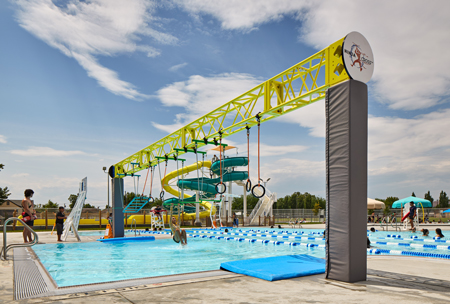
“These pools are designed to serve the entire community, across ages, abilities and skill levels, while balancing experience, operations and long-term sustainability,” said Turnquist. “What was once primarily a place to cool off has become a true community gathering space that supports social connection, recreation and wellness.”
That expectation has driven demand for inclusive design features such as zero-depth entries, accessible circulation, adaptable program areas and spaces that support both active and passive use, said Turnquist. Pools are no longer just about structured programs like swim lessons; they’re places to meet friends, watch kids play, relax and spend unstructured time together.
There’s also been a growing cultural emphasis on health and holistic well-being. Modern pools increasingly support aquatic fitness, therapy and low-impact exercise, recognizing that water-based activity is beneficial across generations.
“In many communities, aquatic facilities have also become civic symbols—spaces that communicate quality of life and community investment, shaping both architectural expression and site design,” said Turnquist.
That pride is illustrated not only with features that used to be the calling cards of waterparks but aesthetics that can show off a city’s history or themes such as a rainforest or pirate ship, said Alecia Stegenga, a project manager with Aquatic Design Group.
“We’re seeing a massive shift toward biophilic design and clean sightlines,” she said. “It’s no longer just about a place to swim; it’s about high-end finishes and themed aesthetics that rival private resorts, ensuring the facility is the ‘crown jewel’ of the municipality.”
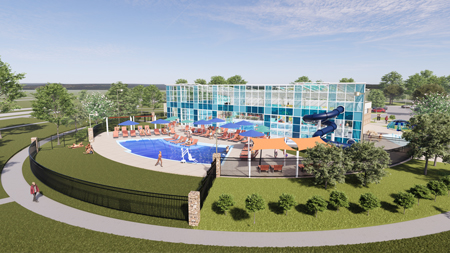
Beyond their surface-level attractiveness, the clean aesthetics serve another purpose, Stegenga said. “Modern, open layouts create transparent sightlines that are a critical evolution for lifeguard safety and surveillance. Ultimately, we are no longer just designing for the pool user; we are creating social hubs with high-quality shade structures and social zones that act as a permanent anchor for community wellness and connection.”
Stegenga said another spark for design is the modern desire for as much inclusion as possible in a community pool. Today’s clients are prioritizing moving beyond ADA compliance to embrace universal design principles. “The goal is to engage the widest possible demographic, from ‘Generation Alpha’ to active seniors, within the realities of municipal budget constraints,” said Stegenga. “To achieve this, we are now looking at zero-depth entries as a social hub for toddlers and a dignified entry point for seniors or those with mobility challenges.
“We’re adding sensory-integrated spray zones, moving away from standard splash pads toward ‘low-flow’ or ‘low-noise’ zones designed for neurodivergent populations. Additionally, many facilities are incorporating multiple bodies of water to ensure varied water temperatures within the same aquatic center. This accommodates high-intensity water fitness in one area and therapeutic, warm-water soaking in another area.”
All that varied water usage requires monitoring and maintenance, and since the days of rectangular bodies of water are long gone, today’s community pools have a century of innovation to tap for water and air quality and pool shape and durability, said Sam Elsheikh, senior principal and co-CEO of design firm Ohlson Lavoie Corp.
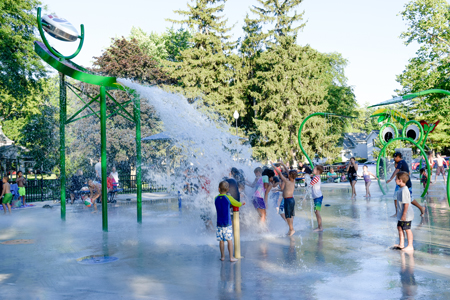
New materials such as PVC membranes and stainless steel basins are gaining popularity, he said, as they have proven to offer a high level of durability and require less maintenance over time, while pools are still commonly built using high-performance shotcrete with improved crack resistance.
When it comes to outdoor decks, new materials are being introduced to reduce heat island effects and be easier on children’s feet, said Elsheikh.
“Although they carry a higher upfront cost, outdoor pools incorporating variable frequency drives, regenerative media filtration, and UV and ozone secondary disinfection are examples of strategies being deployed to reduce energy use, water consumption and chemical needs, resulting in more efficient overall operations,” Elsheikh added.
Some of the most highly requested amenities Elsheikh’s company gets from clients (and thus from the client’s patrons) include zero-entry leisure zones, shade, flexible decks that can accommodate events and food trucks, splash pads, separate lap swim and play areas, flexible locker rooms, LED lighting for night programming, water walls and unique tile patterns. Additional revenue-generating add-ons such as concessions, cabanas and party rooms are also in high demand, he said, along with features that support year-round use, including pool heaters and, in southern climates, cooling systems.
Elsheikh advises those that may have a project on the horizon what to seek in a design partner: “Working effectively with community pool clients starts with clearly understanding the primary goal of the project and ensuring the design supports how the pool will operate day to day. Whether the client is a city, HOA, school district or private developer, it is important to involve key stakeholders early such as operators, maintenance staff, lifeguards and community members to avoid costly surprises later in the process.
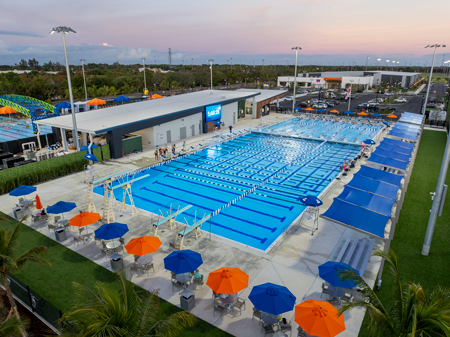
“Strong project teams look beyond upfront construction costs and have open conversations about long-term expenses, including staffing, utilities, maintenance and future repairs over the next 15 to 20 years. Being transparent about trade-offs, such as adding more features versus keeping operations simple, helps build trust and keep the project on track. Planning for future phases is also a smart approach, allowing elements like shade structures, expanded decks or new water features to be added later without major disruption.”
Gleich also has advice for his peers who may be on the verge of their first community pool project: “Ask questions of your designers, make sure you explain the operations side to everyone. People who design the building will see it one way, but not always the way you want to operate. Do double-checks prior to the final drawings being submitted for construction as well. … Simply make sure you do as much due diligence as you can, look at everything and try to communicate what you see and hear to all the groups so you can get any feedback as well.” RM