

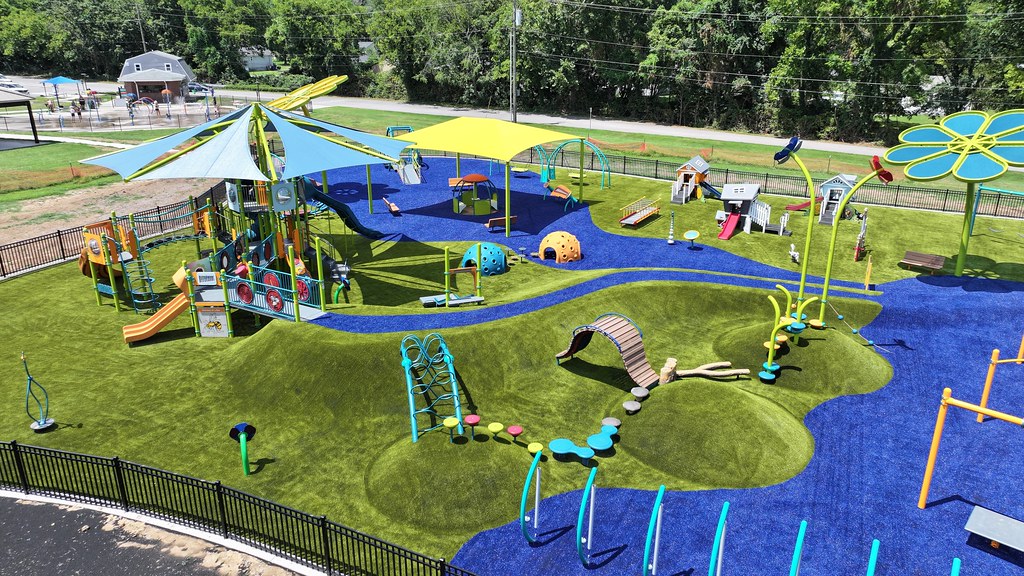
A playground isn’t just a collection of equipment; it’s an invitation to play. It’s a space where every square inch matters.
But long before a child climbs a ladder or races toward a slide, something quieter happens. There’s a first step. A first impression. A subtle decision about whether this space feels welcoming, comfortable, accessible, and fun.
Play doesn’t begin on the equipment; it begins with the broader environment.
The Missing Piece in Playground Design 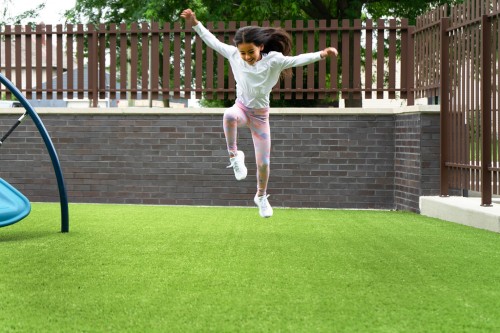
For years, playground conversations have focused on structures, swings, spinners, and slides. While those elements matter, emerging research is shifting the conversation in an important way toward the overall playability of the playground.
A recent study from the University of Texas at Austin’s Department of Kinesiology and Health Education explored how different playground surfaces impact not just safety, but how kids actually use a space. Instead of asking whether a playground meets standards, the research asked a more meaningful question: Does it truly invite play?
Playability, as defined in the study, looks at how physical and social elements come together to support active, inclusive, and engaging play. And one of the most influential factors in that equation?
The surface.
What Research Reveals About the First Step
Across six playgrounds and dozens of observations, the findings were clear: Surfacing plays a measurable role in how children engage, move, and interact. Playgrounds with synthetic grass consistently attracted more children, averaging about 12 users at a time, compared to nine on poured-in-place rubber and just one on engineered wood fiber.
That gap becomes even more significant in lower-income neighborhoods, where playgrounds with synthetic grass saw up to five times more use than those with other surfaces.
Why does this matter?
Because that first step into a playground isn’t just symbolic. It directly impacts wheth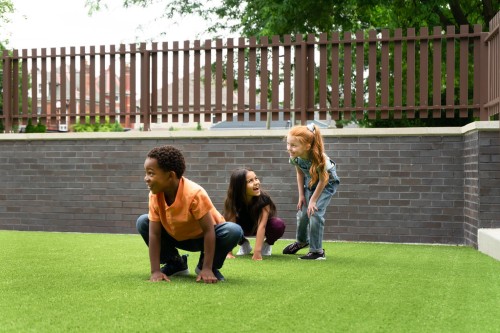 er children enter, explore, and stay. If a space feels inviting from the ground up, kids respond to it.
And when they respond, playgrounds become what they were always meant to be: active, social, community-centered spaces.
Movement Starts at Ground Level
The study also revealed a strong connection between surfacing and physical activity.
52% of children on synthetic grass were engaged in active play compared to 34% on poured-in-place rubber, and just 16% on engineered wood fiber. That's a significant difference, and it reinforces that when kids feel comfortable moving, they move more.
A well-designed surface removes hesitation. It allows children to run, jump, and transition between activities without thinking twice. That freedom leads to longer play sessions, often around 30 minutes per visit, resulting in meaningful physical activity, from thousands of steps to sustained moderate movement.
This isn’t just play. It’s health. It’s development. It’s the kind of everyday activity that supports stronger, more connected communities.
Where Social Play Comes to Life
Playgrounds aren’t just places for movement. They’re places for connection.
The same study found that social and cooperative play were significantly higher on synthetic grass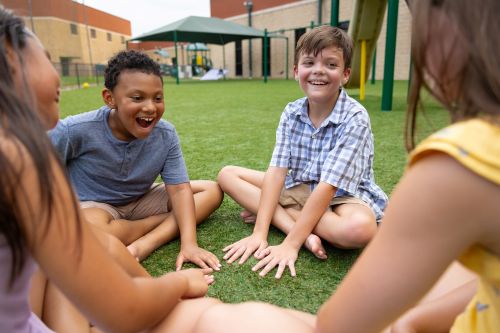 surfaces. Nearly three times as many group play interactions were observed compared to engineered wood fiber, with even greater gains in underserved communities.
When the ground is consistent and accessible, kids don’t have to think about where they can go. They move freely, find each other more easily, and engage in shared experiences. That’s where friendships form, and play becomes something bigger than the individual.
Where Play Begins
A playground isn’t defined by its equipment alone. It’s defined by how it makes kids feel the moment they arrive, and that feeling starts the second their feet hit the ground.
With Playground Grass by ForeverLawn, that first step becomes something more.
It becomes the beginning of movement.
Of imagination.
Of connection.
It becomes the foundation for everything that follows because it truly is where play begins.
Story & Pictures Sponsored by ForeverLawn, Inc.
