


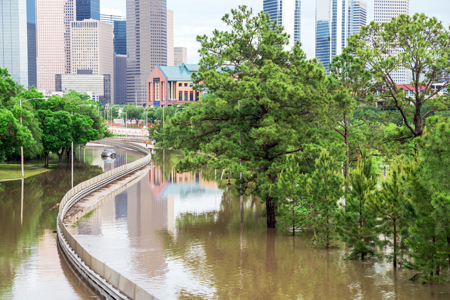
After disasters strike, it’s often a wakeup call for municipalities, parks departments, camps and campgrounds, schools, sports and rec facilities and others to examine and rethink their Emergency Action Plans (EAP), making something positive from a negative. This was certainly the case after the devastating Texas floods in July 2025, when 27 campers and counselors lost their lives at Camp Mystic, with a statewide death toll of more than 135. And while planning for the worst is crucial, recovery strategies are also important considerations.
Chad Berginnis is the executive director of the Association of State Floodplain Managers, a nonprofit dedicated to reducing flood loss. Following the Texas floods, he researched data, interviews and media reports, examining what might be learned from the Camp Mystic tragedy. One takeaway was that flood warnings—whether from sirens or weather service alerts—are limited in effectiveness without an EAP in place. “An effective system requires specific instructions and practiced procedures to take action after the warning,” wrote Berginnis. “Based on numerous articles I read, it seems that staff at Camp Mystic and nearby Camp La Junta were not familiar with the EAPs.”
The nonprofit American Camp Association (ACA) provides educational resources and professional development opportunities to camps and camp staff. Henry DeHart is chief executive officer at ACA, and he said the Texas floods definitely brought crisis plans and natural disaster planning into the forefront. “I think we’ll be learning from this and trying to improve practices as a whole industry for years to come.” He believes a lot of camps are strengthening their EAPs because of it, and said they’re “trying to catch some of the learning that we’ve seen and create educational material to help camps do that.”
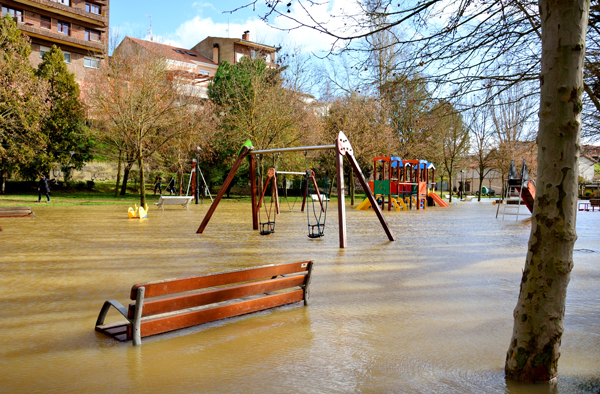
And while the frequency of severe weather events has increased in recent years, DeHart pointed out that there are many other potential crisis scenarios too, such as an intruder, missing camper, boat or water emergency. “Camps have to think pretty thoroughly about what their potential emergencies could be and then have a plan against all of those.”
Camps are typically regulated at state levels, and DeHart said regulations can vary greatly from state to state, with some being very thorough, some very minimal. And since the Texas floods, there’s been some legislative action, and Texas, for example, has passed a law to strengthen their disaster planning. “A decent amount of that law came from ACA standards,” said DeHart, after their board chair testified before a congressional committee and shared a series of recommendations. “We fully think some version of that will show up in other states as well.”
DeHart said that many parents would be surprised at how lacking their state’s regulations might be. Some might require EAPs—like Texas did—but the requirements “didn’t really tell anybody what they had to do with the plan.” And some state regulations don’t even mention emergency planning; they might be more focused on regulating pools, kitchens or building codes.
ACA looks to fill this gap by offering an accreditation program. “ACA accreditation is not regulation, it’s education,” said DeHart. “We’re a voluntary program, but we have the only national set of standards around health and safety in camping.”
He said the accreditation status sits on top of the regulatory framework “and goes deeper into what those practices should be.” He explained that there are 266 potential standards camps have to meet, depending on their program model. If it’s a day camp, for example, there are no standards related to sleeping quarters. If you don’t offer horseback riding, you don’t have to meet that standard. “There are a broad variety of areas, and our job at ACA is to stay current on all the leading practices. Accreditation gives parents an assurance that a camp is thinking about a broad set of health and safety standards.
“And then there’s a third-party review, so those policies and practices are actually reviewed,” DeHart continued. “If ACA-accredited, we require you contact local first responders, and what we recommend is beyond just sharing who’s going to be on site and when; have conversations with them about your emergency plans because they’ve seen emergencies in real life and probably have great feedback on how to strengthen your plan.”
Accreditation not only means having an EAP in place, but there are also recommendations for staff training, “not just at the beginning of summer but throughout the summer, and there are standards around rehearsing it,” according to DeHart. He said the new Texas law includes improved staff training and rehearsals. And when appropriate, campers are educated as well, around things like what to do if there’s a severe storm, or an emergency at the swimming lake.
Dehart said they also require having adequate insurance coverage, “but we recommend strongly you also partner with your insurance carrier because they can pull loss reports from across the country, and they’ve seen a lot of things in different settings and often have really good insights on how to improve those (emergency) plans.”
Tori Barnes is a risk control specialist with Church Mutual, which provides specialized insurance for organizations including nonprofits, schools, churches, sports and rec groups, and camps. She said that insurance is one part of risk management, but “prevention is the heartbeat.” They provide resources including partnerships with security and safety experts to help with risk management planning, and she suggested some principles to consider, including clarity of roles. “Every staff member or volunteer should know their responsibility in an emergency—from radio check to headcount—especially when they’re responsible for minors.”
She then recommended creating layered controls, combining strong policies, physical safeguards and trained people. For example, “don’t just have an evacuation policy; have transportation arranged, supply kits ready and alternate communication tools available.” And she emphasized continuous improvement, with plans evolving. “Review incidents, evaluate standards, rehearse scenarios, and adapt.”
As far as EAPs, Barnes agreed that third-party consultants, insurance partners and local emergency management agencies can bring invaluable perspective. This helps ensure your plan aligns with how emergency services operate, and helps uncover “blind spots,” or available support you might not know about. Internal reviews can make sure the plan fits your specific program. “Plans should be revisited after every season, incident or drill—or anytime something significant changes,” like a new building, program or hazard.
Barnes said staff training must “mirror reality,” and it’s most effective to give staff “opportunities to rehearse skills, not just review them. Decision-making under stress improves when people have practiced, even in small ways.” Tabletop exercises are one training strategy, to “talk through scenarios and roles using real examples.” Functional drills include testing systems—radios, PA, mass notification tools, rosters, first aid gear and vehicles. “Add complexity over time, like practicing a fire drill with simulated power loss.”
She also suggested practicing “full scenarios: move people, simulate stress points, test barriers. These larger drills work best when done with clear communication and time to debrief afterward.” And “micro-drills” help keep skills sharp, like a lightning delay walk-through, a lost camper sweep or a supply check before storm season.
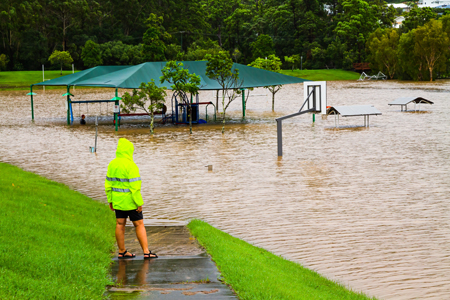
Response and recovery need to be part of the plan too, and Barnes said that reunification plans are often overlooked, outlining how parents and participants are reconnected after emergencies. “It identifies when it’s activated, where reunification occurs (primary and alternate sites), and who manages each step from communication to check-in and release. Pre-scripted family messages, controlled access points and clear signage for those unfamiliar with the site” can smooth this process.
Then there’s continuity of operations and identifying what must restart first—sanitation, food service, power, lodging. “A clear plan keeps recovery focused and manageable,” said Barnes. She suggested establishing MOUs (memorandums of understanding) with “nearby schools, faith communities or transportation providers. Build a volunteer framework before a (disaster), not during it. Engage with county and state emergency management, the Red Cross, and VOADs/COADs (Volunteer & Community Organizations Active in Disaster).”
Documentation is important after an event, explained Barnes. “Timelines, photos and decision logs are critical for both insurance and institutional learning.” And after-action reviews “capture lessons learned and feed them back into procedures while the experience is fresh.”
The nonprofit Main Street America (MSA) works to “strengthen and reenergize downtowns and neighborhood commercial districts.” In 2021, they partnered with the National Park Service (NPS) to launch the Main Street Community Disaster Preparedness and Resilience Program. “As keepers of the National Register of Historic Places and the steward of many culturally and socially significant landmarks and communities, they (NPS) were concerned about the ongoing impacts of natural disasters on historic properties and neighborhoods,” said Bethany Rogers, vice president of strategic projects at MSA.
MSA was asked to conduct research and lead workshops on “best practices our Main Streets leaders were using to prepare their districts for and mitigate damages from natural disasters,” said Rogers. That research led to the development of the Main Street Disaster and Resilience Toolkit in 2024, which addresses “key activities our leaders undertake in preparation for and in response to disaster and crises, including small business coaching and support, district branding and marketing, event planning and activating public spaces.”
Since publication of the toolkit, more has been learned, including how disadvantaged communities are disproportionately affected by climate change and related disasters, and that nearly 90% of U.S. counties declared a natural disaster between 2013 and 2023. “We also learned that only one-third of our Main Streets have disaster plans or related preparation strategies in place, so we’re building new resources and trainings to expand on the toolkit to support our network and other interested communities,” said Rogers.
The toolkit was intentionally made accessible, according to Rogers—broken into simple steps and often illustrated “with real-life examples.” Some themes seeing the most traction include Planning and Partnerships. “The toolkit has great tips for how to have hard conversations and get your local partners committed to disaster planning, as well as clear steps to build relationships with disaster partners.” It also delves into securing funding for disaster recovery or resilience projects.
Historic Preservation is another theme, including tips local leaders can take to inventory their resources, creating opportunities to advocate for those resources. There’s a Small Business Coaching and Support section, including “bite-sized strategies to support your small business with disaster preparation and short- and long-term strategies for helping them bounce back after major disruptions,” said Rogers.
Volunteer Coordination is addressed, as people often want to volunteer and make donations after disasters, “but many of our Main Street communities didn’t have the infrastructure in place to leverage that goodwill,” said Rogers. The toolkit advises on mobilizing volunteers for effectiveness. Other themes include Communications and Community Building, and Rogers said the toolkit offers practical steps “when it comes to crisis communications and simple strategies that can be implemented to restore community stability.”
The Bolingbrook, Ill., park district has an Emergency Operations Management Plan, outlining procedures for natural disasters, but also other emergencies including hazardous material releases, bomb threats, elevator malfunctions, building fires, computer network and power outages, hostage situations, and medical emergencies. “The park district wanted this document to provide information to our staff for all events they could experience,” said Chris Corbett, superintendent of projects and loss prevention. “Safety is about being proactive and prepared.
“Park districts communicate with other park districts to assist in creating plans and updating procedures, along with working with our Risk Management Association to provide feedback and assistance,” Corbett continued. Additionally, when staff attend professional development training, items learned are reviewed with staff and may be implemented into emergency plans. “Safety is always evolving; it’s important to review past events or learn from other agencies to improve our safety protocols.”
The park district has a crisis communication team with dedicated responsibilities for each staff member, and a training matrix that managers are required to follow and train from, including emergency plans. “Facility managers are tasked to perform facility drills to staff/patrons in our facilities at varying dates throughout the year,” said Corbett. And in addition to local emergency and municipal partners, the district has contacts with community leaders should the need arise, to assist with shelters, volunteers, etc.
Headwaters Economics is a nonprofit, independent research group working to improve community development and land management decisions. Megan Lawson leads their research in outdoor recreation, economic development and demographics. She explained that they assist communities to be more resistant to natural disasters, and they were noticing that “places being burned up or flooded out were places that have outdoor recreation economies.” When they dug into the data, they found that things like wildfires and floods were indeed higher in these places.
Lawson’s research found that of the nearly 140 people killed in last year’s Texas floods, nearly a third were visitors staying at a campground, RV park or rental cabin. And in 2022, flooding in Yellowstone National Park in Wyoming shut down park access, costing nearby communities $156 million in lost visitor spending. In fact, FEMA estimates that 25% of businesses in outdoor rec economies never reopen after a disaster and another 40% close within a year.
But recreation infrastructure can also help with hazard mitigation, according to Lawson, and proactively reduce the risk of catastrophic damage. “Integrating green infrastructure into project design—like restoring natural floodplains or using permeable parking areas—can help absorb and divert floodwaters. Trails can be designed as fuel breaks or fire access routes to help contain a wildfire before it reaches populated areas. Project design can incorporate evacuation planning, ensuring multiple points of access for visitors to leave and emergency personnel to enter.”
She described how some communities are integrating recreational opportunities into disaster risk reduction projects. In Gardiner, Mont., “a new pedestrian bridge will double as a way to elevate the town’s water pipeline above flood stage, protecting its essential water supply from damage.”
Hazard resilience projects can also make it easier to get funding and grants. “If we do this river restoration project that will slow down the floodwaters and protect this infrastructure, we might as well build some trails or parks that would also be an asset for our community.”
Lawson said it’s critical to develop EAPs for campgrounds and RV parks, “which should include hazard-specific actions and evacuation routes. Including outdoor recreation leaders in local drills and tabletop exercises can help identify weaknesses and improve system-wide coordination. Further, networks of guides, visitors’ centers and outfitters can serve as critical communication hubs, acting as early warning systems in the initial hours of a disaster.”
Outdoor rec professionals can also help with recovery efforts. When Hurricane Helene hit western North Carolina in 2024—where whitewater rafting is big business—there were suddenly a lot of unemployed river guides, “who were essential for understanding what was happening on the rivers, where debris removal was necessary,” said Lawson. “They were repurposed to help communities, to help folks dig out and start recovering.” Additionally, a nonprofit group that keeps an eye on water quality, protecting rivers and keeping them clean, assisted with water quality sampling, “applying the skills they had to keeping their community safe.”
“Emergency plans aren’t paperwork, they’re proof of care,” said Barnes. “They should be dynamic, revisited often and tested in real conditions.” She said recent severe weather events are reminders that:
- Communication redundancy is essential: Don’t rely on a single network or system
- Reunification and accountability require structure and calm, clear messaging.
- Evacuation readiness means knowing where to go, how to get there and what to bring.
She added that in addition to insurers, there are organizations offering templates, tools and guidance to help with emergency response and disaster plans, including ACA, FEMA, Child Care Aware of America, the I Love You Guys Foundation, and the American Red Cross. “The strongest plans are those that are practiced, shared and genuinely understood by everyone from leadership to your newest seasonal hire, from the family in RV site 42 to the weekend park volunteer. Safety thrives when preparedness is visible, practiced and lived—not just
written.” RM