
By Matthew Sands
Public aquatic facilities are under growing pressure to deliver reliable, safe, and cost-effective environments while managing aging infrastructure, limited budgets, and constrained maintenance staff. For many parks and recreation departments, traditional pool finishes such as plaster, paint, and tile are becoming increasingly difficult to justify over the long term due to frequent repairs, extended shutdowns, and unpredictable performance.
Reinforced PVC membranes are emerging as a practical alternative for public aquatic facilities seeking predictable lifecycle performance and reduced operational risk. Initially adopted for pool interiors, these systems are now used across a wide range of aquatic applications, including splash pads, pool renovations, decks, locker rooms, and other wet environments. For public-sector operators, the appeal lies in durability, faster installation timelines, and long-term maintenance efficiency rather than novelty.
Splash Pads: Safety, Durability, and High-Use Performance
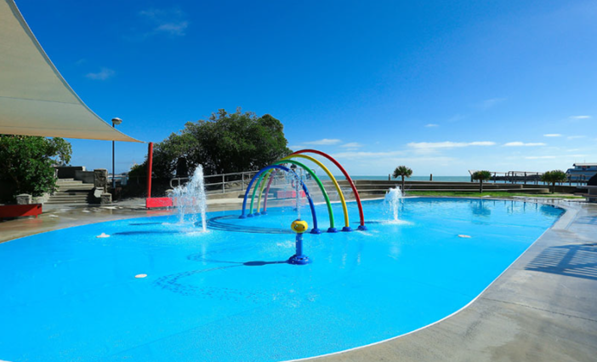
Splash pads have become a popular feature in community parks and recreation facilities due to their accessibility and broad appeal. However, these zero-depth environments present unique challenges. Constant water exposure, heavy foot traffic, UV radiation, and seasonal temperature changes can quickly degrade traditional concrete coatings and textured finishes, leading to cracking, surface wear, and slip hazards.
Reinforced PVC membranes address these challenges by functioning as a fully welded, watertight system rather than a surface treatment. By preventing water from penetrating the concrete slab, membranes help protect the underlying structure from freeze–thaw damage and long-term deterioration—an important consideration for municipalities focused on extending asset life.
Slip resistance is a primary concern in splash pad environments, particularly those designed for children. Reinforced PVC membranes can be manufactured with slip-resistant textures engineered specifically for barefoot traffic in wet conditions. Unlike applied coatings that may wear unevenly over time, slip resistance is integrated into the membrane itself, providing consistent performance throughout the life of the installation.
From an operational perspective, reinforced PVC systems also support faster construction and renovation timelines. This makes them well suited for public splash pads that must be completed within narrow seasonal windows. In addition, available colors and graphic options allow communities to create visually engaging play areas without compromising durability or ease of maintenance.
Pool Renovations: Reducing Downtime and Extending Facility Life
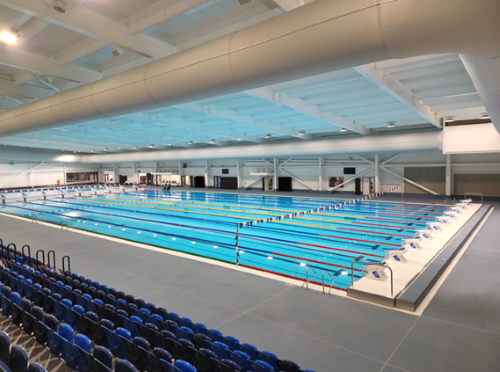
Many public pools constructed several decades ago are now facing recurring issues such as cracked plaster, failing paint systems, tile delamination, and chronic leaks. Traditional renovation approaches often require extensive demolition, long shutdowns, and unpredictable outcomes—factors that can significantly disrupt programming and revenue.
Reinforced PVC membranes offer a practical solution for renovation projects. In many cases, membranes can be installed directly over existing concrete or tile substrates following proper preparation. This overlay approach reduces demolition, shortens construction schedules, and lowers overall project disruption.
A key technical advantage of reinforced PVC membranes is their ability to accommodate minor structural movement. The internal reinforcement layer allows the membrane to bridge cracks and absorb substrate shifts without compromising watertightness, addressing one of the most common causes of recurring failures in older facilities.
For facility managers, predictability is critical. Membrane installations follow a controlled, repeatable process, allowing operators to better plan shutdown periods and reopening dates. Many reinforced PVC systems also offer long-term watertightness warranties, supporting capital planning and risk management strategies.
In practice, membranes are often replaced due to broader renovation cycles or aesthetic updates rather than product failure, making them a strong long-term investment for public aquatic facilities.
Decks, Locker Rooms, and Interior Wet Areas
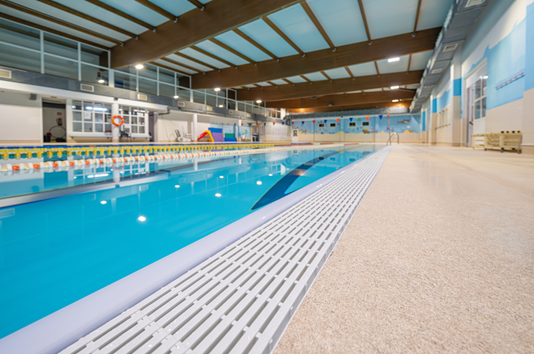
The use of reinforced PVC membranes is expanding beyond pool vessels into decks, locker rooms, showers, and other interior wet areas. These spaces are exposed to splashed water, chlorinated runoff, and frequent cleaning, making waterproofing and slip resistance essential.
In these applications, reinforced PVC membranes serve as both a waterproofing layer and a finished surface. Fully welded seams create a continuous barrier that helps prevent water migration into concrete slabs and adjacent spaces, reducing the risk of long-term structural damage.
Slip-resistant textures designed for wet, barefoot traffic improve safety in high-use areas, while the non-porous surface simplifies cleaning and supports hygienic conditions by limiting moisture absorption. Reinforced PVC membranes are also designed to withstand exposure to common cleaning agents and disinfectants used in public facilities.
Using a consistent system across pools, decks, and locker rooms can also simplify maintenance routines and reduce the number of materials staff must manage, while creating visual continuity throughout the aquatic facility.
Conclusion: A System-Based Approach for Public Aquatics
For parks and recreation departments, reinforced PVC membranes offer a system-based solution aligned with public-sector priorities. By combining watertight performance, slip-resistant safety, predictable installation timelines, and long-term durability, these membranes help reduce operational risk while extending facility life.
As public aquatic facilities continue to modernize, reinforced PVC membranes are increasingly viewed not as a specialty product, but as a practical, proven tool for managing aging infrastructure, improving safety, and delivering reliable aquatic experiences to the communities they serve.
About the Author:
Matthew Sands is a sales engineer with RENOLIT and has more than 20 years of specialized experience in construction renovation, product installation, and project engineering. His background includes working for one of Europe’s leading flooring manufacturers and supervising complex renovation projects such as the La Fenice Opera House in Venice and the LAC Cultural Center in Switzerland. At RENOLIT, Sands supports architects, installers, and distributors across North America with technical expertise, field training, and system design guidance. Additionally, he trains international customers through RENOLIT’s Global Training Academies worldwide. For more information, visit www.renolit.com.