


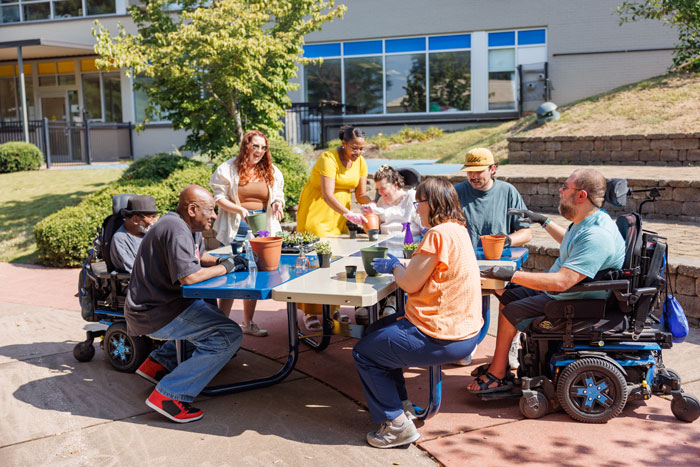
Site furnishings, such as park benches, picnic tables, waste receptacles, bike racks and more, play a subtle, but vital role in how the public experiences recreation spaces by transforming open spaces into comfortable inclusive places for community use—while also supporting safety, cleanliness and long-term stewardship of the park.
Furnishings even shape how people utilize a park, said Justin Jorgensen, graphic designer for a Cherokee, Iowa-based manufacturer of park and campsite products. Benches arranged to face one another encourage conversation, while clustered seating and picnic tables define social zones. Bike racks, seating and waste receptacles placed near entrances reinforce arrival points and help with wayfinding.
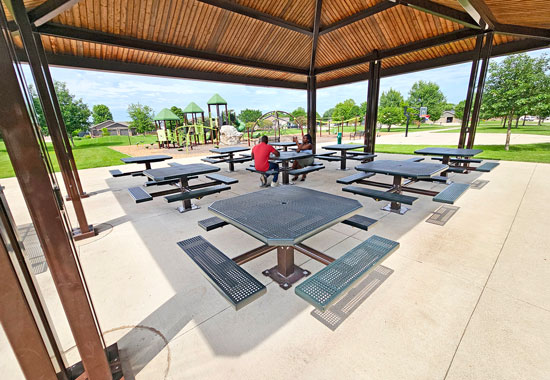
When furnishings are coordinated in style or customized to reflect local culture or history, Jorgensen continued, they contribute to a stronger sense of place. The goal is for furnishings to help organize space and behavior without calling attention to themselves.
But how can stakeholders best achieve all those goals? Experts recommend that during your due diligence process, turn inward, and ask yourself critical questions about your park or recreation space, so that by the time you meet with a landscape architect or manufacturer’s representative, you are clear about your most pressing needs.
Begin your analysis this way: Are you refurbishing an existing area? If so, will you be looking to repeat the previous style of furniture, or enhance the area with a new look?
The old furniture is usually pretty tattered by the time a replacement decision is put in play. With a new build you are open to a broad menu of products of all types that can be considered, explained Alan Robbins, president of an Akron, Ohio-based manufacturer of outdoor furniture for parks.
Sometimes, Robbins said, the design architects insert their recommendations and may specify a style or vendor. But more often the architect refers to “customer discretion” and lets the customer do whatever works best for the site or the community they serve. Money available often influences the direction taken.
Usually, the end user has a visual look and feel of what they want their area to look like. Find that out via community outreach meetings, suggested Marilee Gray, marketing director of a Janesville, Iowa, park equipment and commercial grade site furnishings manufacturer.
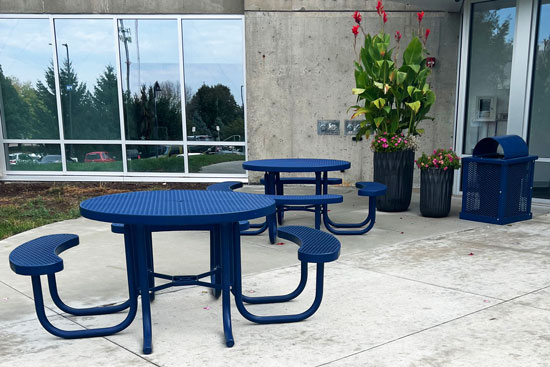
Who are the primary users of the facility? Age and activity demographics are always factors. Do you want to consider child-size options?
“There are lots of outdoor games, as well as site furnishings like tables, benches, grills and trash containers that your guests may like to have,” Gray said
From a stakeholder standpoint, Jorgensen said, “site furnishings should be viewed as long-term infrastructure, not decorative add-ons. The selection process starts with understanding how the park is currently being used and how it may evolve over time.”
Identify core user groups, expected traffic levels and the surrounding context, whether the park is in a historic district, residential neighborhood or urban corridor. Equally important is community input. Engaging residents early helps ensure furnishings reflect local identity and actual needs.
Materials Matter
Material selection should reflect both usage and climate. Powder-coated or galvanized steel offers strength and versatility in a variety of conditions, while recycled plastic and stainless steel perform well in wet or coastal environments and require minimal maintenance. “Choosing the right finish is extremely important. It protects the material and significantly extends service life,” Jorgensen said.
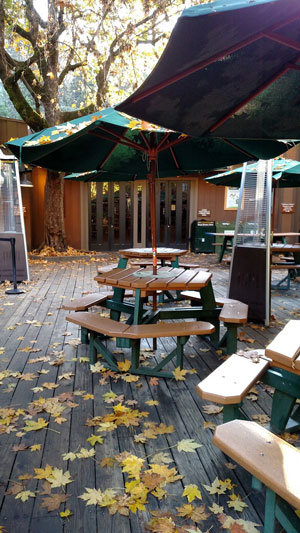
“There are many material options available that address safety issues and maintenance. But it wasn’t always that way. The evolution of materials that are the building blocks of furnishings has changed significantly over time.”
“When I entered the market in 1989 the dominant material was pressure treated wood, typically southern pine,” said Robbins. “The pressure treatment utilized by the wood industry was used to reduce the insect/termite activity. The chemicals utilized were CCA (chromated copper arsenate), essentially two heavy metals and water-soluble arsenic in a children’s food eating area. This was very bad from a health environmental aspect.”
Some of these CCA chemicals were also showing up in water tables for drinking water. So, there was a significant national effort to get CCA out of products, Robbins explained.
By the late 1980s and early 1990s new plastic lumber materials were beginning to enter the U.S. marketplace.
Park picnic tables, benches and furniture were some of the first market areas to seize upon plastic lumber as a new material system that would work effectively to eliminate CCA from products, reduce maintenance and improve safety aspects of painting, splinters, rust or rot in outdoor exposure.
Wood looks great in a natural setting, Gray said, “but takes upkeep, like stain and water sealer, periodically in outdoor elements. PVC-coated metal, aluminum or recycled plastic takes virtually no maintenance and can stand up to weather elements for years of service.”
Bottom line: “The new plastic lumber materials have benefited from the poor performance of wooden materials to capture a significant percentage of this market,” Robbins said. “I don’t have a percentage of market capture, but just an intuitive guess is that about 90% of the market now goes to other materials beyond wood. Expanded metal materials are also a popular replacement material for wood.”
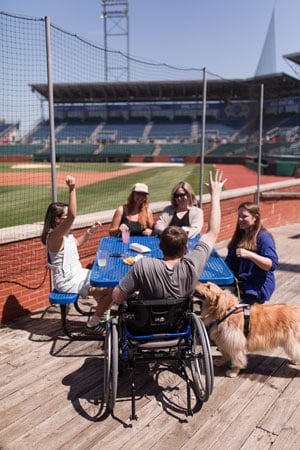
Gray agrees. “Wood used to be the ‘staple’ material choice for outdoor tables and benches,” she said. “But as we look to the future, other materials have been introduced in the market, which require less maintenance than wood. As life gets busier and budgets for maintenance get tighter, many organizations go for longer-term value options like recycled plastic lumber and PVC-coated steel, that withstand the outdoor elements for years and require little to no maintenance.”
Furnishings Integration
Furnishings can be integrated with the park’s overall style, landscaping and accessibility, said Mimi Marler, marketing director for a Chattanooga, Tenn.-based manufacturer of commercial recreation products, including site furnishings. “They should feel like part of the park’s personality. Research architectural cues, existing landscape materials and the overall aesthetic, whether that’s naturalistic, modern or historic.”
Texture and form help tie things together so the furnishings don’t feel like they were added as an afterthought. “It is important to integrate accessible routes, proper surfacing and layouts that support mobility devices so that every element is both visually cohesive and fully usable,” Marler said.
Integration happens when furnishings are considered early in the design process, Jorgensen suggested. “Materials and finishes should complement any surrounding architecture, paving and plantings. Furnishings should align with circulation paths, gathering spaces and key sightlines rather than being scattered randomly. Accessibility should also be built in, not added later. Furnishings placed along accessible routes with proper clearances and surfacing help ensure the park functions as a cohesive, inclusive environment.”
Lighting, sightlines and placement of equipment all factor into making furnishings feel safe and visible, but not intrusive.
Clear sightlines between seating, entrances and circulation routes support an open, welcoming atmosphere, Jorgensen said.
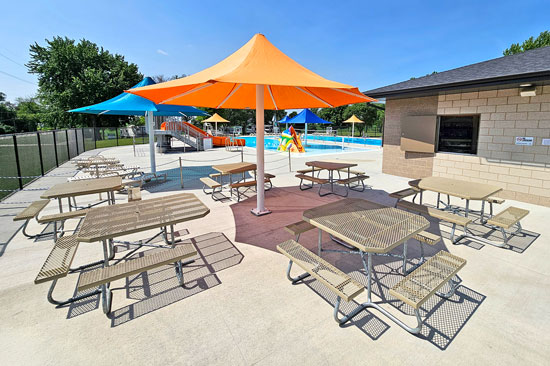
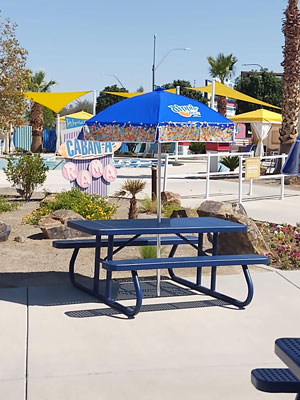
Comfort plays a major role in whether furnishings are used. Whenever possible, seating and tables should be placed under tree canopies, shade structures or near buildings that provide relief from sun and weather. Material choice also matters—some surfaces retain less heat and are more comfortable in warm climates.
“Stakeholders should evaluate ergonomics, stability, anchoring, visibility and accessibility,” Jorgensen said. “Furnishings should be comfortable to use. When furnishings feel safe and comfortable, users are more likely to treat them, and the park, with respect.”
Design Guides Inclusion
Inclusivity isn’t a single feature, Marler explained. “It’s a mindset that guides the entire design process. Inclusivity comes down to creating environments where everyone has equal choice and comfort.”
Many traditional site furnishings technically meet ADA requirements, but only offer one or two wheelchair positions. A more inclusive approach gives people who use mobility devices options. Providing multiple accessible positions ensures people aren’t confined to one spot. Additionally, make sure pathways and surfacing support mobility devices. Think about how furnishings can invite people in—seating that encourages conversation, areas where different age groups can comfortably gather, and spaces that feel safe and approachable.
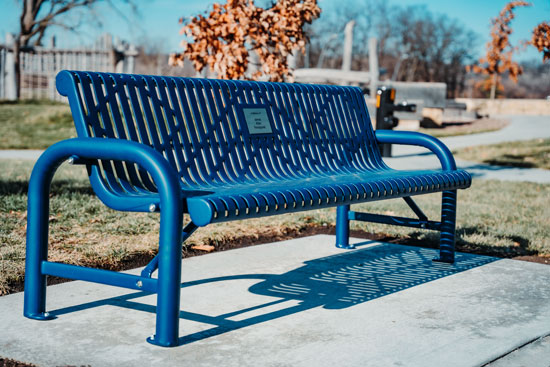
Inclusivity also shows up in the spacing between furnishings, clear approachable routes, seat heights that work for different ages and abilities, and social layouts that make it easy for people to gather, Marler explained. “When a park offers flexible, comfortable and approachable seating choices, you naturally see more engagement and more community interaction, because everyone can find a place that works for them.
“Furnishings placed in clusters, under shade or along natural flow paths invite people to slow down and connect. Tables near playgrounds support family interaction; benches along trails encourage casual conversations,” Marler said.
For wayfinding, furnishings can subtly guide movement: Placing amenities at decision points or near entrances creates natural cues. And when furnishings align with the park’s identity, using cohesive materials, branded elements or locally inspired colors, they help reinforce a true sense of place. They stop being objects in the park and start becoming part of the park’s story.
Families benefit from group seating and picnic tables near play areas, while older adults often prefer benches with backrests, armrests and comfortable seat heights placed along walking routes.
Being truly inclusive, Jorgensen said, “is about offering choice and dignity, which means providing a range of seating types and distributing accessible options throughout the park rather than isolating them.”
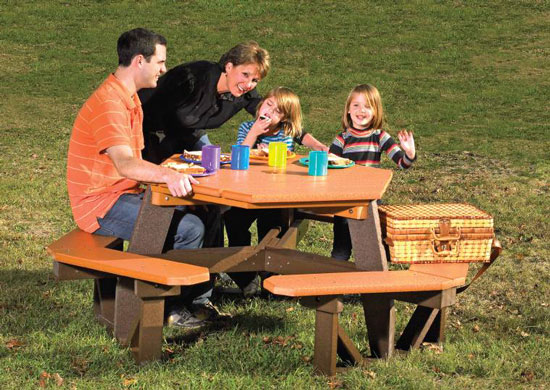
Furnishings should support multiple ages and abilities using the same spaces. When people feel physically comfortable and represented in a park, they’re more likely to linger, interact and take ownership of the space, which naturally fosters community engagement.
Teens are drawn to social zones and flexible seating where they can move or gather around. Cyclists usually want clear bike parking close to paths and rest points. Dog walkers appreciate amenities like pet waste stations, seating along trails and areas where they can pause while keeping leashes untangled. “When you account for all of these needs from the beginning, you create a space that feels welcoming and intuitive for everyone,” Marler said
Safety and Protection From Heat
Safety is both functional and psychological. “It is important to place furnishings where there’s good visibility, clear sightlines from paths, playgrounds and parking areas,” Marler said. “Lighting should illuminate walkways and seating without feeling harsh or overpowering. Placement also matters; avoiding hidden corners and instead situating furnishings where natural foot traffic occurs.”
The goal is to make the space feel cared for and well-observed without the furnishings dominating the landscape. When these elements work together, users feel both welcome and secure.
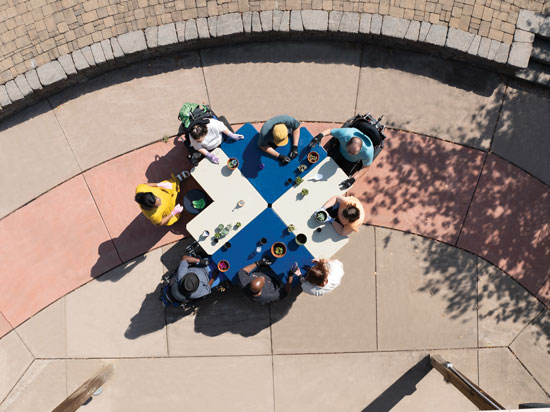
Heat, shade and weather protection play a huge role in how comfortable a site feels, so it’s important for planners to think about these factors early in the layout process, Marler said. A great first step is evaluating how the sun moves across the space throughout the day. Orienting benches, tables and rest areas toward natural shade, like tree canopies or shaded edges of the site, creates immediate comfort without additional structures. Where natural shade is limited, incorporating shelters or strategically placed shade elements can make a
big impact during the hottest part of the day.
Coated steel furnishings, lighter colors, ventilated seating surfaces and recycled plastic can all help reduce heat buildup and withstand harsh weather.
Bike parking should be considered with the same lens. Locating racks where cyclists naturally enter or transition, ideally under shade or near buildings for rain protection, encourages year-round use, Marler said. “Ultimately, the goal is to create outdoor spaces that feel inviting and safe in every season. When shade, materials and climate considerations are built into the design, furnishings stay more comfortable, age better and support consistent use.”
Maintenance Mainstays
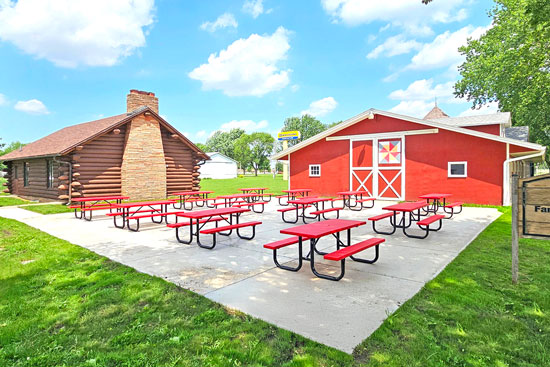
“Most furnishings are designed assuming periodic inspections, basic cleaning and occasional tightening of hardware. For departments with limited staff or budgets, low-maintenance materials and simple designs become especially important,” Jorgensen said.
Durable finishes, fewer moving parts and secure anchoring help ensure furnishings perform well even with minimal upkeep. “We know that many departments operate with limited staff,” Marler said. “In those cases, material selection becomes critical. Coated steel, aluminum and recycled plastic perform extremely well with minimal maintenance. Our goal is always long-term durability. If the product is designed well from the start, even minimal upkeep can keep furnishings looking great and performing properly.”
Through the years, there has been great motivation to remove pressure-treated chemicals from the food eating area, Robbins said. “There are commercially available spray cleaners and you can spray off graffiti or power-wash it off.”
When materials and finishes are matched to their environment, site furnishings last longer, perform better and require fewer resources over their lifespan, Jorgensen said.
Plan for a realistic maintenance cycle, typically seasonal inspections for tightening hardware, clearing debris and touching up finishes.
The Future of Furnishings
The future is all about creating durable, inclusive, connected spaces that truly meet people where they are.
“Technology is slowly making its way into parks,” Marler said. EV charging, solar lighting and smart features like device-charging tables are gaining traction. Communities want spaces that not only look good but also support modern lifestyles. “There’s also growth in branded elements and placemaking, furnishings that reinforce the park’s identity and help tell a story.”
“There has been industry consolidation over the last few years,” Robbins said. “But it is unclear if this will enhance product creativity. The marketplace is always looking for a value proposition and products that work for their specific needs. We strongly promote the use of recycled-content products, which typically moves clients towards a recycled plastic material or a hybrid (plastic/metal).”
Many communities appreciate the environmental aspect of using recycled products. Some park departments have been able to secure funding for the recycled content picnic tables from their solid waste district, Robbins said. “This is a great way to show the effectiveness of post-consumer plastic recycling.” RM