

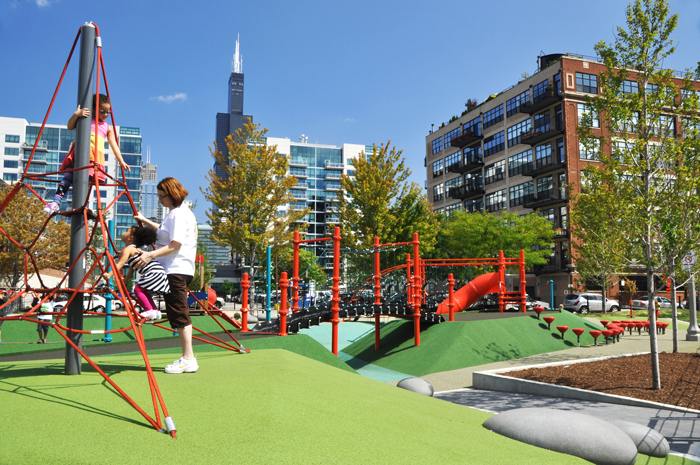
Landscape design encompasses many things, with project goals running the gamut from functional to aesthetic, or oftentimes both. But these days, with the worsening effects of climate change, extreme weather events and the diminishing of green spaces in general, landscape design projects are more frequently addressing sustainability, resilience and restoration, no matter what the project scope may be.
In urban environments, resilience has become part of the standard project criteria, according to Rob Reuland, principal at Site Design Group, a landscape architecture and urban design firm. “Designing for yesterday’s climate conditions is no longer responsible practice. We routinely plan for more intense rainfall, localized flooding and prolonged heat events. Green infrastructure, such as bioswales, rain gardens, permeable paving and expanded tree canopy, is now a baseline expectation rather than an optional enhancement.
“Resilience also has a social dimension,” Reuland continued. “The neighborhoods most vulnerable to extreme heat and flooding often have the fewest environmental protections in place. Addressing those disparities through landscape design is as much about public health and long-term equity as it is about performance.”
“We’re seeing many more projects where resiliency is the starting point, not an add-on,” said Amirah Shahid, associate principal at HDR, a company specializing in architecture, engineering, environmental and construction services. She mentioned a couple of current projects as examples, including the Cherry Creek and Speer Boulevard Vision Study in Denver, which looks to realign Speer Boulevard to “prioritize people over cars,” and restore Cherry Creek biodiversity, “creating a healthier environment in the heart of the city,” according to their website.
“We’re studying corridors where waterways were channelized in the past,” said Shahid. “By selectively lowering or removing hard walls and restoring floodplain and wetland edges, we create landscapes that can safely store and slow floodwaters, improve water quality and adapt to more intense storm events tied to climate change.”
At the same time, Shahid said, these designs create room for larger tree canopies and native plant communities, “which reduce urban heat, provide shade for people and habitat for wildlife, and make the public realm more comfortable and resilient over time.” And as these projects will also create shaded trails, gathering spaces, and stronger connections between nearby neighborhoods and downtown, “It’s a good example of how resiliency projects can address flooding and extreme heat while also creating beautiful, accessible civic spaces that communities value every day.”
Scott Crawford, principal at RDG Planning & Design, agreed that parks, trails and open spaces can be dual-purpose. “Emphasizing the control of flood runoff and the reduction of downstream impacts, parks can incorporate adaptive landscapes and resilient infrastructure. These systems work in harmony to manage stormwater effectively while promoting long-term environmental stewardship.”
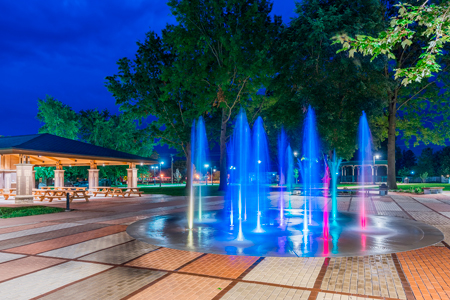
And Crawford agreed that heat island effects in parks and urban spaces can be significantly reduced by increasing tree canopies, and native and layered vegetation. Additionally, “using light-colored, high-albedo materials, permeable pavements, and incorporating water features further lowers surface and air temperatures by reflecting heat and providing evaporative cooling… to create more comfortable, climate-resilient public spaces.”
Added Reuland, “When we talk about cooling infrastructure, we’re also talking about equity. Access to comfortable public spaces during extreme heat should not depend on where someone lives.”
Sustainability in general is “embedded in most projects from the outset,” said Reuland, “but the depth of that commitment varies. Beyond stormwater management, we prioritize soil health, native and climate-adaptive plant palettes, reduced irrigation demand, and energy-efficient lighting.” And increasingly, he said they’re evaluating carbon footprint. “That includes reducing unnecessary demolition, preserving mature trees, minimizing hardscape and selecting durable materials with lower embodied carbon.”
But at the same time, Reuland pointed out that every design decision carries a carbon consequence. “What we remove, what we add and how long it lasts all matter. A park that cannot be maintained, or that requires constant replacement, is not truly sustainable.”
“We’re seeing sustainability shift from a checklist to a systems approach,” said Shahid. One focus is “creating real habitat in public space—not just planting trees but designing connected native plant communities that support pollinators and urban biodiversity.” She said cities are more commonly embedding nature-based solutions into code and design standards, “so sustainability isn’t optional—it becomes the default for every project, making it easier for developers and public agencies alike to contribute to a healthier, more resilient shared system.”
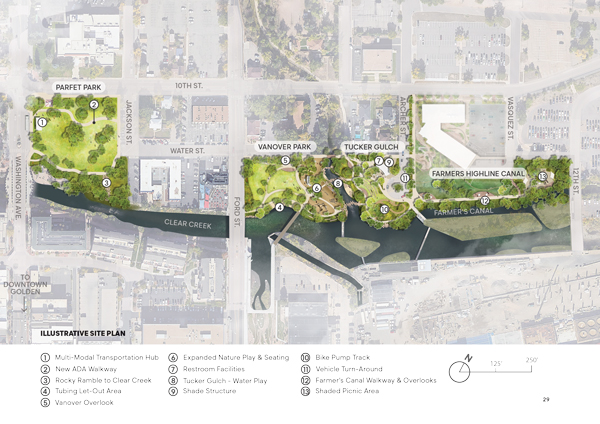
Shahid said they’re also seeing some clients shift toward restoring ecological function as part of everyday parks and public-realm projects. In their Golden, Colo., project, which aims to make the Clear Creek Corridor more usable and desirable for residents while providing needed space for police and city services, “we heard loud and clear that people want a deeper connection to Clear Creek. But in many places along the corridor, native plant communities and natural hydrology have been heavily altered, so meaningful access requires restoration first.”
Restoration isn’t just about turning back the clock, said Shahid, “it’s about designing landscapes that function ecologically and socially.”
But there are challenges. “We’re often working with contaminated or compacted soils from former industrial uses, altered drainage patterns or channelized waterways, tight urban footprints with competing infrastructure needs, and layers of funding and regulatory complexity, all while trying to balance meaningful habitat restoration with safe, welcoming public access for the community.”
She said that when restoration is done thoughtfully—with ecologists, engineers and the community at the table—the result is usually a place that performs better, costs less to maintain and feels more meaningful to people. “We often say we’re stacking benefits: cleaner water, climate resilience, habitat, recreation, and civic identity all in one project.”
And while restoring green spaces and designing for resiliency and sustainability offers many long-term benefits for communities, Shahid said economics is often a major motivator as well, and they’ve witnessed how high-quality public spaces can become economic engines. “When creek corridors are restored and designed as beautiful, safe and welcoming places, they draw people into downtowns and neighborhoods—and that’s where people linger, shop, dine and invest.”
These projects can also create strong opportunities for public-private partnerships, according to Shahid. “When cities can clearly show early on how flood protection, ecological restoration, mobility improvements and great public space will support local businesses and property values, it becomes easier to build funding coalitions and community support.” Therefore, resiliency and restoration projects aren’t just environmental investments, “they’re catalysts for long-term economic vitality.”
College and university campuses are often on the forefront of landscape design trends, and RDG’s website states that the experience of a school’s open spaces “have just as much of an impact on the perceived quality of an institution as the experience of inside a building.” Crawford said this is a core consideration in creating holistic design solutions. “Exterior landscapes that relate to the interior spaces of buildings, functionally and aesthetically, benefit facility users and create an intentional, cohesive sense of place.”
Reuland has been involved with several recent projects across the University of Chicago campus, and he said higher education clients are paying closer attention to how outdoor environments shape students’ well-being and daily experience. “Shaded study areas, flexible quads, improved pedestrian connectivity and quiet gardens for reflection are increasingly considered essential infrastructure. Landscape is no longer viewed as leftover space between buildings; it contributes directly to campus identity, mental health and overall student success. Outdoor space functions as both a learning environment and a powerful recruitment tool for students and faculty alike.”
Landscape design in health and well-being settings is also important, as studies show that “daylight, views of greenery and access to outdoor environments can lower stress and improve mental health outcomes.”
One HDR project—a Rehabilitation Institute in Chicago—integrates green spaces and natural elements intended to promote healing and provide relaxing and accessible environments for patients and staff. The facility features therapeutic gardens on ground level and the 10th floor Sky Lobby. An outdoor terrace serves as a functional rehab gym, featuring varying terrains and slopes for mobility training. Additionally, a roof garden manages stormwater and combats urban heat island effects.
“In healthcare settings, access to nature provides moments of calm, dignity and connection during stressful times,” said Shahid. “Thoughtful landscape design can reconnect what might otherwise feel like isolated, clinical environments to their broader community and natural context, offering light, fresh air, movement and seasonal change.”
She said even small gardens or terraces can support healing, improve staff well-being and create places for families to gather, “reminding people they’re part of a larger world beyond the walls of a facility.”
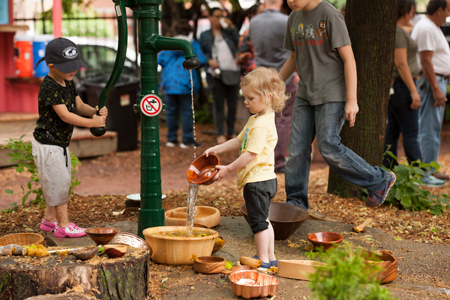
In fact, Shahid said they’re seeing a strong increase in urban projects where “providing respite is the central goal. Communities are consistently asking for places to slow down,” with “shaded paths, access to water, quiet seating areas, nature play and tree canopy that cools the city.”
She said these everyday experiences become essential public health infrastructure. “Thoughtful urban design can create small moments of calm and connection within busy environments, helping people recharge while still staying connected to their community.”
Crawford said the integration of both active and passive recreation opportunities is fundamental to the success of public spaces. “Passive recreation opportunities provide human physical, social and mental health benefits. Connecting humans to nature through parks and open spaces also builds greater appreciation and stewardship of environmental systems.”
As we were reminded during the pandemic, outdoor spaces are also essential for community cohesion. “Parks are civic infrastructure,” said Reuland. “They’re among the few spaces where people of different backgrounds, ages and identities share common ground. That shared ground does not happen by accident; it must be designed intentionally.”
He said public spaces should support everyday recreation, cultural celebration and moments of collective gathering. “When we avoid designing for that reality, we unintentionally limit who feels welcome and comfortable.”
And he cautioned against a one-size-fits-all approach. “Claims of neutrality in design can sometimes reinforce exclusion. A culturally responsive approach recognizes that communities bring different traditions, preferences and expectations, and that design should reflect them.”
“Community cohesion is absolutely a goal,” said Shahid, “but we also think about building lasting systems that serve people fairly over time.” She said they realize that not every project can include every amenity, but there should be something for everyone across a park system or corridor. “When we can’t meet every request in one location, we focus on being transparent about tradeoffs and working closely with the city so people understand how decisions were made and how their input shaped the outcome. That kind of honest, inclusive process builds trust—and ultimately leads to stronger, more connected communities.”
Crawford echoed that parks and public spaces provide accessible venues for community gathering, cultural events and public expression, “strengthening social connection and civic participation. The design of these places has the potential to foster a sense of belonging and identity while supporting vibrant, active and engaged communities.”
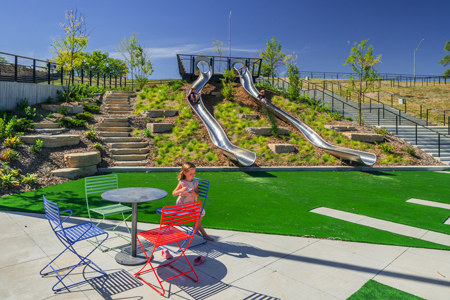
Particularly for communities with limited open space, flexibility remains a major consideration. Multipurpose spaces allow parks to support a variety of activities and special events, according to Crawford, maximizing use, efficiency and long-term value, while adapting to community needs, promoting inclusivity, and creating opportunities for social interaction and programming. “Flexible spaces—like open lawns, plazas and adaptable courts—can support everyday activities such as picnicking, pick-up sports, relaxation, and special events such as concerts, festivals and farmers markets.”
RDG also works with sports-centric projects, and Crawford said landscape design trends for municipal outdoor sports facilities emphasize flexible, multi-use fields and courts, equitable and accessible design, environmental sustainability, and heat mitigation through shade, trees and efficient materials. “These facilities are increasingly integrated with trails, social amenities and technology to create comfortable, community-focused destinations that support recreation, health and year-round use.”
Of course, as every community is different and goals vary, Shahid said community engagement is essential, meeting people where they are and offering multiple ways to participate: “Holding conversations in the actual places we’re planning for, so people can connect their memories and ideas to the site, and reaching out intentionally to groups who don’t always show up to traditional meetings.”
She said that might mean pop-ups along the creek trail, working with local schools or community organizations, or providing materials in multiple formats and languages. “The goal is an equitable process that leads to equitable public space. When people see their voices reflected in the design, projects are stronger, more trusted and more successful over the long term.”
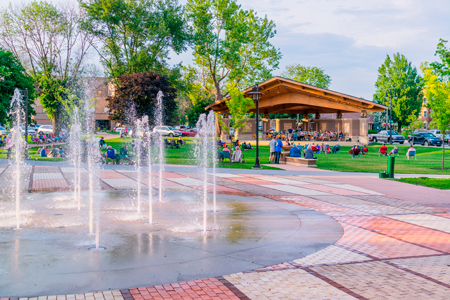
Reuland agreed that holding a single public meeting will not lead to optimal outcomes. “Every neighborhood brings distinct priorities shaped by history, demographics and lived experience.” He said in some communities, safety and lighting dominate conversations, while in others, youth recreation, cultural programming or environmental restoration take precedence. “Many residents want to see their cultural identity reflected in materials, art, programming and spatial organization. Design signals who a space is for.”
Whomever—and whatever—a space is ultimately designed for, inclusivity and accessibility always need to be in the conversation. And over the past several years, Reuland said the conversation has shifted from simply meeting code requirements to asking a more meaningful question: “Does this space genuinely work for a diverse public?” Beyond ADA compliance, he said clients increasingly want to understand how a park will feel to older adults, caregivers, children and people with varied physical or sensory needs. “That shift changes design decisions from the very beginning of the process.
“Continuous accessible routes are integrated into primary circulation rather than treated as secondary paths,” Reuland continued. “Seating includes backs and arms. Shade is planned as essential infrastructure. Play environments provide multiple ways to participate instead of separating users by ability.”
He said inclusion requires acknowledging that design is not neutral, and layout, materials and programming all signal who a space is meant for. “If we’re serious about inclusion, we have to ask whose history, whose identity and whose comfort is centered in the design.”
Likewise, universal design should not be treated as a specialty, and the most successful parks don’t segregate users by age or ability, they layer experiences so children, caregivers, teens and older adults can comfortably share space, said Reuland. “Walking loops support both rehabilitation and daily exercise. Play areas offer graduated challenges. Seating accommodates a range of physical needs.”
Flexibility is a long-term strategy, Reuland explained, and open lawns, adaptable furnishings and layered programming allow a site to evolve as demographics shift and community priorities change. “Over-programming can date a park quickly. Designing for adaptability extends its relevance and lifespan.”
Shahid said there’s a much stronger focus on equity and inclusion, and it’s shaping both process and design. With a couple of their ongoing civic projects, she said they’re looking closely at who currently has access to parks and safe mobility, who doesn’t, and why. “That means improving connections from surrounding neighborhoods, designing spaces that feel safe and welcoming for all ages and abilities, providing a range of programming and quiet spaces, and engaging communities early so their needs shape the outcome.
“Equity shows up in the long-term thinking,” she continued, “making sure maintenance, shade, accessibility and transit connections are considered so these spaces serve everyone, not just on opening day but for decades. Inclusive public space isn’t an add-on anymore; it’s a core measure of a successful project.” RM