


On New Years Eve in 2025, when freshman basketball guard for the Furman University Paladins Alex Wilkins hit a jumper with 19 seconds left to defeat conference rival Mercer in a 74-72 nailbiter, it was the first conference game in Furman’s newly renovated Timmons Arena. And it capped an unbeaten December for the NCAA Division l Paladins, who went 6-0.
Located in Greenville, S.C., Furman’s basketball venue had become outdated. Dimensional Innovations, an experience design, build and technology firm, led the Timmons Arena renovation. Eric Buckels, account director/sports & higher education at the firm, said it’s becoming increasingly common to create multipurpose environments that feel relevant beyond campus, particularly for programs looking to strengthen connections with their communities.
“At Timmons, our scope wasn’t purely focused on adding amenities,” said Buckels. “This needed to be an arena for Greenville, not just Furman. The goal was to support a great gameday atmosphere while also creating a venue that could host a range of events and feel welcoming enough to compete for how locals choose to spend their time.”
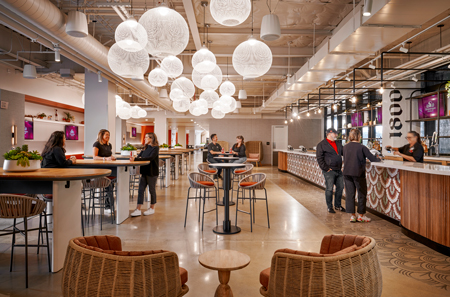
Photos Courtesy of RYAN GOBUTY FOR GENSLER
Brand elevation for recruiting is also a major driver in both new builds and renovations, according to Buckels. “Using Timmons as an example, venues like stadiums and arenas are great opportunities to ‘double dip’ on impact: The same high-energy, ‘wow’ moments that drive revenue and attract fans also act as powerful recruiting tools. When athletes see a space that feels intentional, it signals that the program is serious about investing in the student-athlete experience and gamedays.”
Erin Mayes, deputy athletic director at Furman, said that throughout the renovation process, they were able to see first-hand the impact that improved facilities had on recruiting for men’s and women’s basketball programs. “The renovation was intended to enhance recruiting, retention and the overall student-athlete experience. A modern, basketball-centric arena creates a stronger home-court advantage and elevates the program’s stature, which enhances the Paladin’s ability to recruit and develop the nation’s top-tier student-athletes.”
And while recruiting is still a design consideration, the college athletics landscape has significantly changed in recent years due to new rules surrounding the transfer portal and Name, Image and Likeness (NIL) incentives for athletes. “NIL has essentially created a pay-to-play transfer portal, introducing free agency and market-driven athlete value into college sports,” said Trevor Bechtold, director of sports at design firm Gensler. “So, we’re seeing programs hire front offices and operate more like professional leagues, with private equity, corporate sponsorships and media partnerships all part of the mix.”
Bechtold explained that revenues are at an all-time high and rising in the collegiate space, now reaching $80 million to $100 million annually in media rights, rivaling some of the smaller pro leagues. At the same time, new NCAA rules allow schools to pay student athletes directly through revenue share deals, up to $20.5 million per school per year. “While beneficial for athletes, these deals can be a pretty big hit to an athletics program’s bottom line, so they’ve had to rethink how they bring in revenue and what that means for the future of college athletics.”
Buckels agreed that there’s now more competition for each program’s dollar. “Investments tend to win when they clearly support measurable outcomes like improved attendance or increased donations or improve the probability of a recruit selecting the university.”
Additionally, the way spaces support recruitment and retention has changed. “With the transfer portal, athlete rosters can turn over more frequently, so content needs to be refreshed quickly season to season. Facilities need to function as an always-on recruiting tool.”
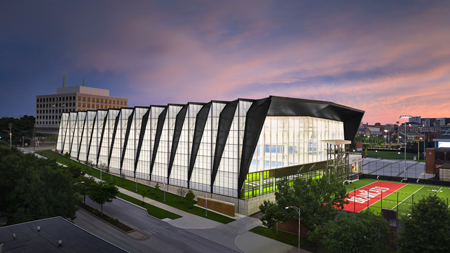
CENTER AT THE UNIVERSITY OF CINCINNATI
Photos Courtesy of BRAD FEINKNOPF
And have these rule changes started to affect design strategies? “A big shift we’re hearing from college clients is that recruiting is now less focused on the amenities of the spaces,” said Chris DeVolder, who’s also a director of sports at Gensler. “Yes, amenities still matter, but what today’s student-athletes really want is compensation and support in building their individual brand. Facilities are still important, while the bigger focus is brand, exposure and financial opportunity.”
From a design and construction perspective, Bechtold said they’ve seen a pause in the “ever-bigger, amenity-rich training centers. Schools are still investing, but in more targeted ways—spaces for data analytics, recovery or health partnerships.” He said it’s also about scalability. 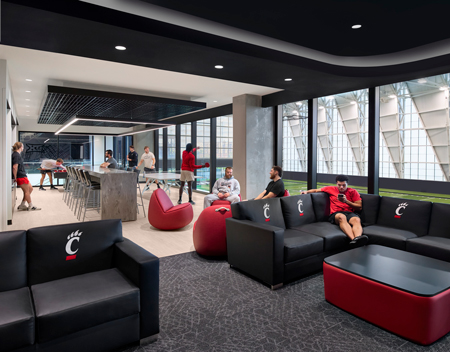 “Schools like Alabama and Clemson are creating studio-quality setups, while smaller programs might just need a functional mini-studio or podcast areas. In the future, these spaces may double as broadcast-ready environments for ESPN or College GameDay coverage, creating media value for both the team and networks.”
Creation spaces are now becoming standard, added DeVolder. “Where a decade ago we might have had a small room with a changeable backdrop and a microphone, we’re now designing full production suites—podcast studios, video editing bays, social media hubs. Athletes recognize they’re brands, and schools want to support that.”
He said the studios Gensler designed for the NFL’s West Coast media headquarters in California have become a model that universities look to when they’re designing their own broadcast suites. “So, we’re certainly seeing that professional level of production space make its way onto campuses.”
DeVolder said sponsorship strategy is also becoming more sophisticated. “Beyond traditional naming rights, partners now brand everything from locker rooms and concourses to entry gates. Agencies use data analytics to assess every possible touchpoint for brand exposure. Think of it as spatial monetization.”
“Looking ahead, digital integration will drive the next wave,” said Bechtold, “things like LED glass basketball floors that display dynamic logos or halftime activations tied to sponsorships. Imagine each game having different sponsors rotating through digital surfaces. It’s an efficient way to multiply exposure without new construction.”
Upscale offerings also drive revenue, and Bechtold said everyone is searching for ways to turn underused areas into premium experiences, “transforming unused end zone space into clubs or converting storage space into small VIP lounges. We’ve also seen examples where press facilities were relocated, allowing valuable space with superior views to be re-created as a premium offering.”
“Where you once had two main premium products—suites and club seats—you now have a dozen variations,” said DeVolder. “Some are as simple as wider chairs with a concession credit. Others are ultra-exclusive, multi-tiered suites-within-suites. If premium seating makes up 20% of your venue, it often drives 80% of your non-broadcast revenue. Teams are finding new ways to add layers of exclusivity.”
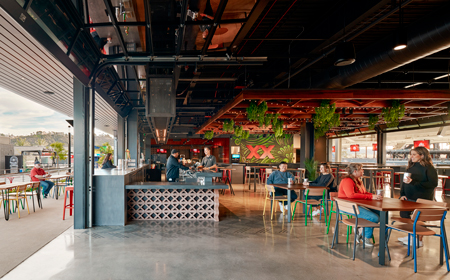
Photos Courtesy of DIMENSIONAL INNOVATIONS
At the Timmons Arena, Mayes described their seating transformation. “We now have 360-degree seating and a full wraparound concourse, so you never lose sight of the game no matter where you are.” On the premium side, she said they’ve added eight private suites, two party suites, courtside seating, and a branded courtside club and hospitality deck.
Concessions were another big focus, and Mayes said they’ve partnered with a concessionaire, stepping up service and “quality of the items provided both from a concessions and catering standpoint. We now offer enhanced concessions with grab-and-go options, which has really sped up lines and improved service.” She said their hospitality deck provides a premium food & beverage experience “that many groups and private parties have opted into for our home basketball games.” 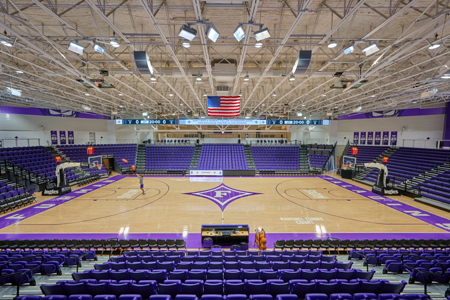
“Food and beverage is huge,” said DeVolder. “Fans expect access to enhanced hospitality even at regular prices. ‘Local and authentic’ is the trend—think regional craft food instead of cookie-cutter concessions.” He said technology is a gamechanger, with grab-and-go markets and self-checkout exploding, selling “better than traditional stands simply because they’re faster and more intuitive.”
And while Mayes said a large portion of their fan base is family-oriented, she pointed out that it’s difficult for kids to stay entertained for an entire game. Therefore, they partnered with a children’s museum and a design firm to create their Children’s Zone, “an innovative area located behind the basket on the concourse where families can entertain their children while still being able to watch the game.” And to tie into the school experience, “the climbing structure is the iconic belltower that Furman is known for.”
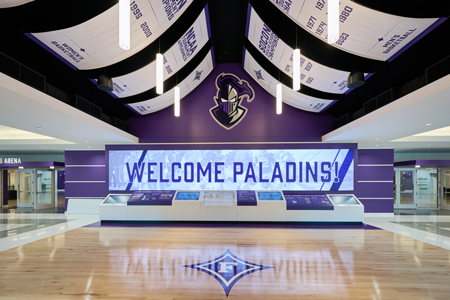
The lobby of the renovated Timmons Arena now features a 34-foot-wide LED Hall of Honor panel and interactive kiosks bringing decades of Furman athletics to life, celebrating athletes and highlighting memorable plays. “It’s become an immediate point of pride for our fans, alumni and recruits,” said Mayes, who witnessed this when inducting the new class into their Hall of Fame. “Previous inductees came back to celebrate, and the pride they had in showing their families all of their accolades was such a wonderful moment.”
Buckels said these types of features “preserve and elevate local history, create a shared sense of pride across generations, and give fans a reason to linger and engage beyond game time. Interactive components are particularly effective because they let people choose their own path through the content, whether that’s reliving hype moments from past seasons, exploring records and milestones, or learning about individual athletes and teams.”
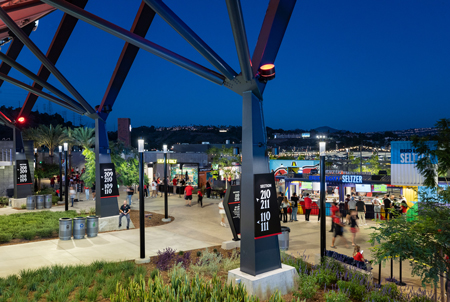
“We’re seeing more facilities incorporate ways to honor their heritage and local character,” said Bechtold. “Halls of Honor are becoming more integrated into the overall fan journey rather than functioning as standalone spaces. When these features are placed at the plaza level or along primary circulation paths, they help connect key areas of the site and naturally become part of the gameday experience.”
Competition venues are also featuring murals, sculptures, custom light fixtures and other artistic embellishments, which Bechtold said is an opportunity for facilities to create spaces that feel distinctive and authentic, celebrating their brand in gathering areas like entryways and concourses. “Artwork can reflect the roots of the city or the character of the campus, giving the facility a sense of place. Digital elements add another layer by allowing fans to interact and engage with content in a more dynamic way.”
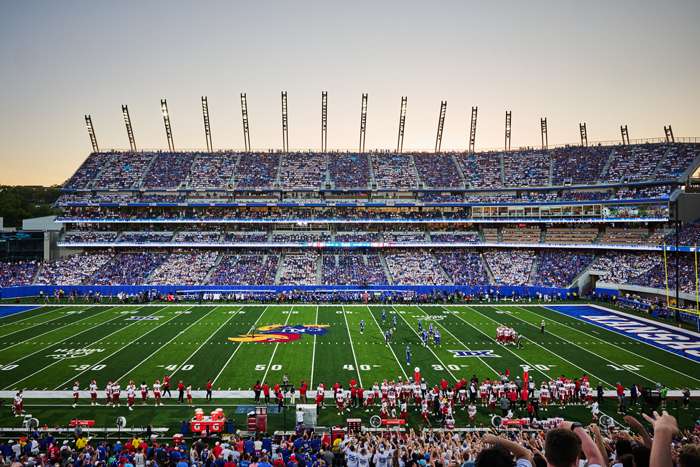
The newly renovated David Booth Kansas Memorial Stadium at the University of Kansas features a “massive ceiling installation composed of sculptural abstractions” in KU’s brand colors. Additionally, the use of limestone reflects roots in the Kansas Flint Hills. “Incorporating sculptural moments, locally inspired artwork and regional materials has become increasingly common, especially in collegiate athletics where facilities are expected to communicate identity as much as they support performance,” said Buckels, whose firm worked on the Kansas project. “Pulling in cues from the surrounding city and state through recognizable landmarks, local materials and integrated storytelling helps create a stronger sense of ownership and pride.”
Buckels pointed to signage and wayfinding as other critical design considerations. “If people can’t find their seat, restrooms or concessions, the experience won’t be a good one. That’s why clear, intuitive wayfinding is a priority early in the process. It helps first-time visitors find destinations quickly and easily.”
DeVolder said they’re seeing a shift toward stronger sustainability commitments across the industry, and building codes continue to raise expectations for energy and water performance. At the University of Texas in Austin, the new Moody Center—the school’s basketball arena and a Gensler project—is LEED Gold certified. Highlights include 26% energy savings, low-water-use plumbing and 95% less waste through reuse.
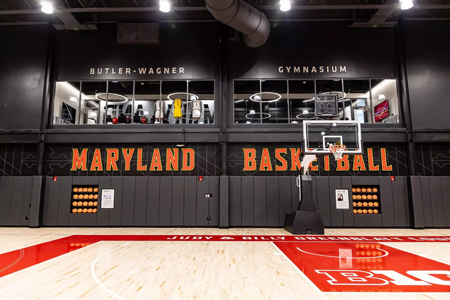
“Zero-waste strategies are gaining momentum because a single simplified waste stream is easier to manage and creates strong sponsorship opportunities,” said DeVolder. “On the carbon side, owners are prioritizing electrification, low-carbon materials and systems designed to reduce emissions throughout the building’s lifecycle.” Clients are also placing greater emphasis on wellness, he continued, “by offering healthier food options, indoor and outdoor connectivity, biophilic design, quiet rooms and lighting that supports natural circadian rhythms.”
Mayes said they upgraded audio and visual components at Timmons Arena, adding “modern lighting with programmable spotlights, a completely new sound system that’s integrated throughout the entirety of the arena, and
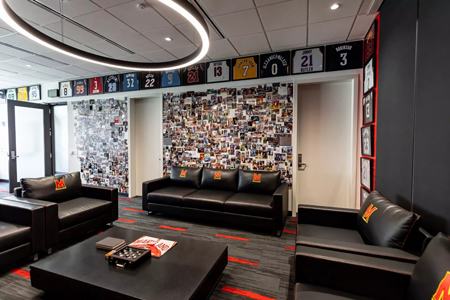
enhanced display systems and ribbon boards throughout the space. Beyond creating a better in-arena experience for our fans, these improvements also impact our TV broadcasts by creating a more polished product on-air.”
The Western Michigan University (WMU) Broncos compete in NCAA Division l athletics. We checked in with Matt Kulik—associate athletic director/facilities—regarding any recent upgrades they’ve made to their sports facilities, and he described improvements made to their indoor golf venue. “We created three new spaces: a chip and putt space, a putting lab and a simulator room,” as well as renovating the golf locker room. Kulik said the new space has been a gamechanger. “Previous to this they had a small, flat putting green in the basement. Now they have a space they can utilize 365 days a year.”
Kulik said the simulator allows golfers to practice on courses they’re going to play on throughout their season. The putting lab enables athletes to putt on surfaces that can be manipulated to have hills and undulations, while also measuring numerous metrics including ball speed, strike quality and angle. “Lastly, the chip and putt is about four times larger than the old putting green and also includes a large chipping area around the green.”
In 2025, WMU’s football team won the Mid-American Conference championship, while their hockey team won the National Collegiate Hockey Conference title. Kulik said college recruiting is currently “an arms race,” all about who has “the biggest and newest innovations. When you’re recruiting a student-athlete, they’re likely being recruited by your competitors, so you need to make sure you’re keeping up with the other schools in your conference.” And while he can’t be sure the latest golf facility renovations have helped with recruitment, “I have to believe we’re getting a higher quality student athlete than before we updated these facilities.”
Universities are looking for models that help facilities generate value year-round, according to Bechtold. “Regardless of scale, many institutions are actively exploring how their venues can support concerts, hospitality, enhanced food and beverage, and mixed-use programming throughout the year.” He said they’re also seeing schools incorporate food and beverage components directly into stadiums, “so that parts of the venue can stay active consistently.”
Buckels pointed out that gamedays only happen a handful of times each year, and when a university invests in a marquee asset like a stadium or arena, “it’s smart to plan for the other 300-plus days. These venues are memorable spaces, which makes them ideal for a wide range of uses beyond sports, including conferences, weddings, public tours and classrooms. That helps optimize return on investment and allows communities to interact with them year-round.”
Mayes said their intention for the new Timmons Arena was to be able to “use it for campus and community events as well as a revenue driver for the university. Anything from concerts and trade shows to hosting external athletic events.” Additionally, the facility will begin hosting volleyball next fall.
“As with all renovations, there have been things to work through throughout the season, but they’ve been minor and the feedback has been overwhelmingly positive,” continued Mayes. “We’ve had some record-breaking attendance as we’ve had multiple sell-outs this season so far.”
Summing up sports facility design in 2026, Bechtold said that it’s ultimately about maximizing every square foot, “making spaces flexible, monetizable and meaningful. Whether it’s through new revenue models or deeper brand storytelling, venues have to perform like businesses now.”
“And they have to deliver layers of experience,” added DeVolder, “for athletes, fans, and sponsors alike. The line between sports, entertainment and real estate is blurring fast. Design’s role is to make that ecosystem seamless and sustainable.” RM